
Where Humanity Begins · Compilation · 14:29
Where Humanity Began: Four Places in Tanzania
Four chapters, one story. Walk the 3.6-million-year-old Laetoli footprints, read two million years of our family in the walls of Olduvai Gorge, follow two million animals across the Serengeti, and climb to Kilimanjaro's vanishing snows — the places in Tanzania where the human story is written into the land.
 Watch on YouTube
The story, frame by frame
104 frames, one painted frame per line.

Where Humanity Began: Four Places in Tanzania
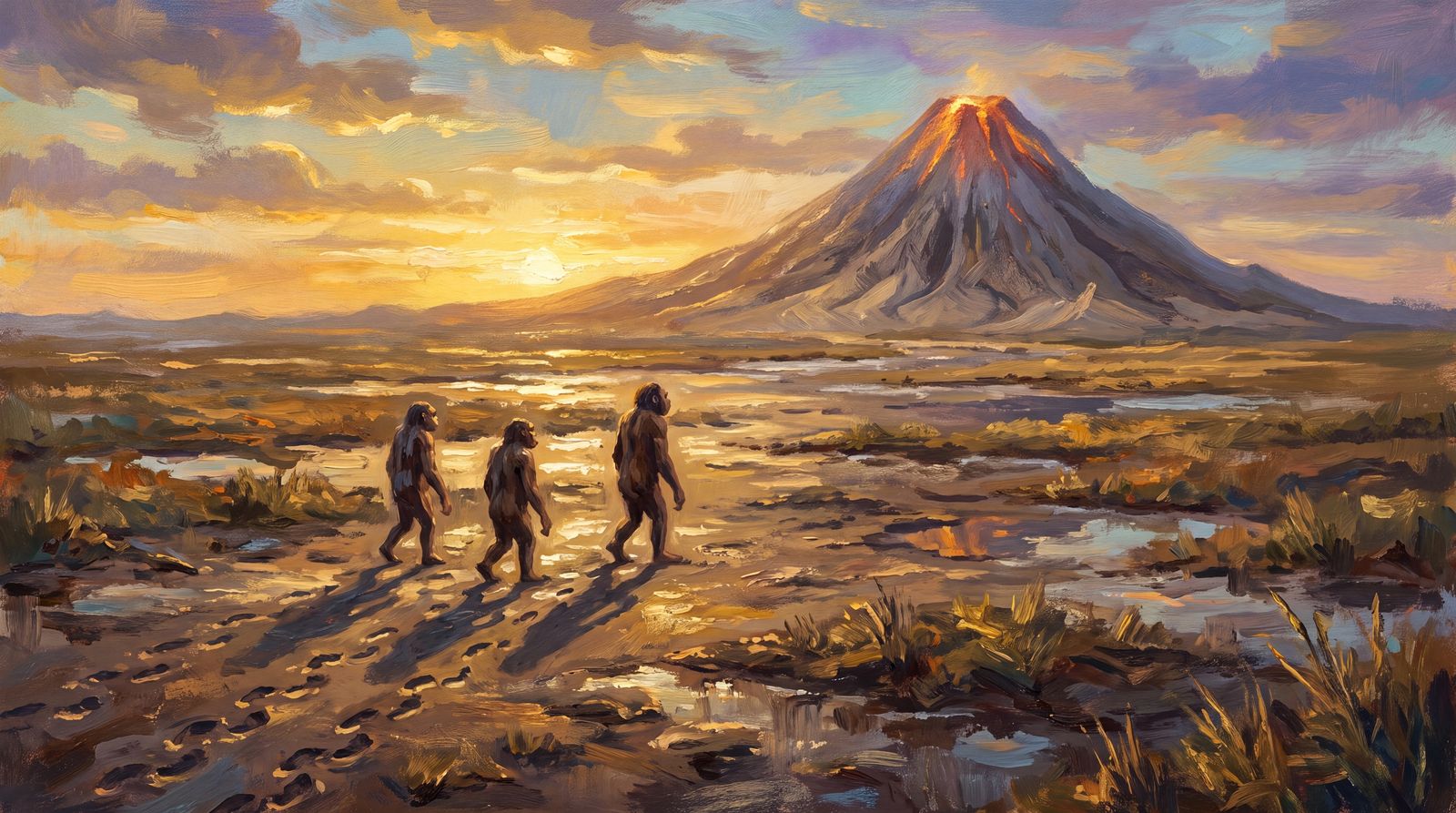
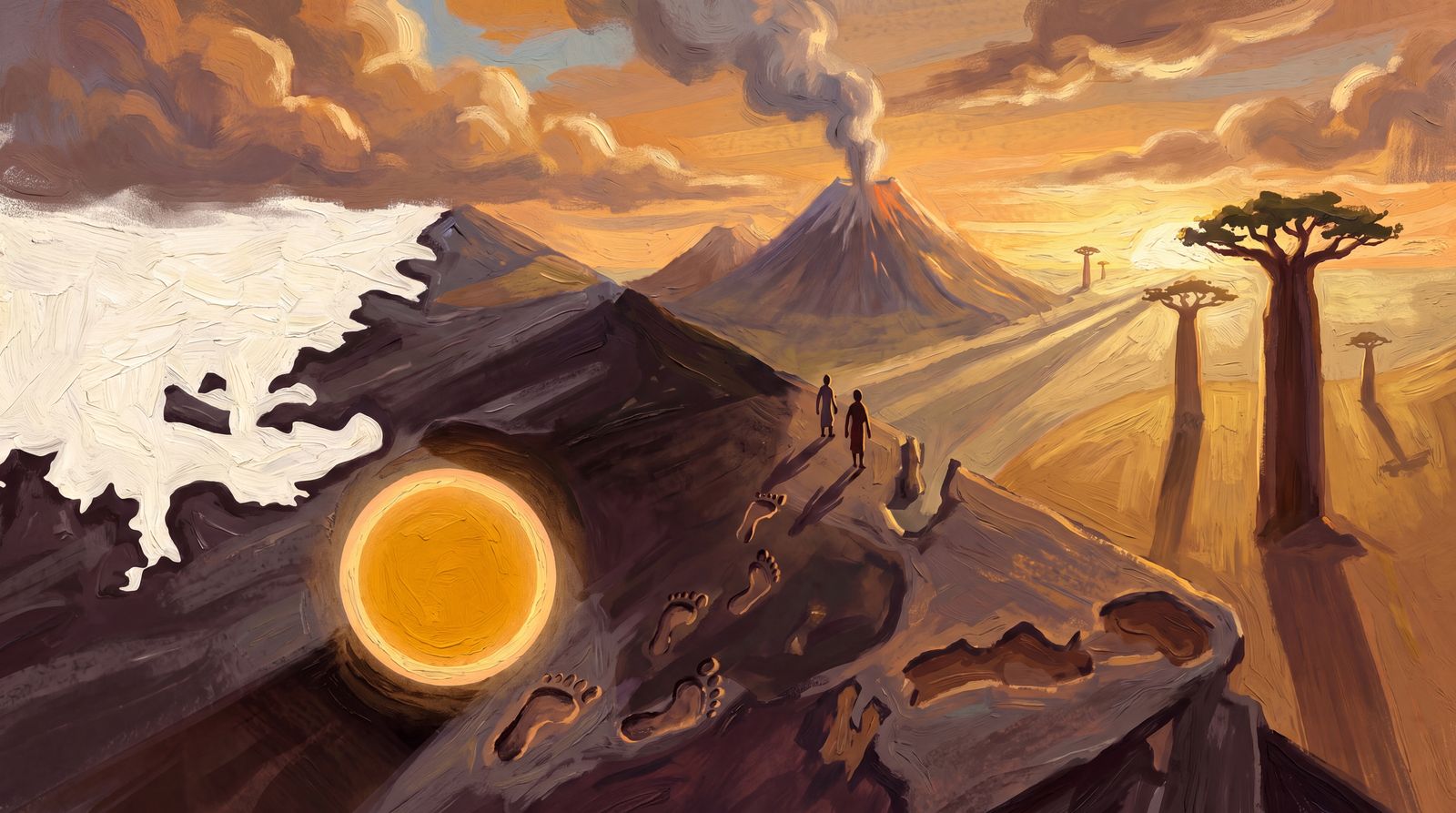
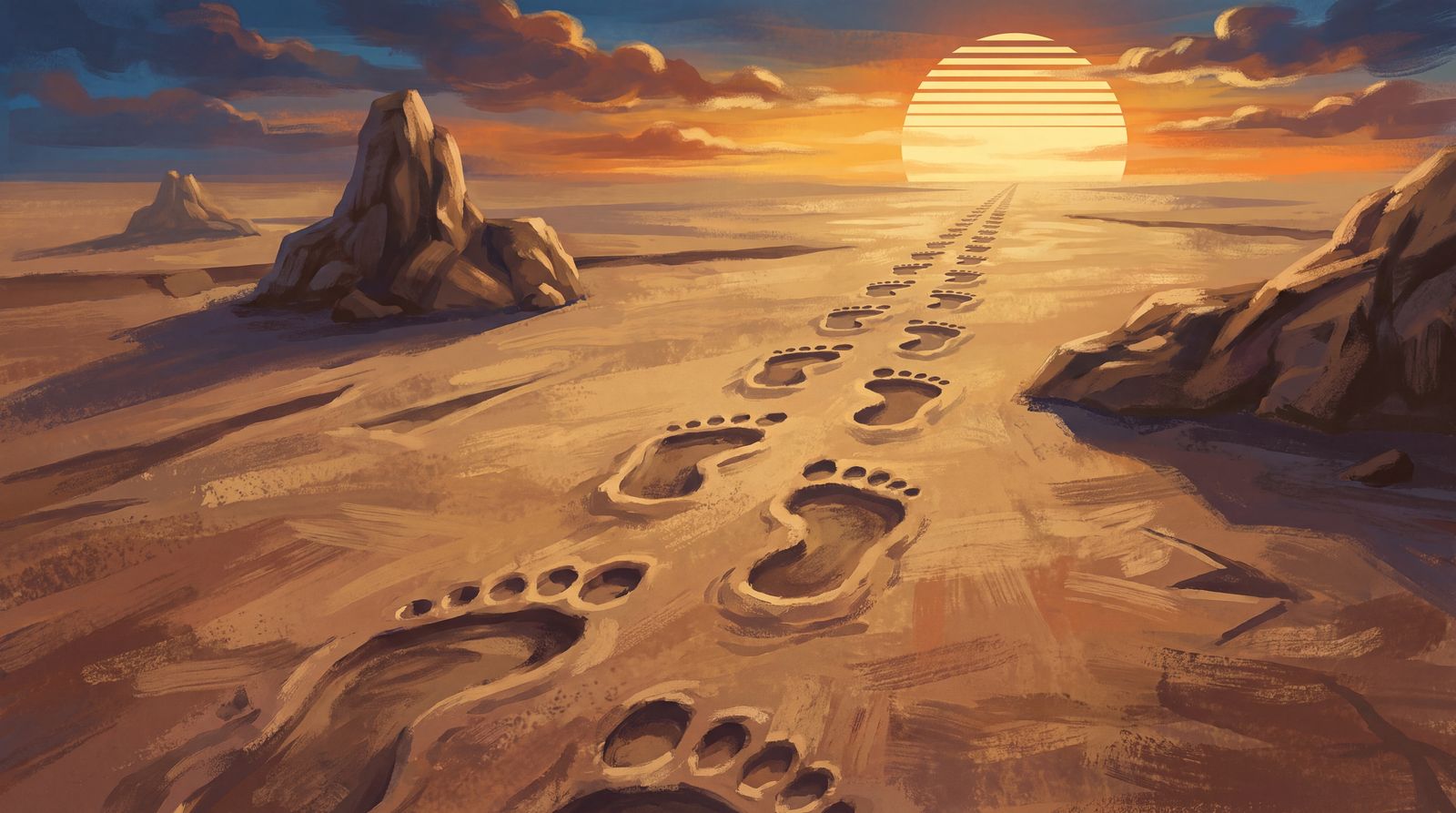
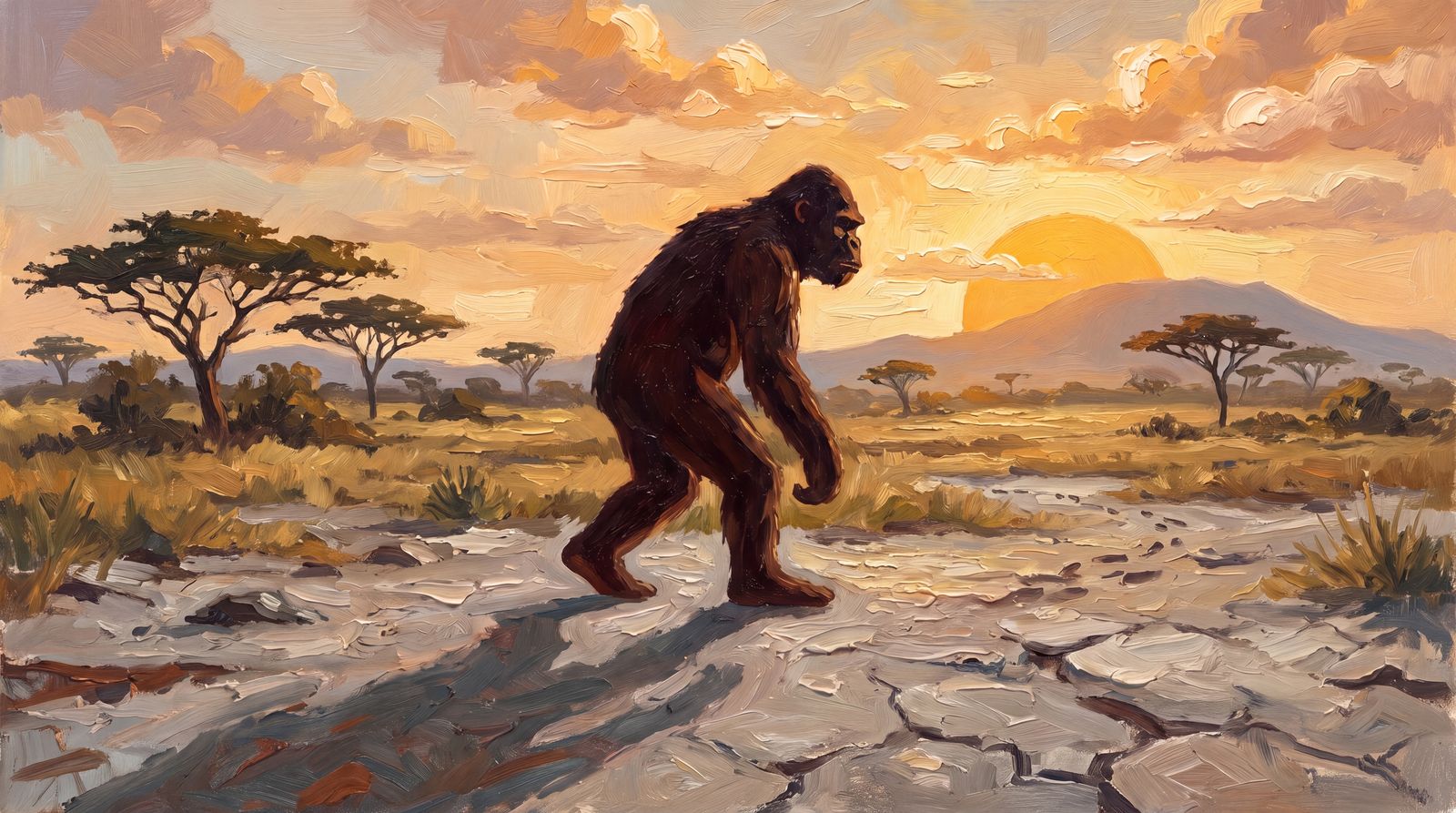
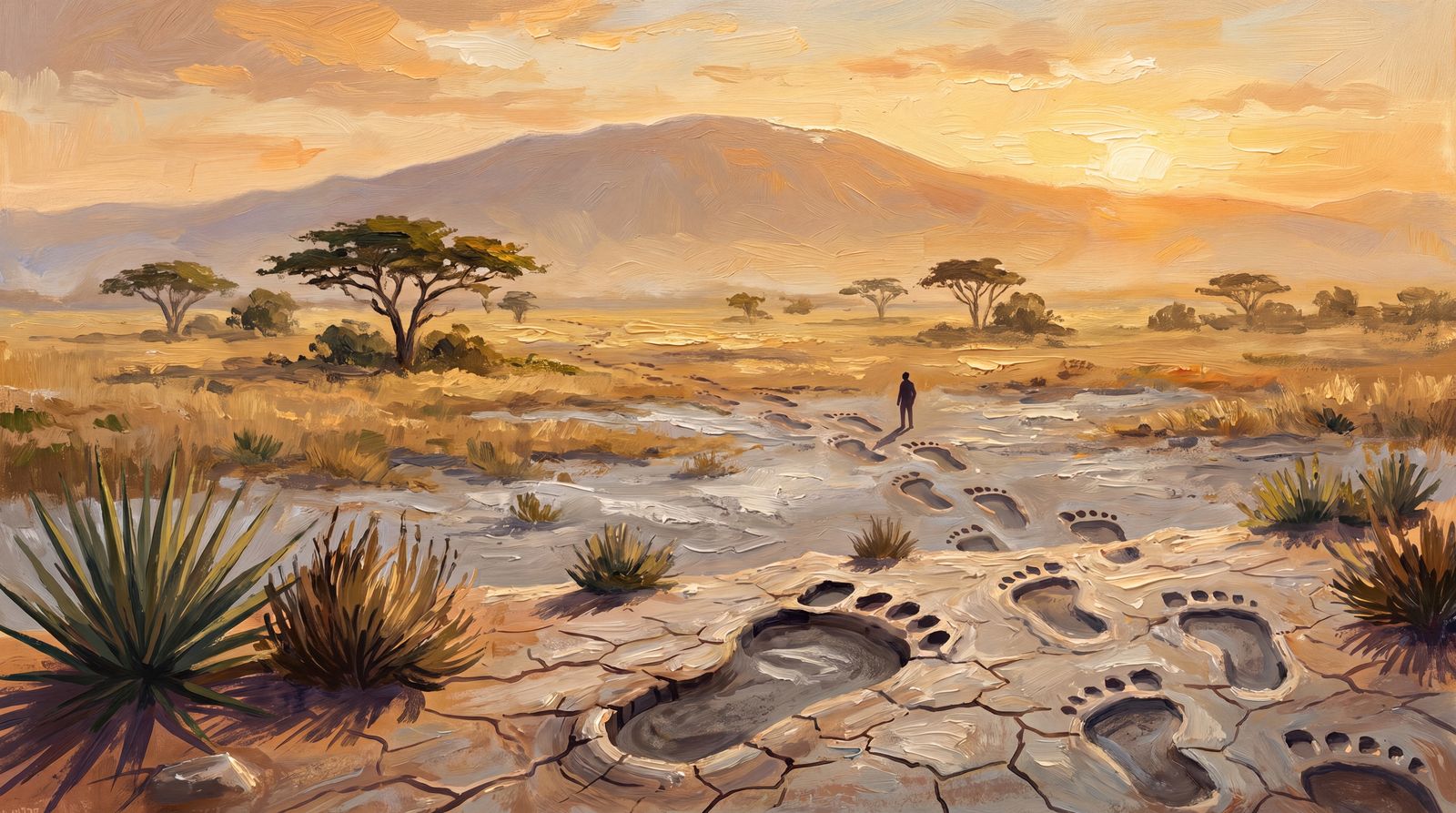
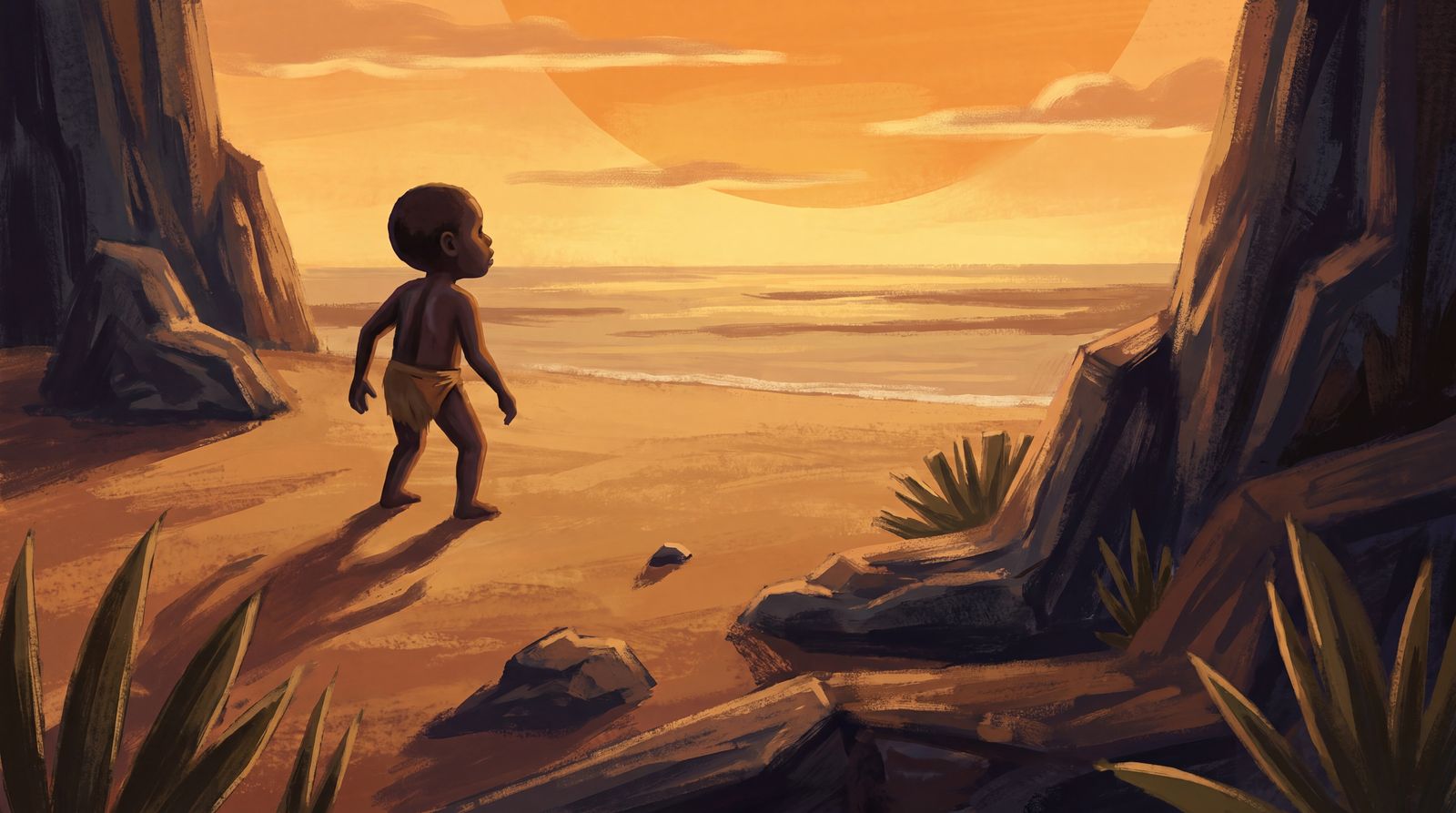
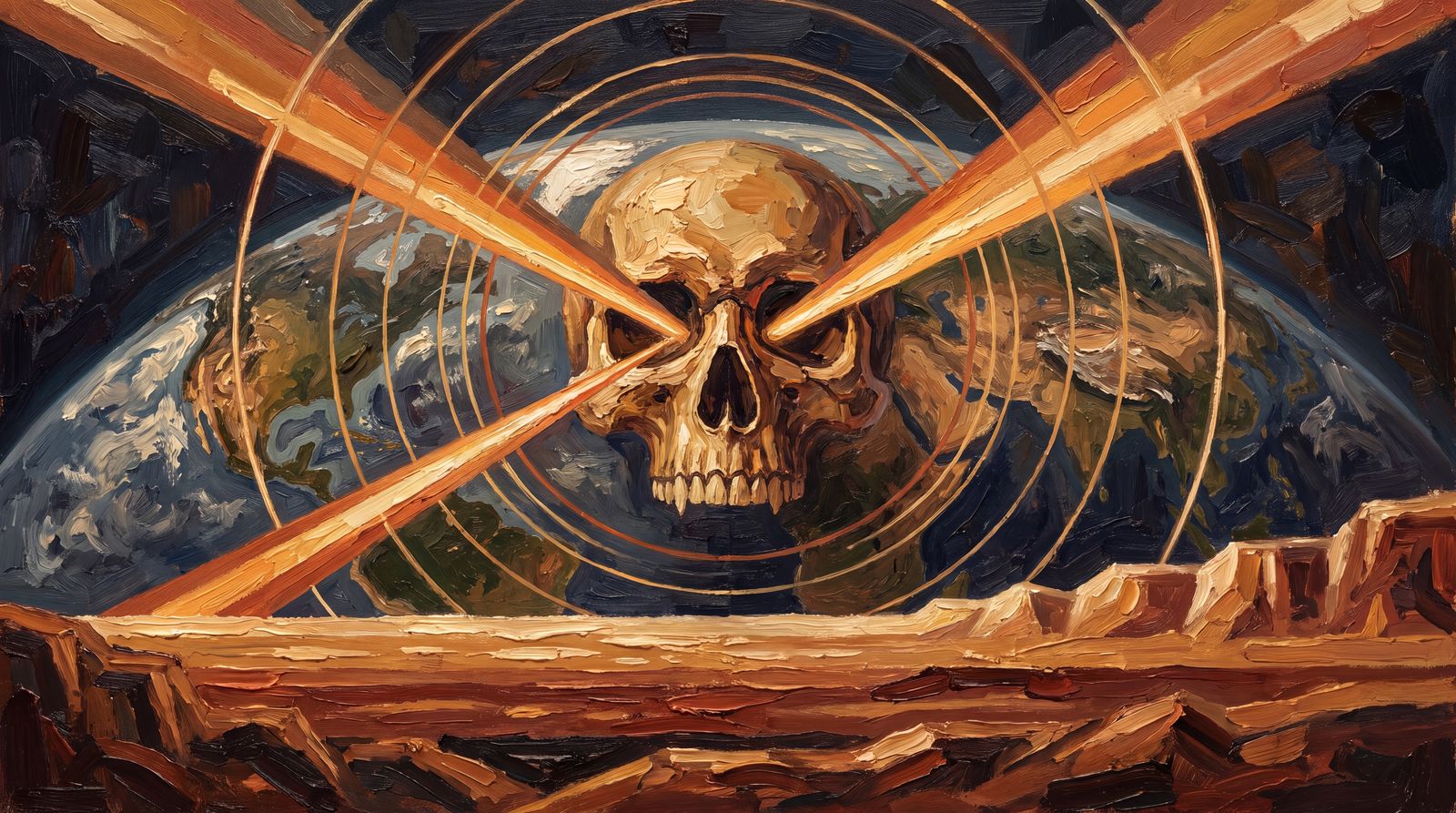
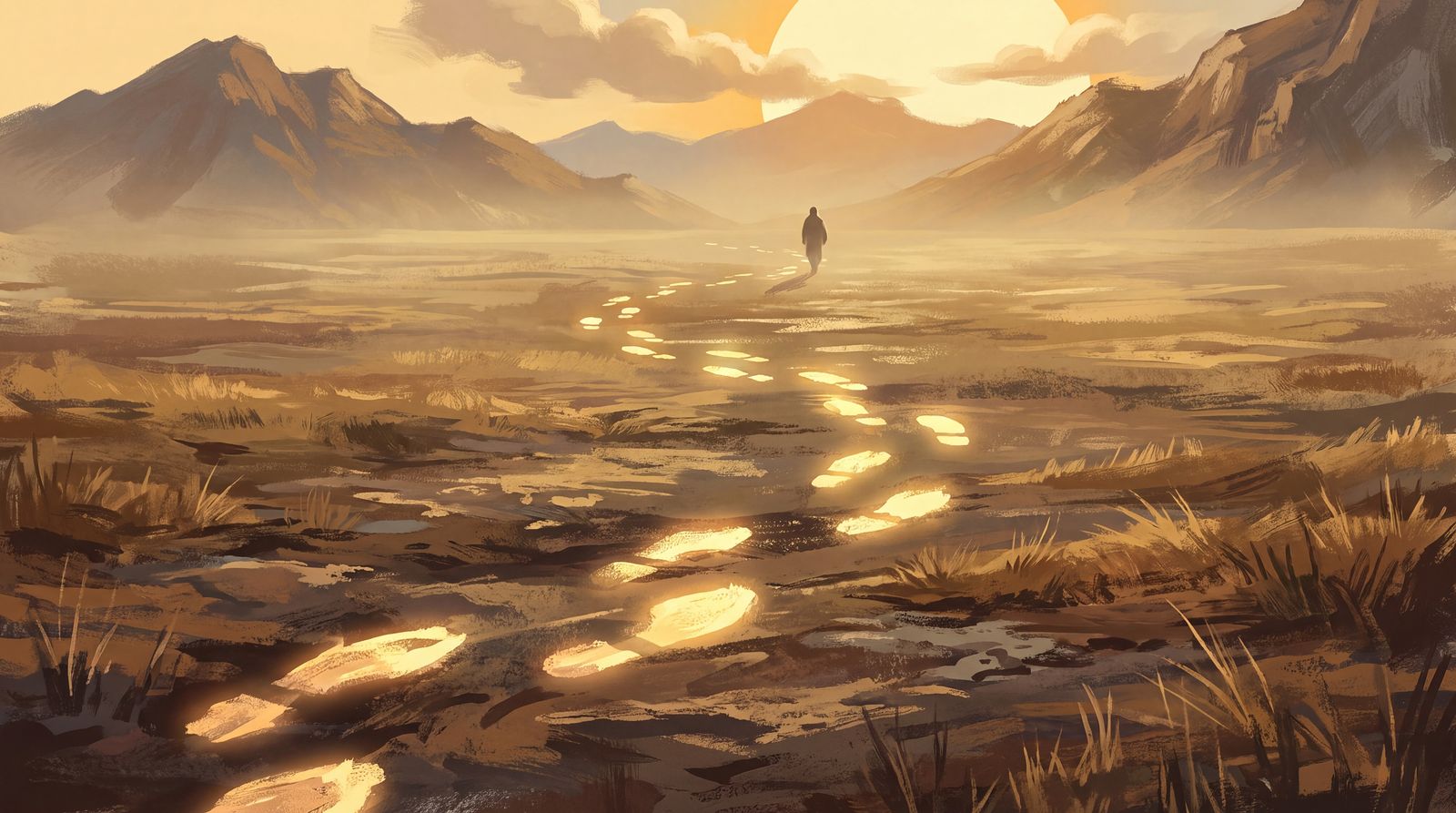
Around three and a half million years ago, three creatures walked across a plain of wet volcanic ash in what is now northern Tanzania. Their footprints are still there.

This is Dunia Docs. Four chapters, one story. This is where humanity began.

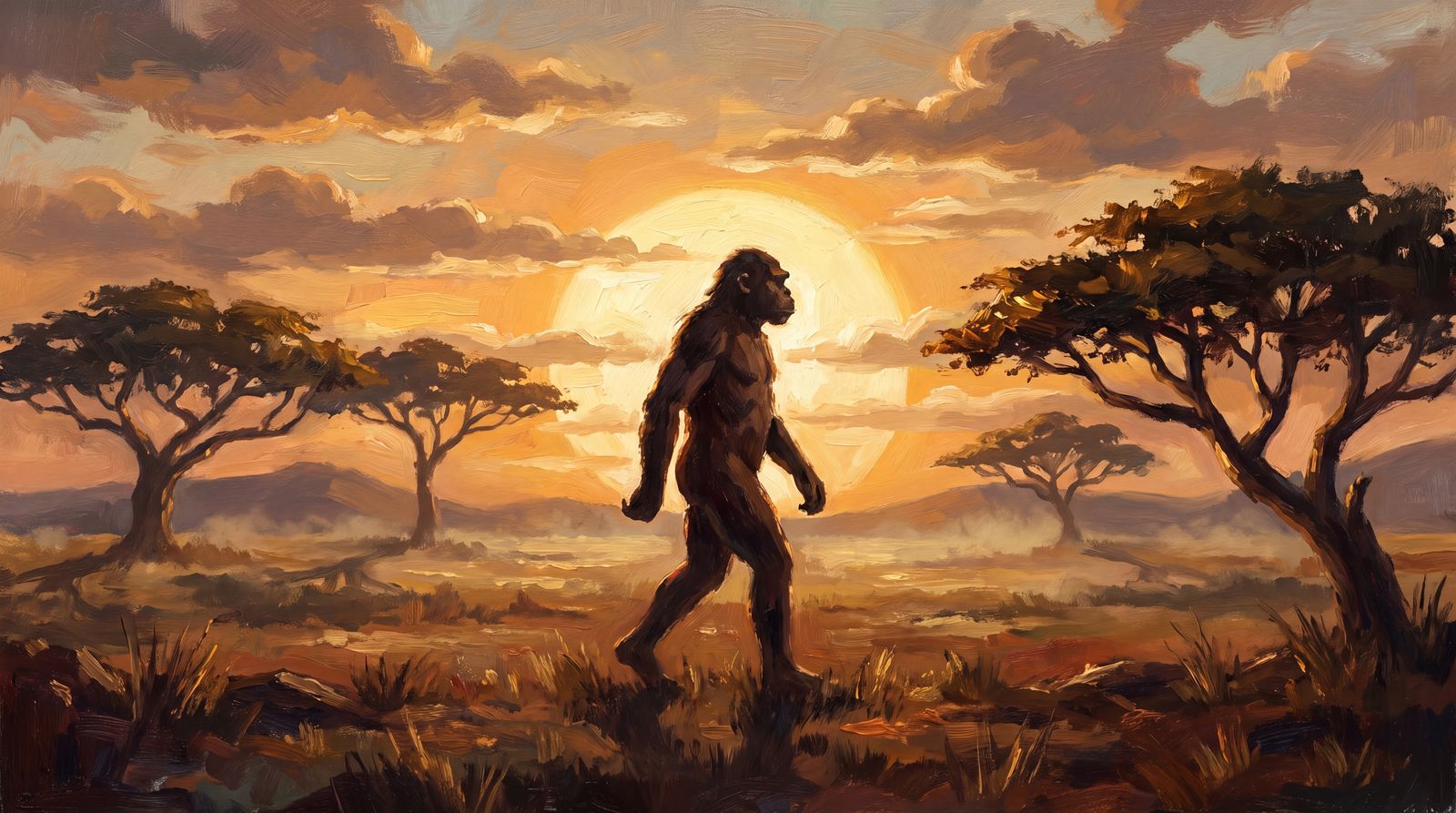
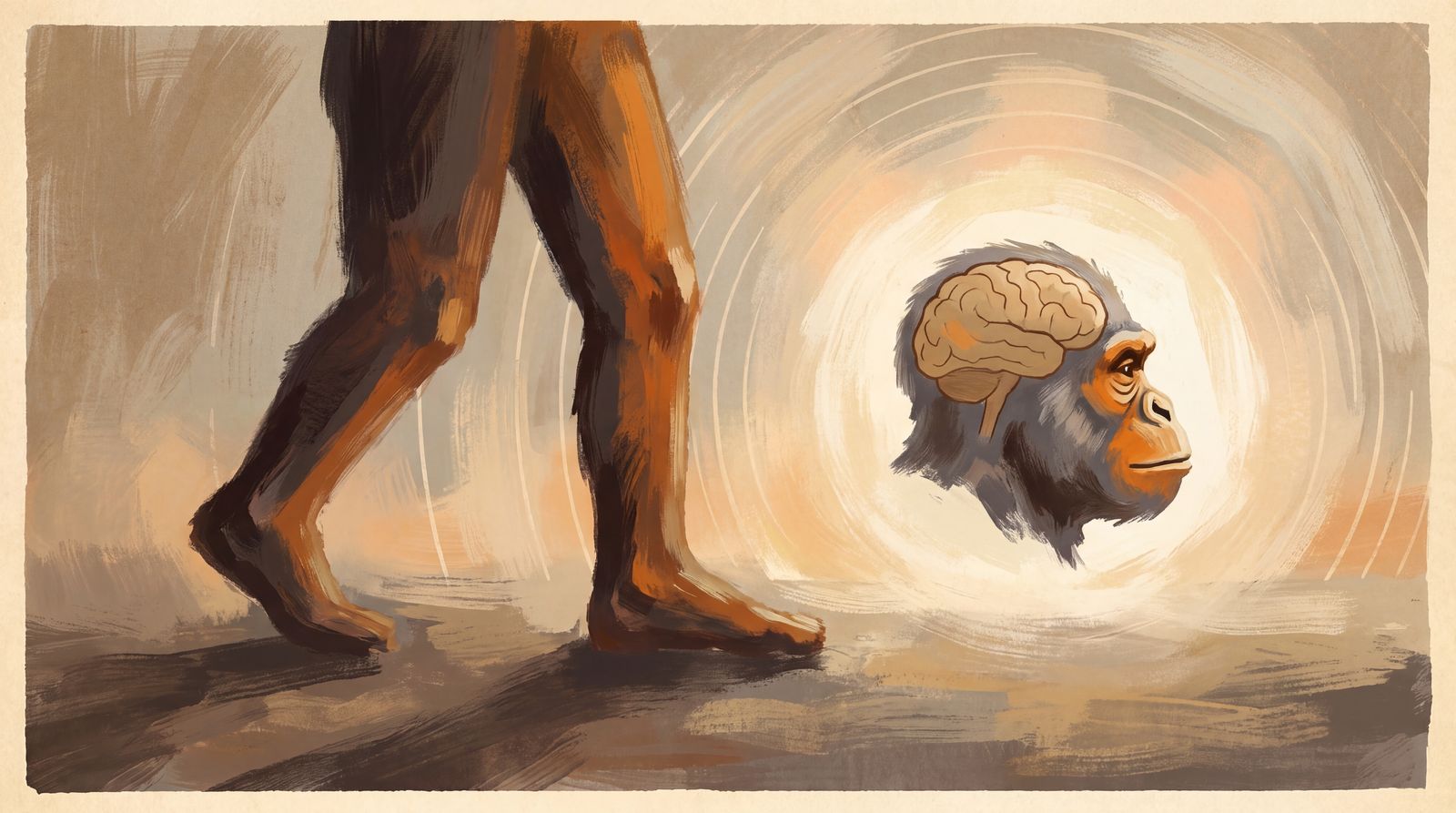
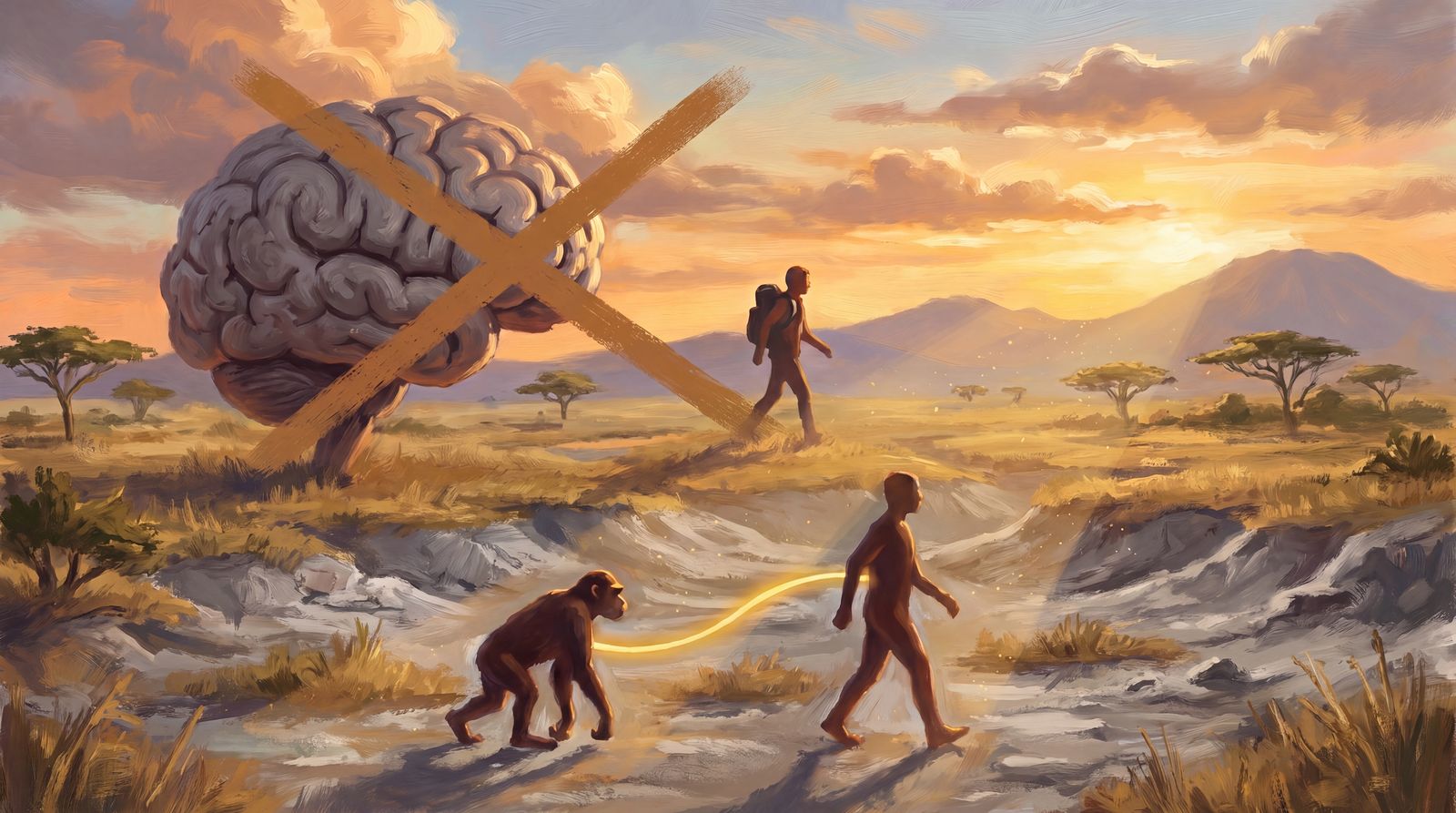
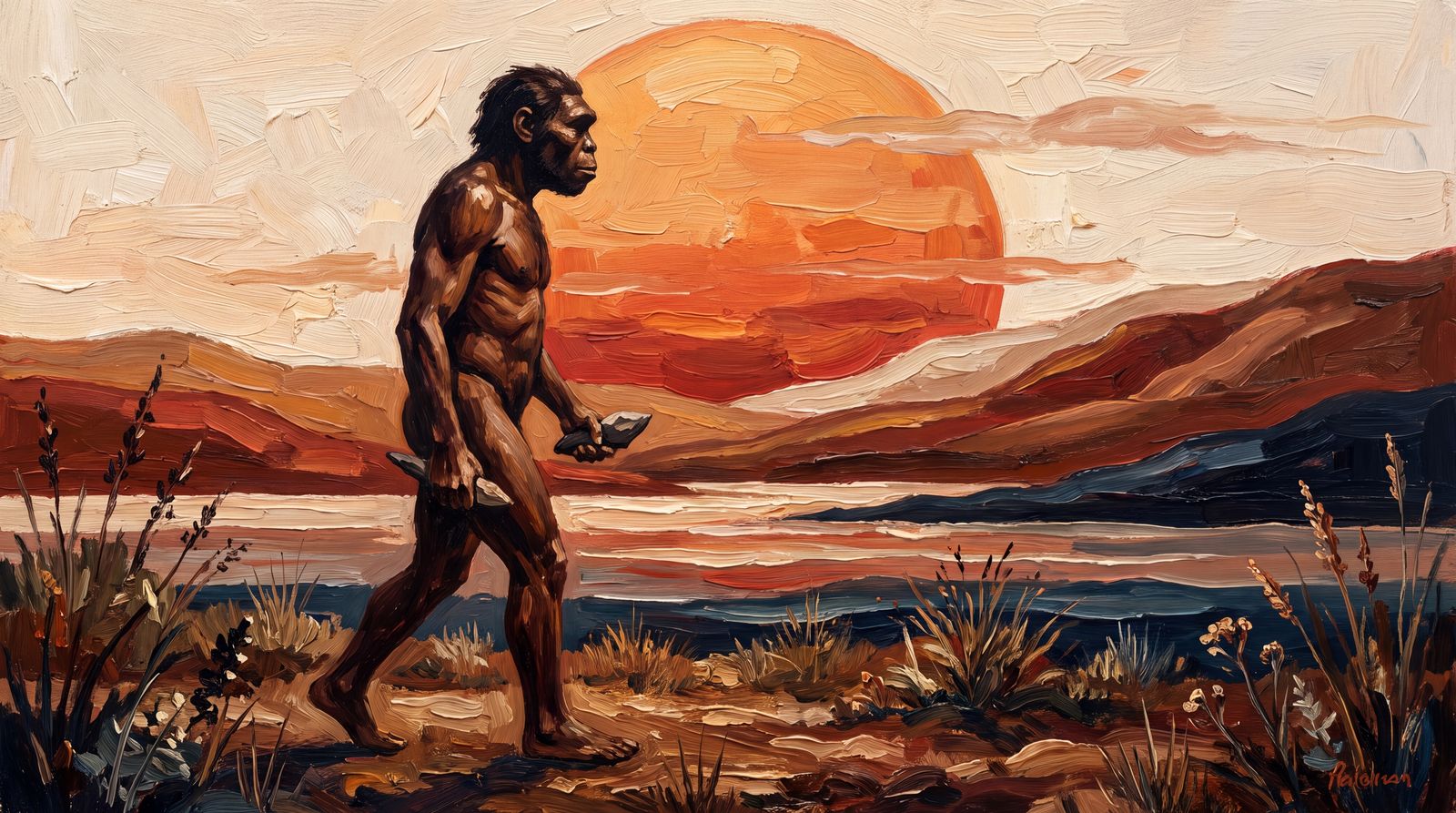
They were not human. Their brains were barely bigger than a chimpanzee's. But they walked upright, on two legs, just like you.

These are the oldest clear footprints of our family ever found. And they rewrote the story of how we became human.

This is Laetoli, on the southern edge of the Serengeti.

A quiet, dusty place that holds one of the most precious fossils on Earth. Not a bone, but a walk.

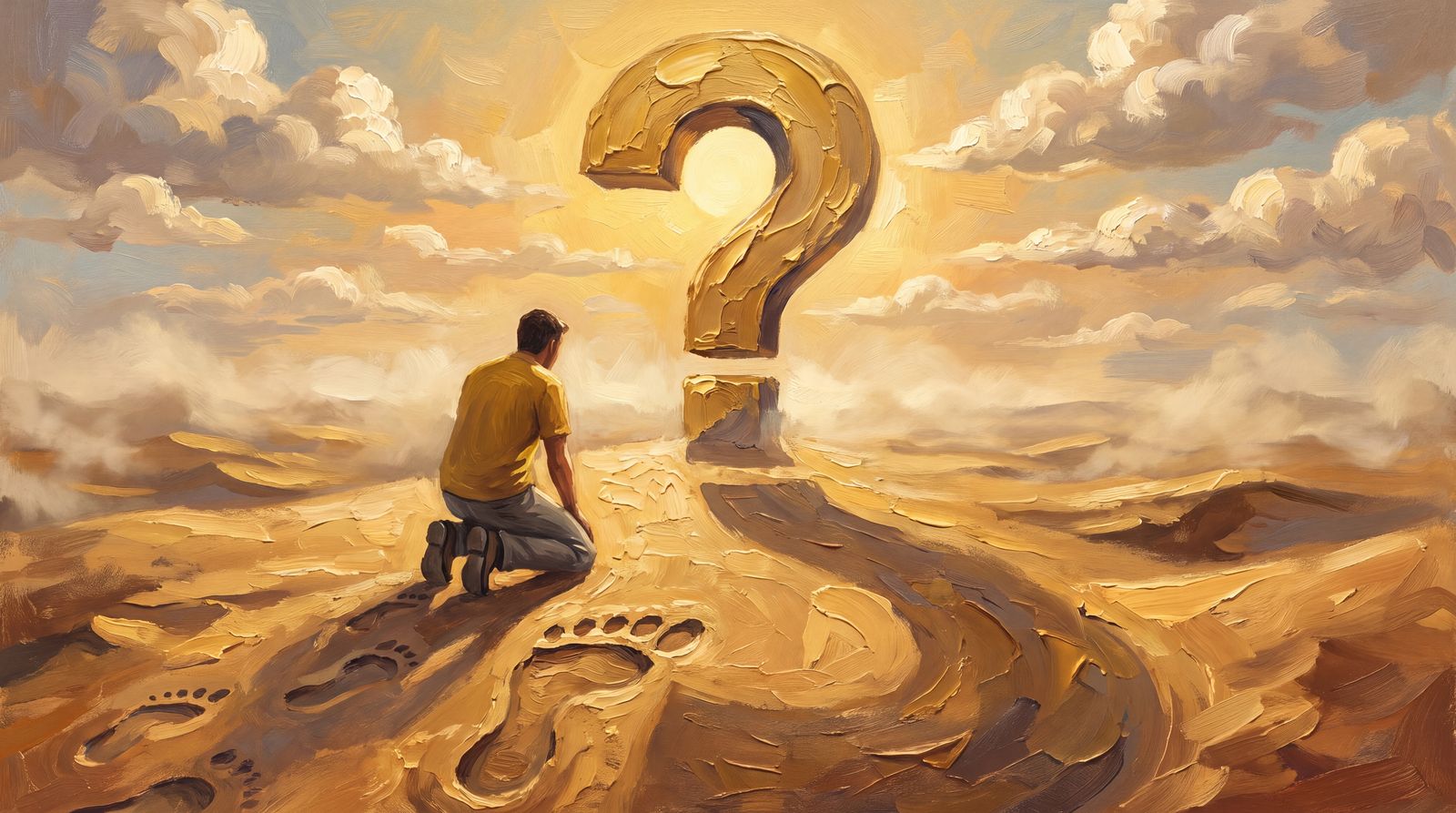
So who left these prints? And why do they matter so much?

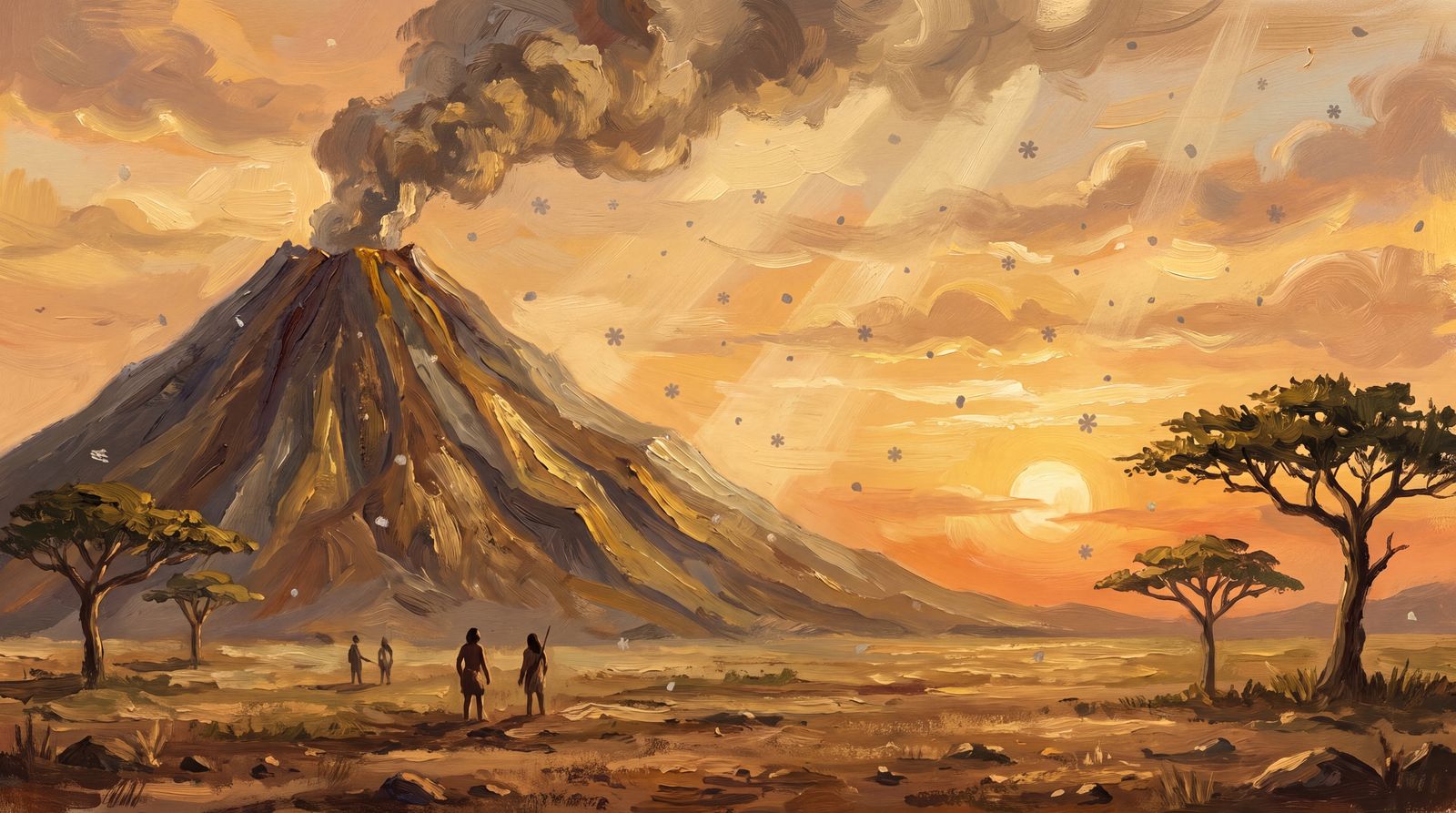
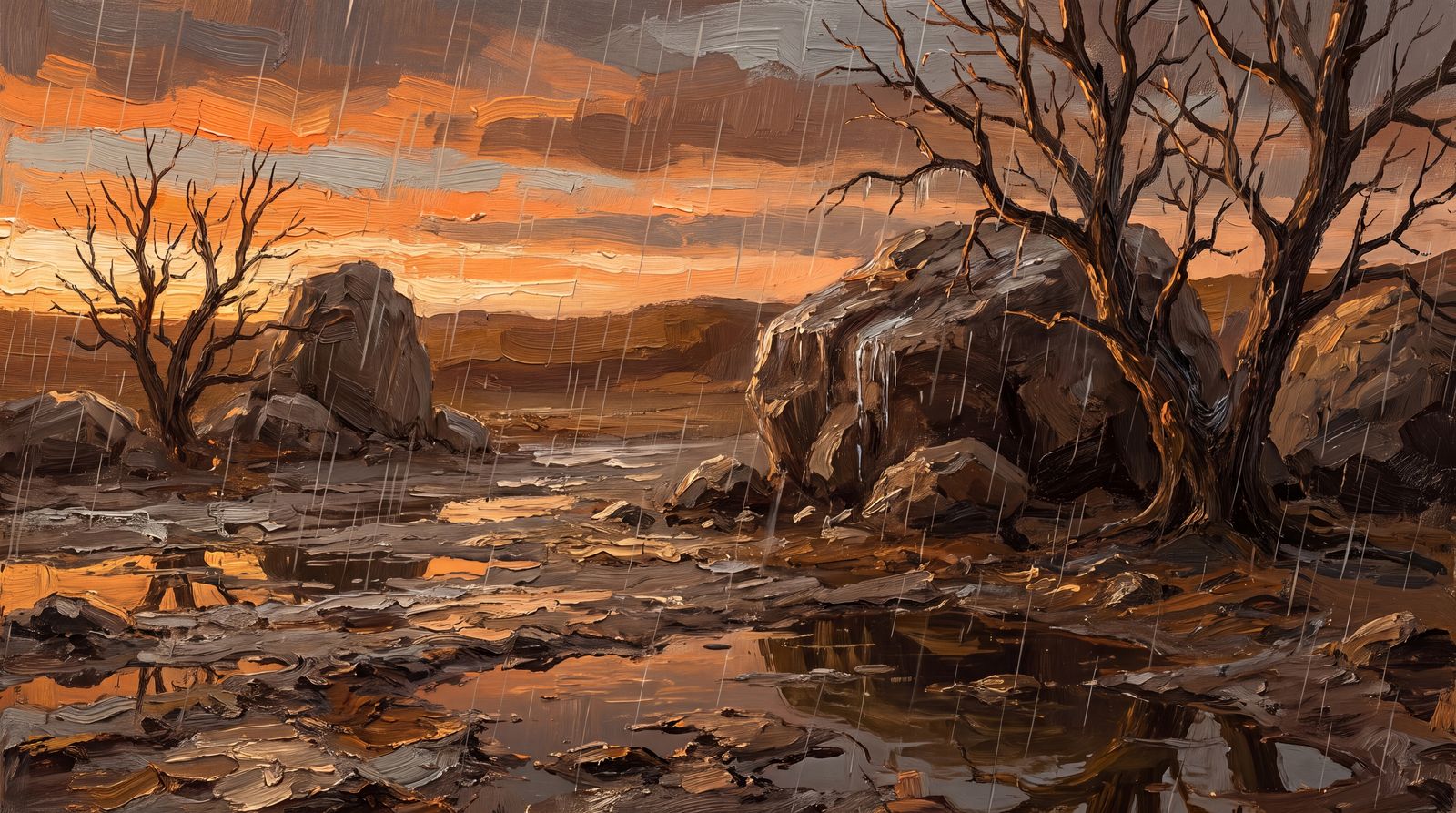
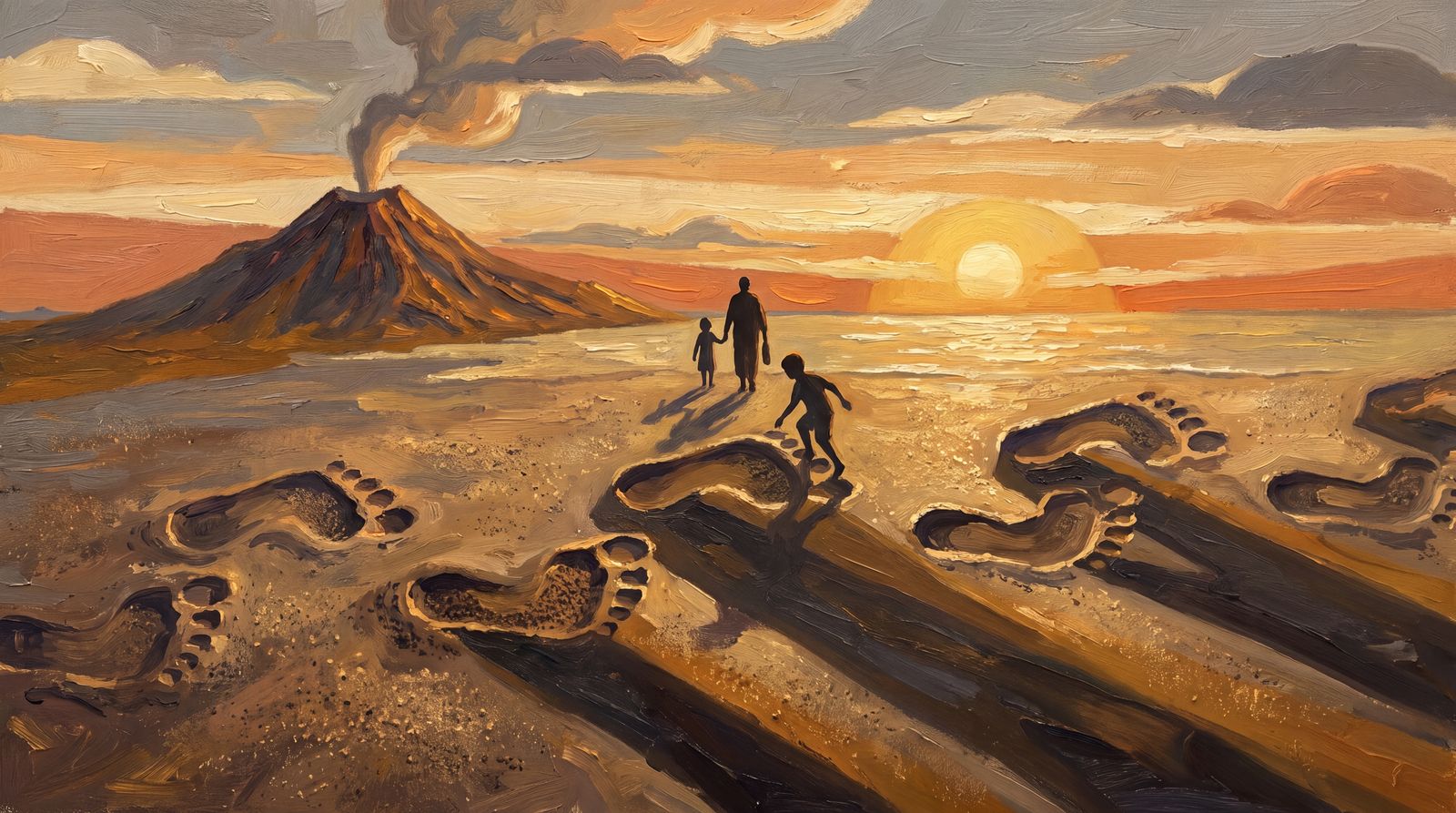
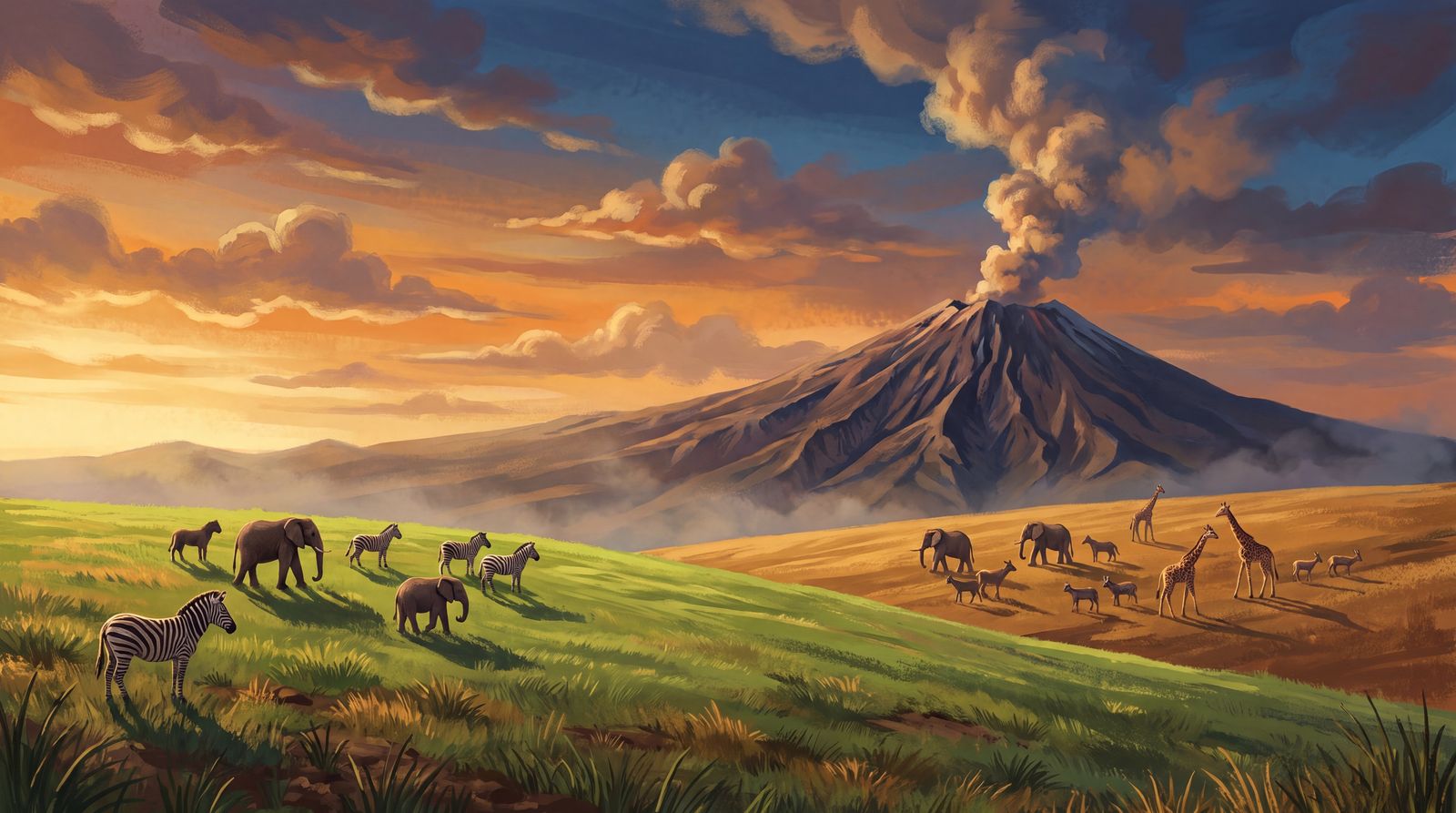
It began with a volcano. Ash from a nearby eruption dusted the plains, fine and powdery.

Then it rained, and the ash turned to a soft, wet paste, like fresh cement.

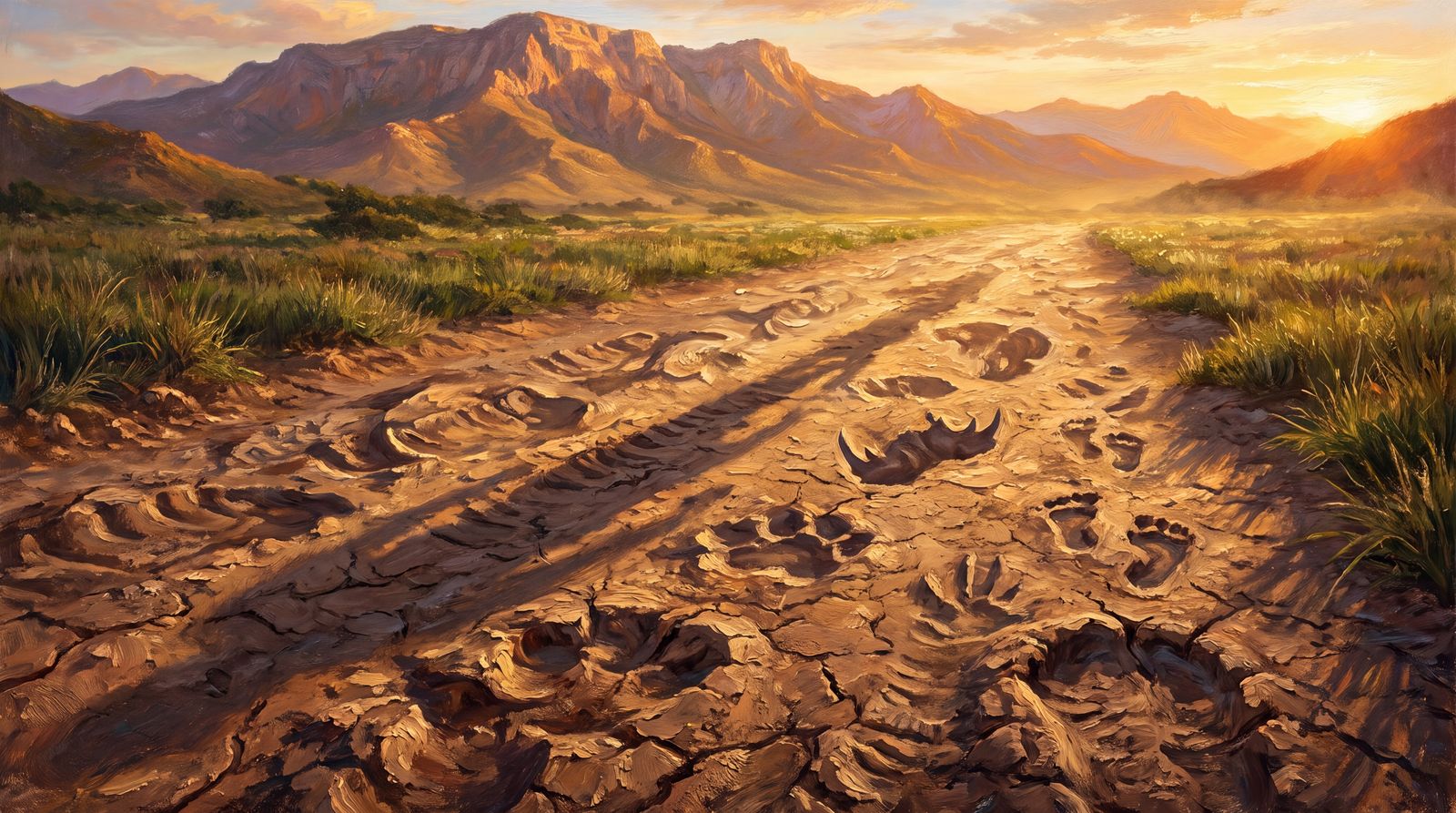
Animals walked across it and left their tracks. Birds, ancient elephants, rhinos, hares. And then, three of our own ancestors.

The sun baked the ash hard. More ash buried it. And there it waited, for three and a half million years.

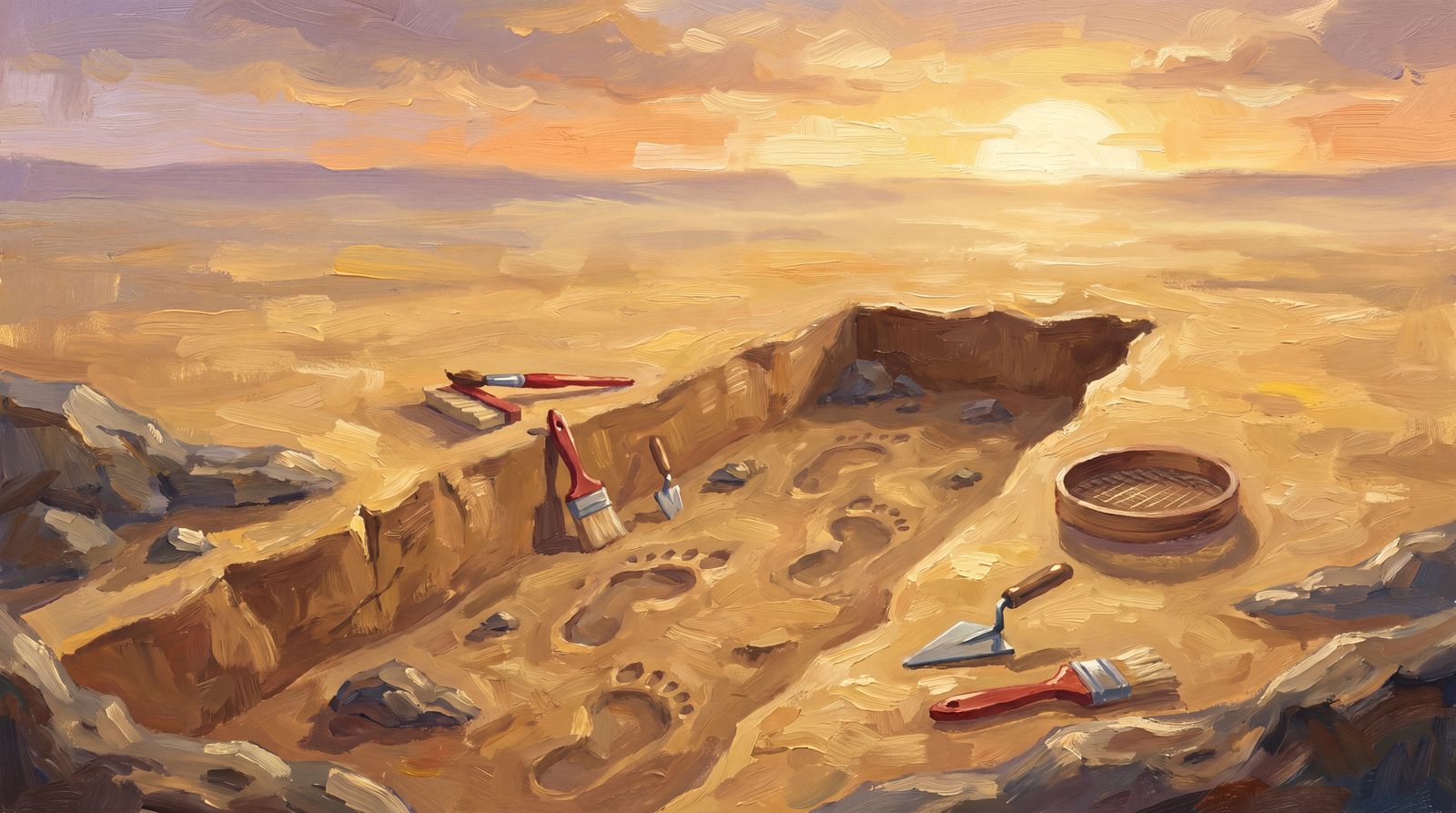
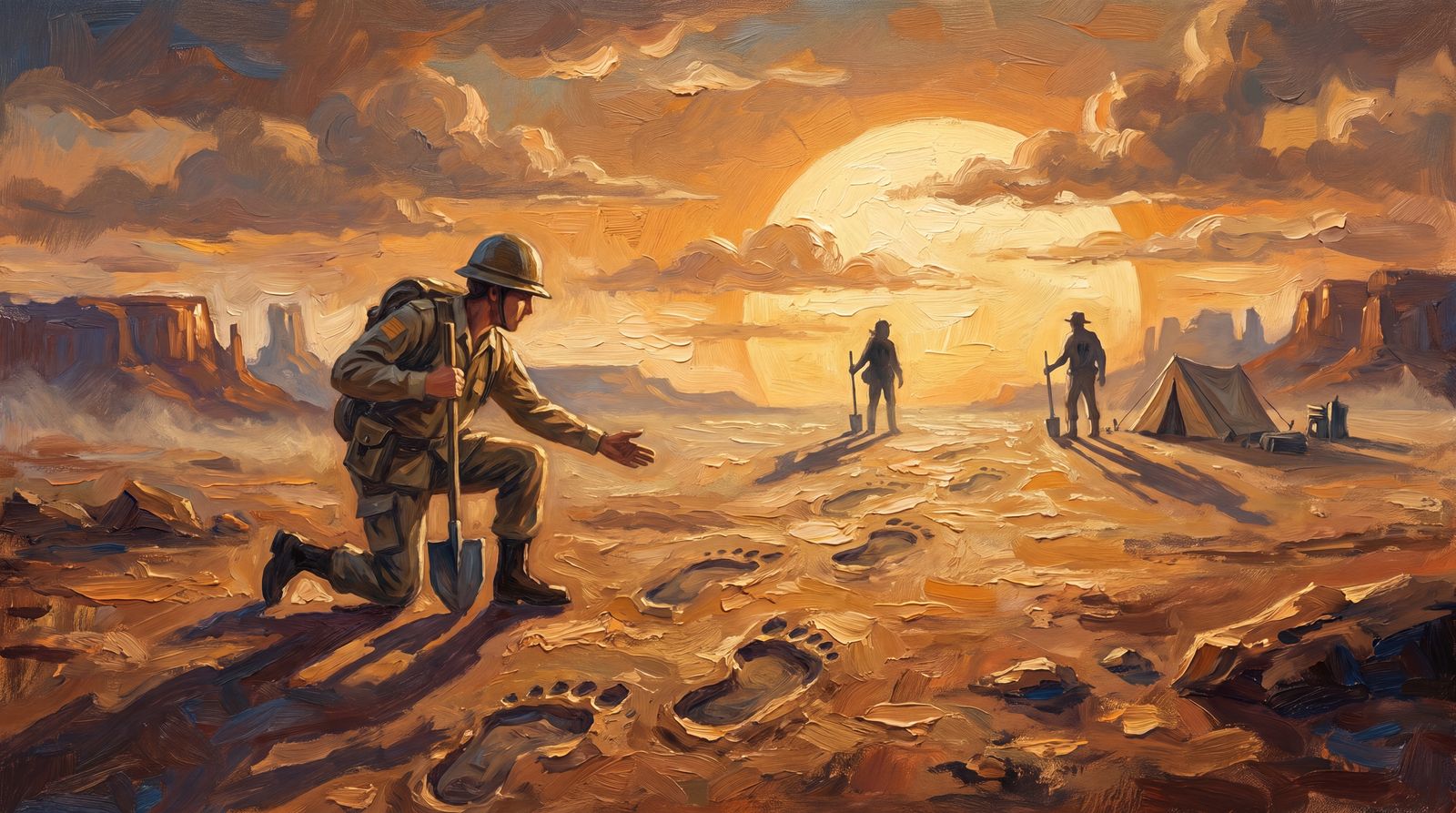
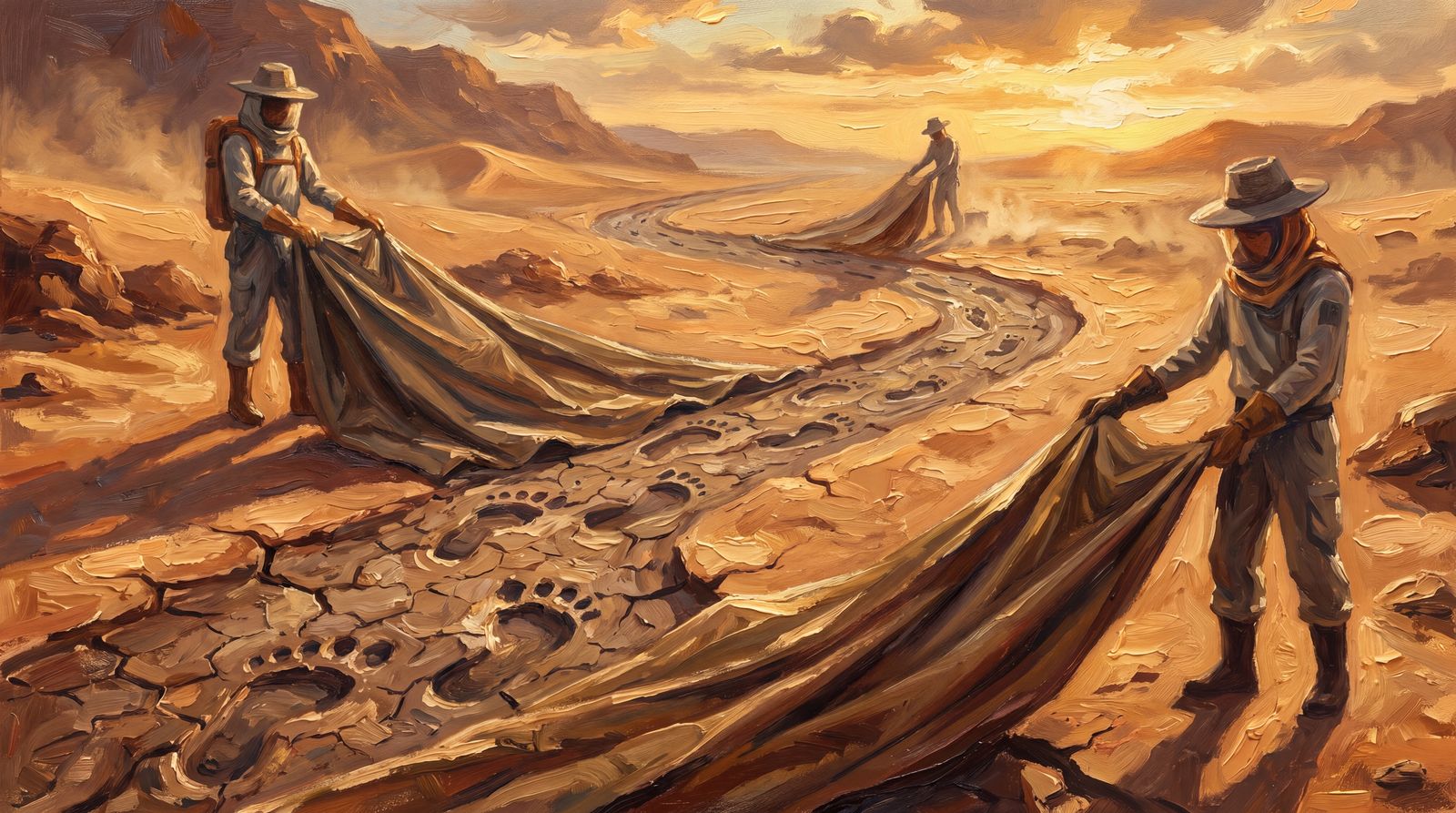
In 1978, a team led by the famous fossil-hunter Mary Leakey uncovered it. One of her colleagues literally stumbled onto the trail.

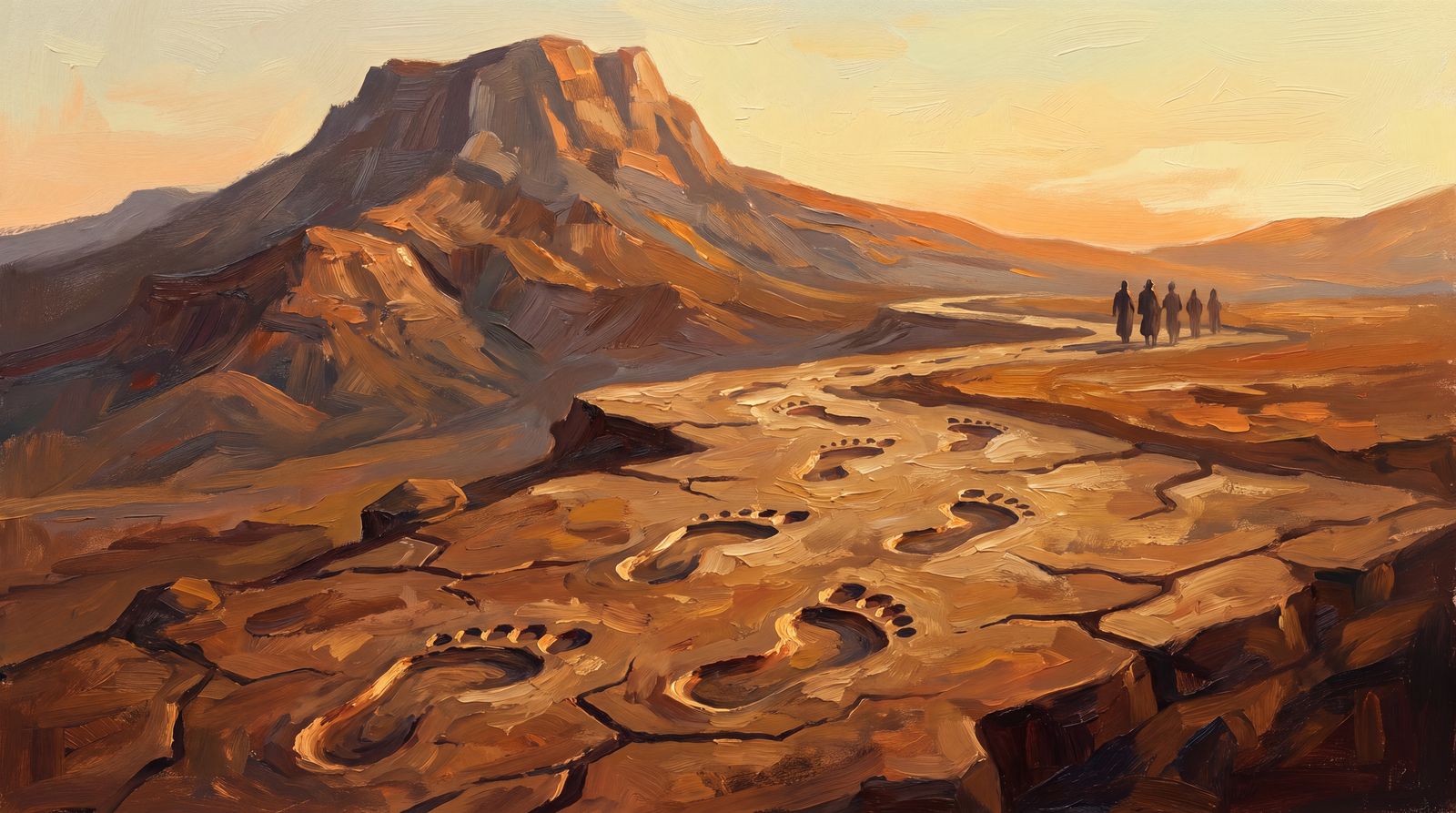
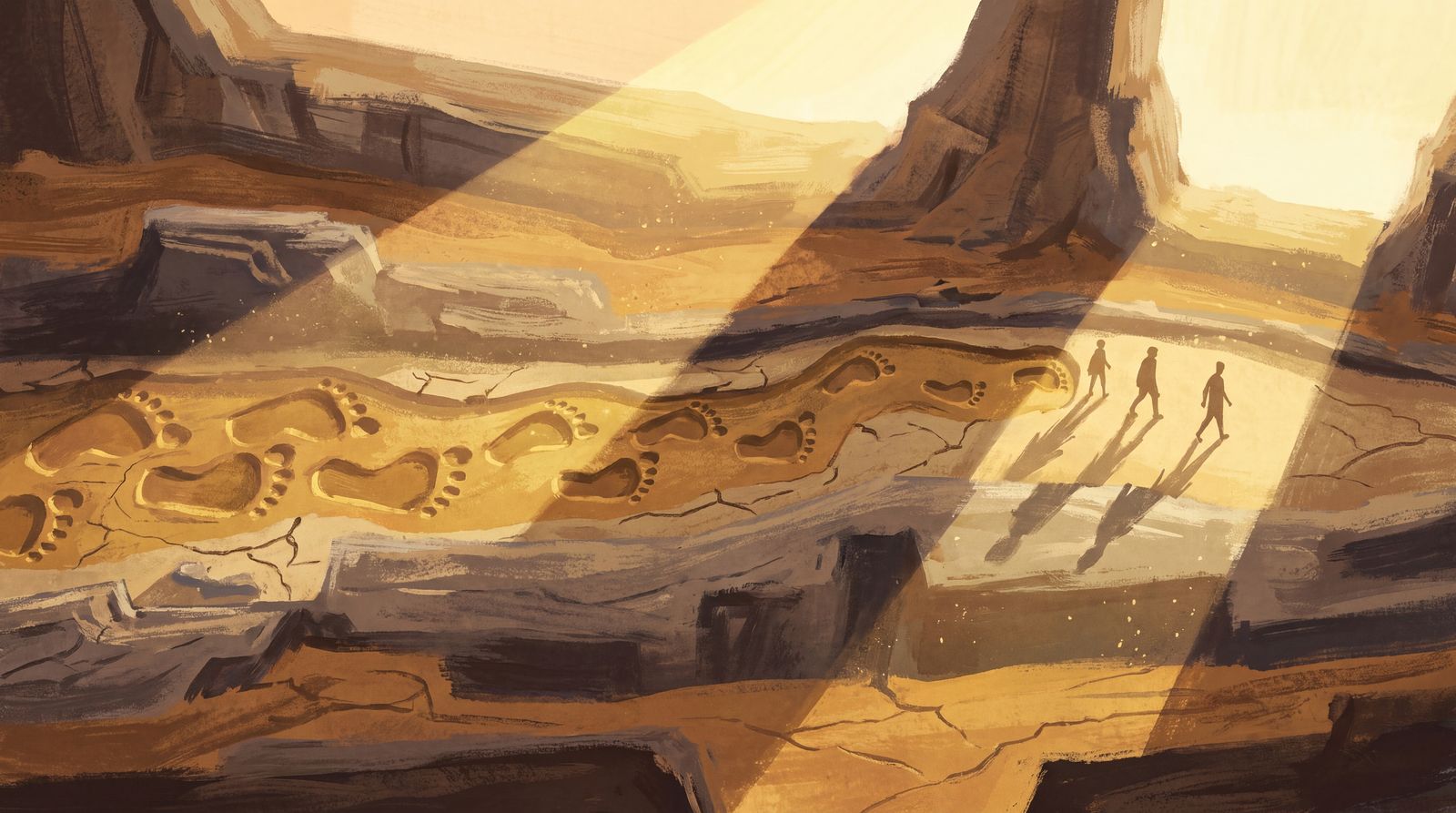
What they found was a trackway almost twenty-seven metres long, with around seventy footprints.

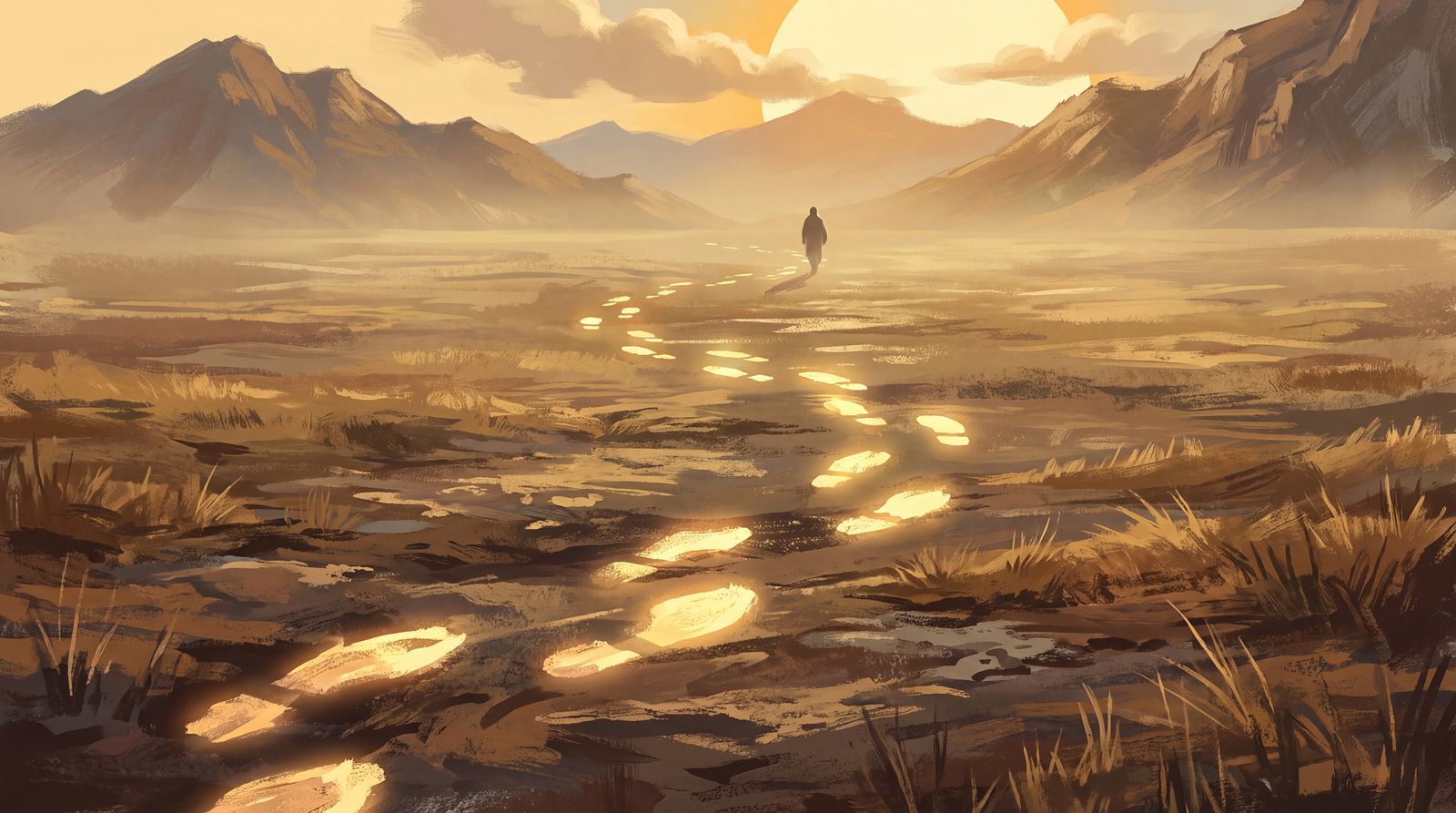
Made by three individuals, walking together in the same direction. A larger one, a smaller one beside it, and a third stepping carefully into the big one's prints.

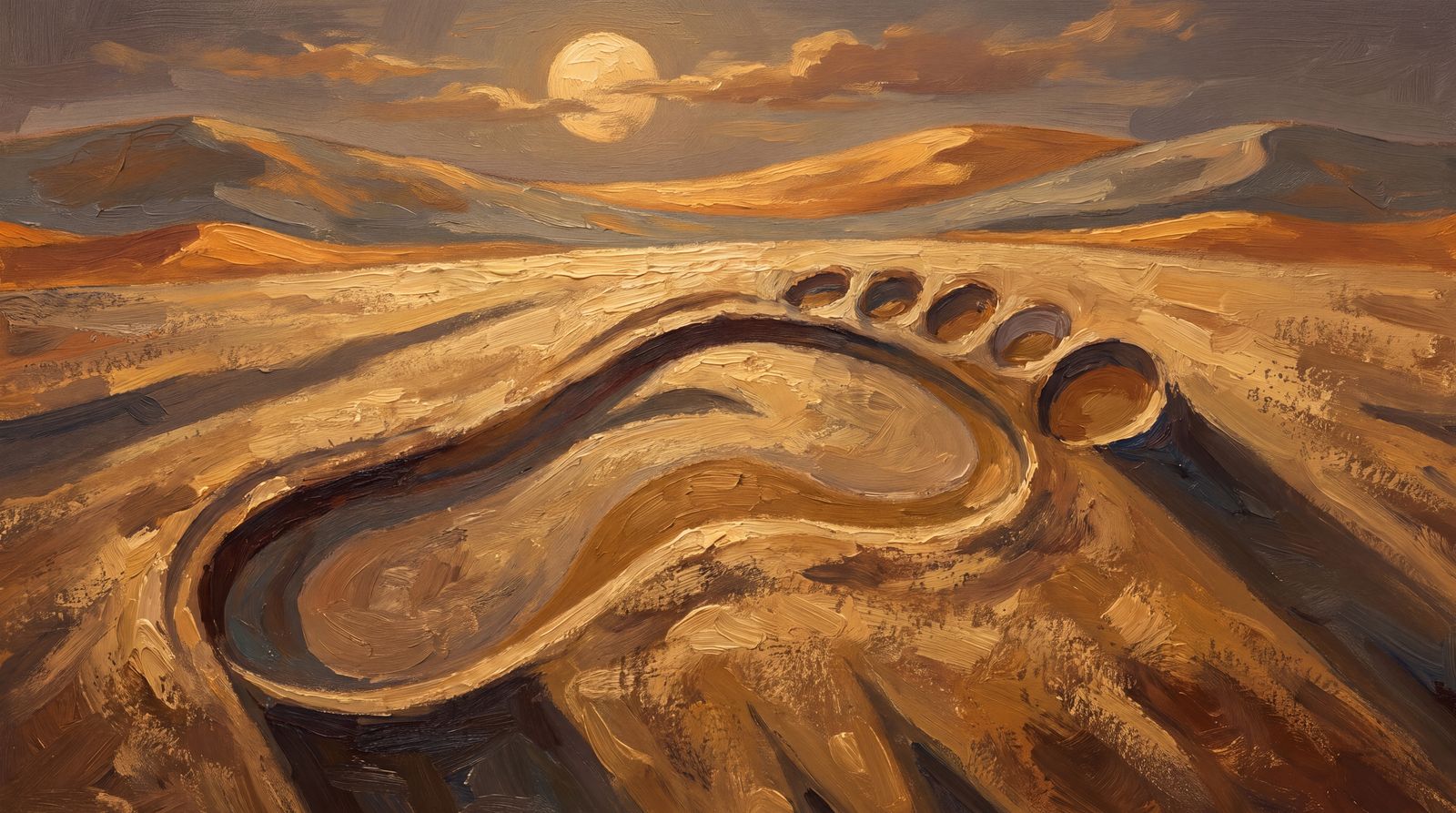
The prints have a rounded heel, an arch, and a big toe in line with the others, pressing off just like a modern human foot.

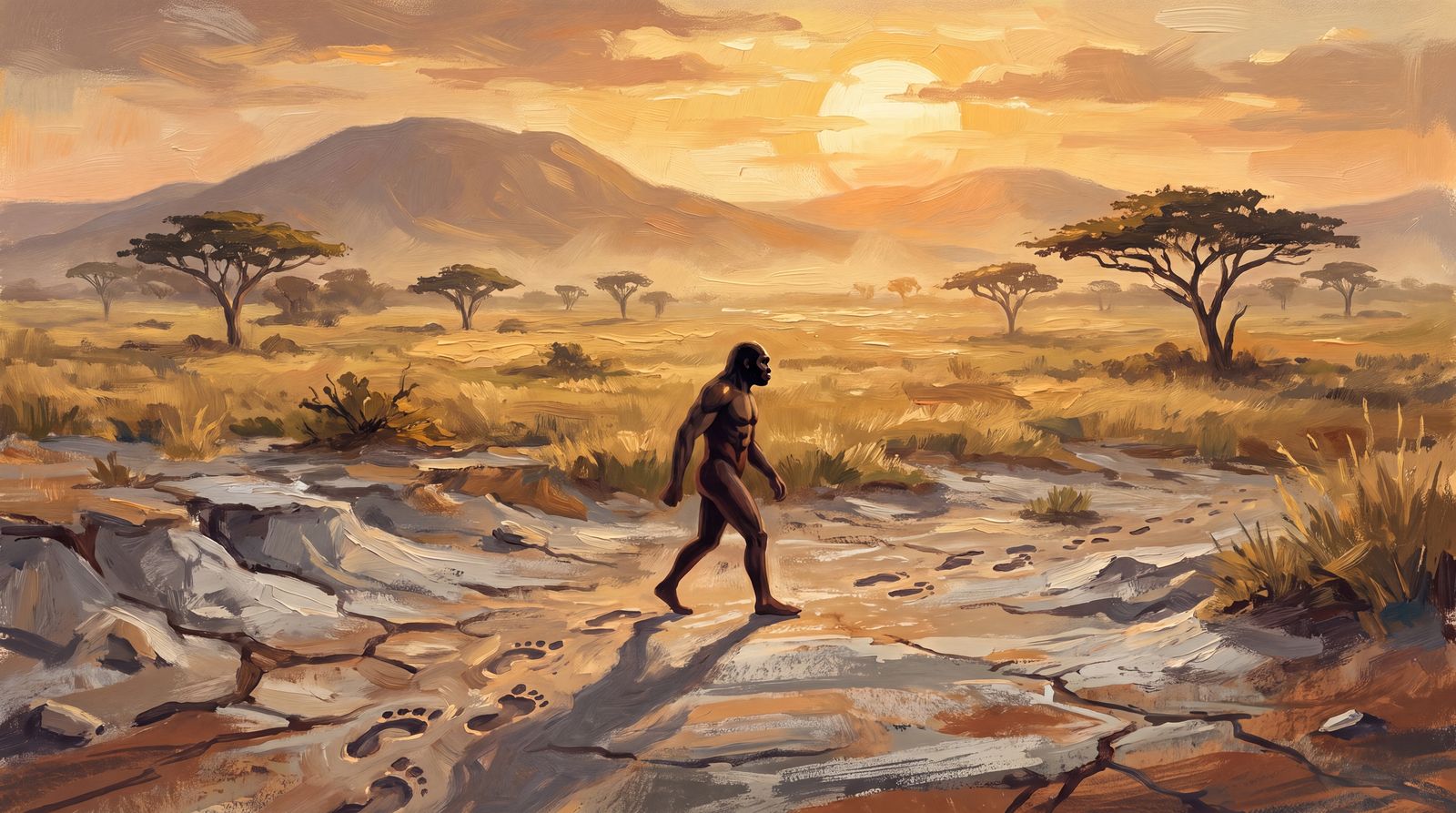
Whoever they were, they were not shuffling, or knuckle-walking. They were striding, upright, and free.

So who were they?

Almost certainly a species called Australopithecus afarensis. The same kind of creature as the famous fossil nicknamed Lucy.

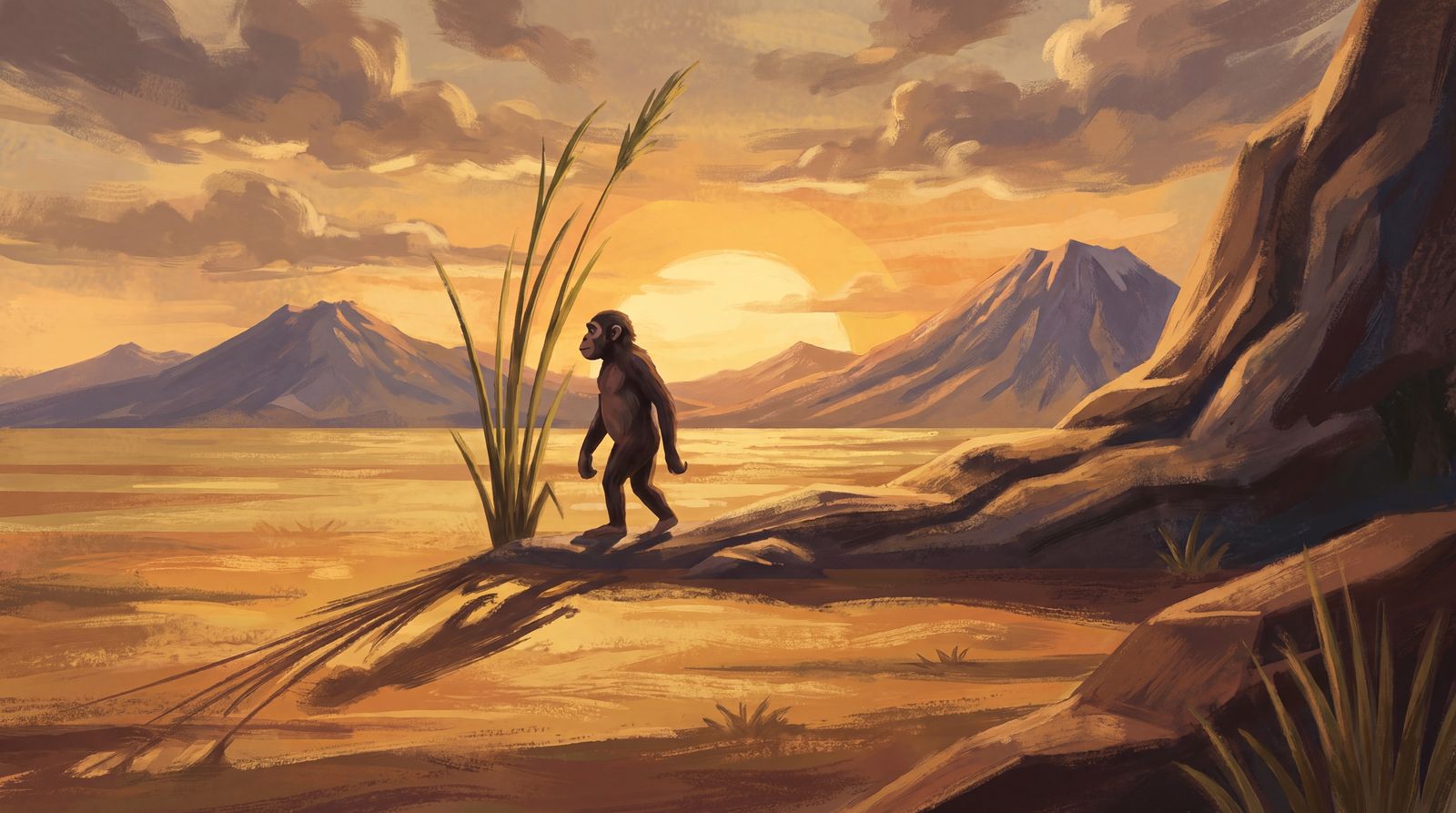
Small. A little over a metre tall. A face still ape-like, a brain still small.

And that is the shock hidden in these footprints.

For a long time, people assumed we grew big brains first, and only started walking upright later.

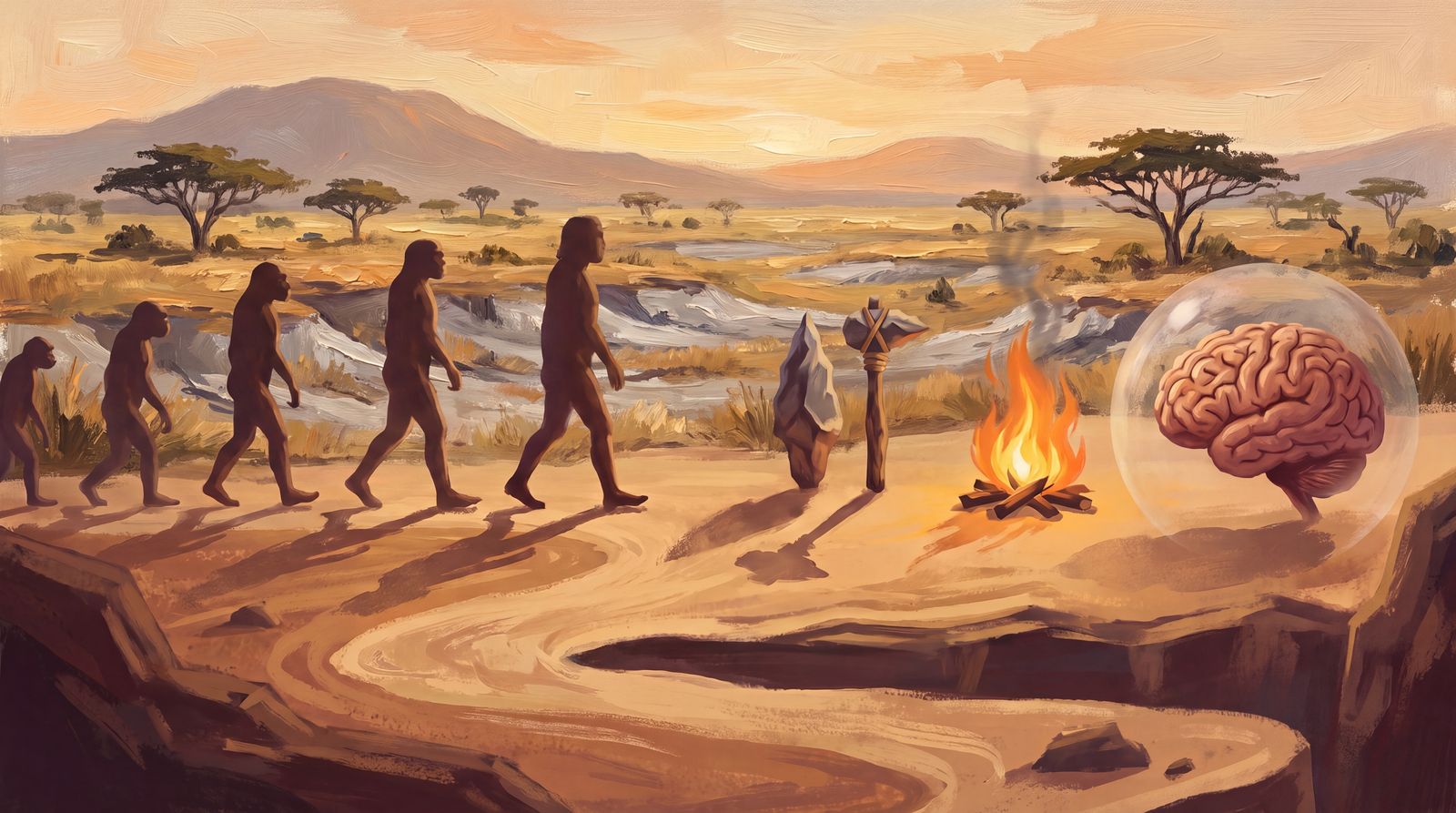
Laetoli proves it was the other way around. These creatures walked upright three and a half million years ago, long before big brains, before stone tools, before fire.

Standing up came first. Everything else, our tools, our intelligence, our whole journey, came after.

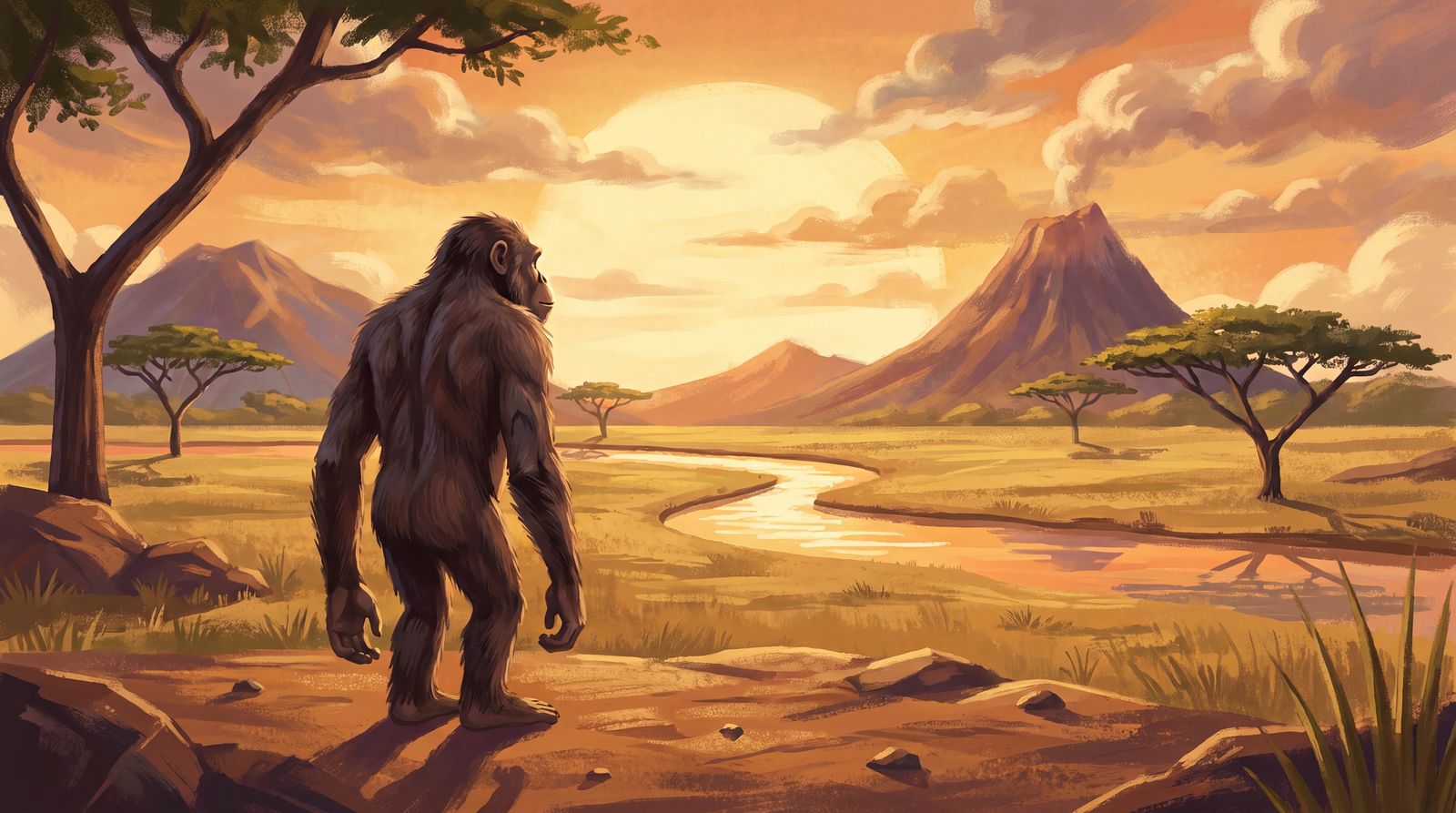
There is even a human touch in the trail. At one point the tracks seem to pause and turn slightly, as if one of them stopped, and looked to the left.

We will never know what they saw. A predator? A storm on the horizon? A companion?

The footprints are so fragile that scientists reburied them, to protect them from the very air.

A single, ordinary walk across a muddy field, frozen into the most extraordinary record of who we were becoming.

But those footprints were only the beginning. A few miles away, one gorge holds two million years of the human story.

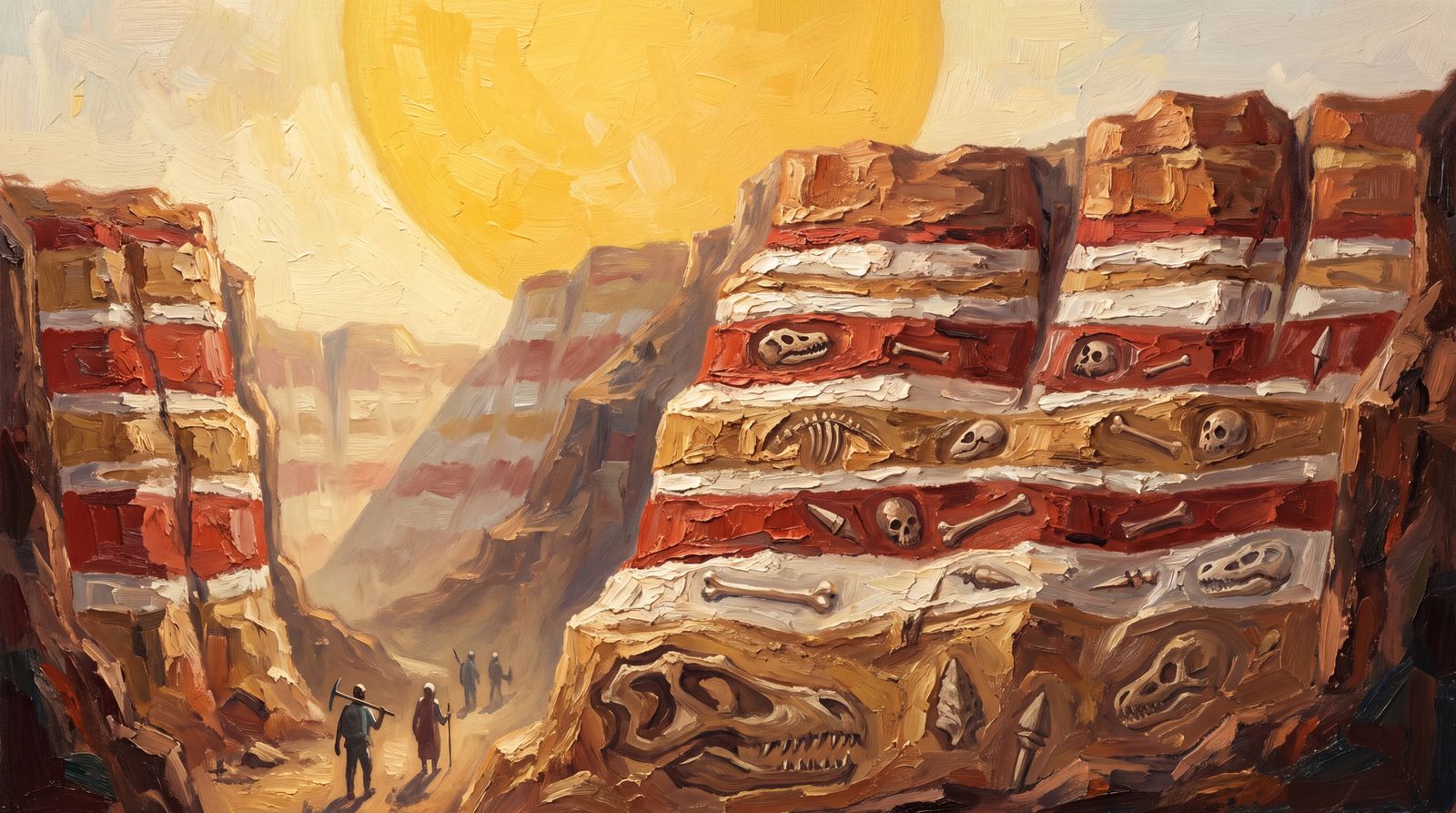
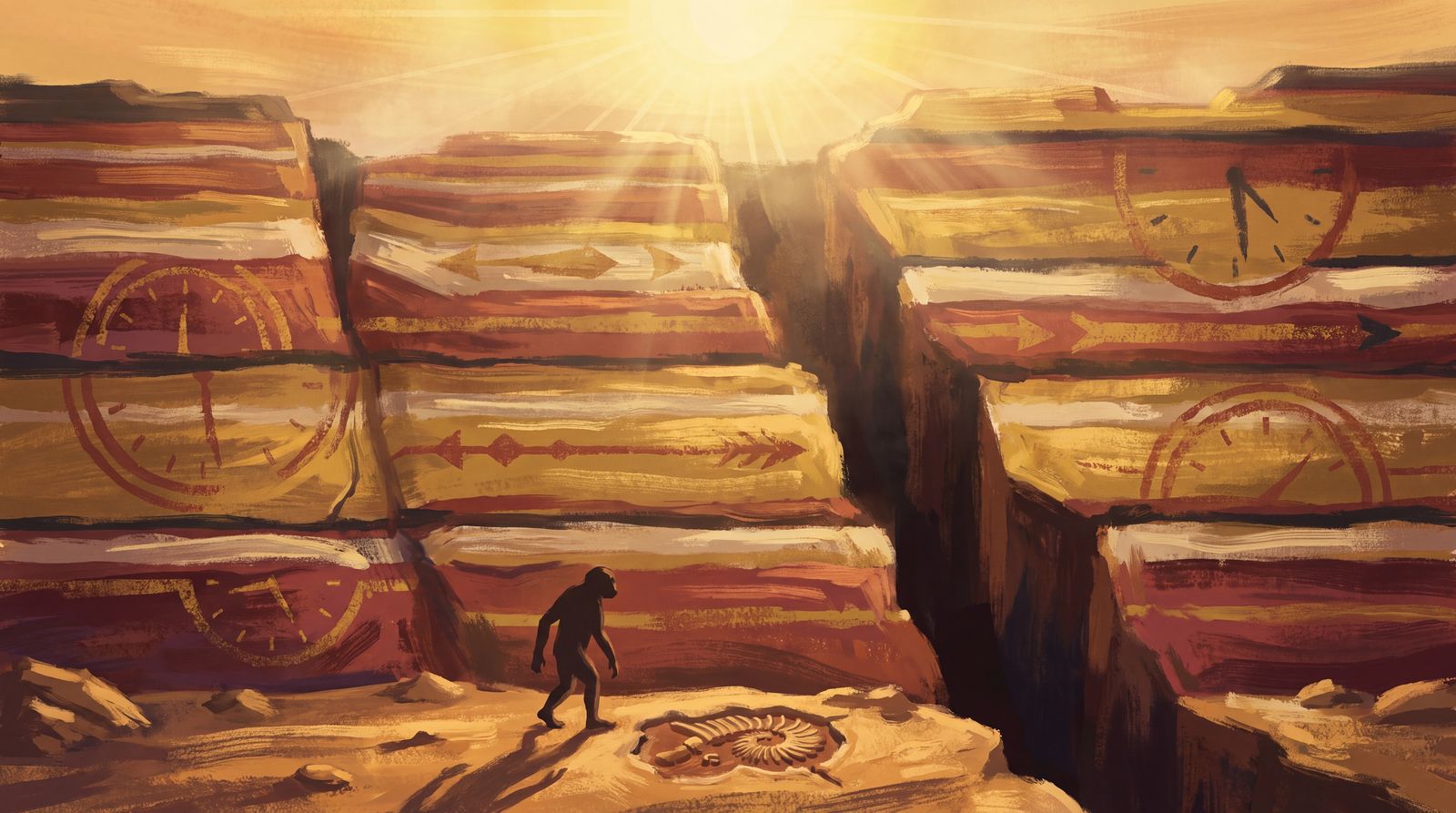
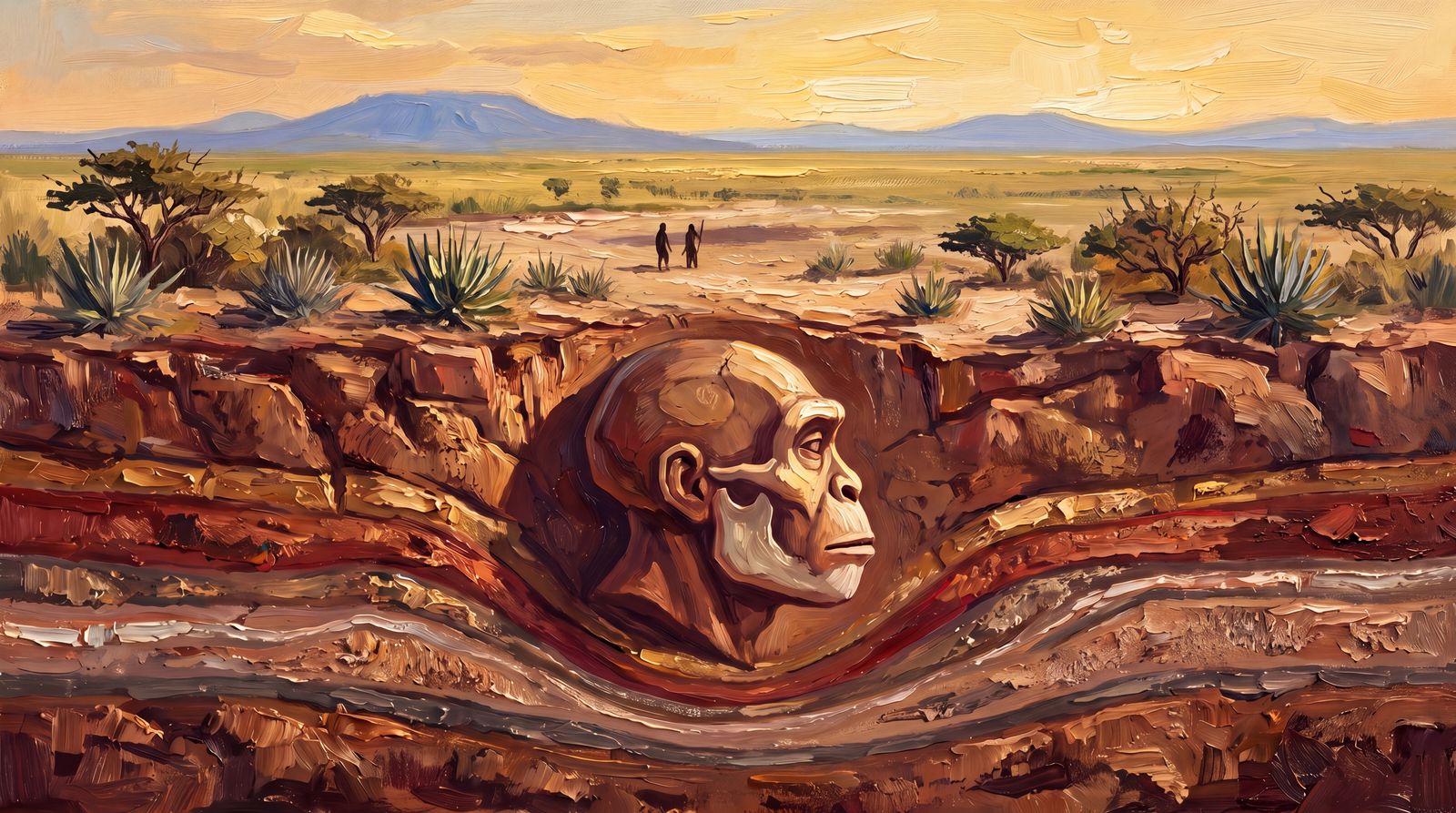
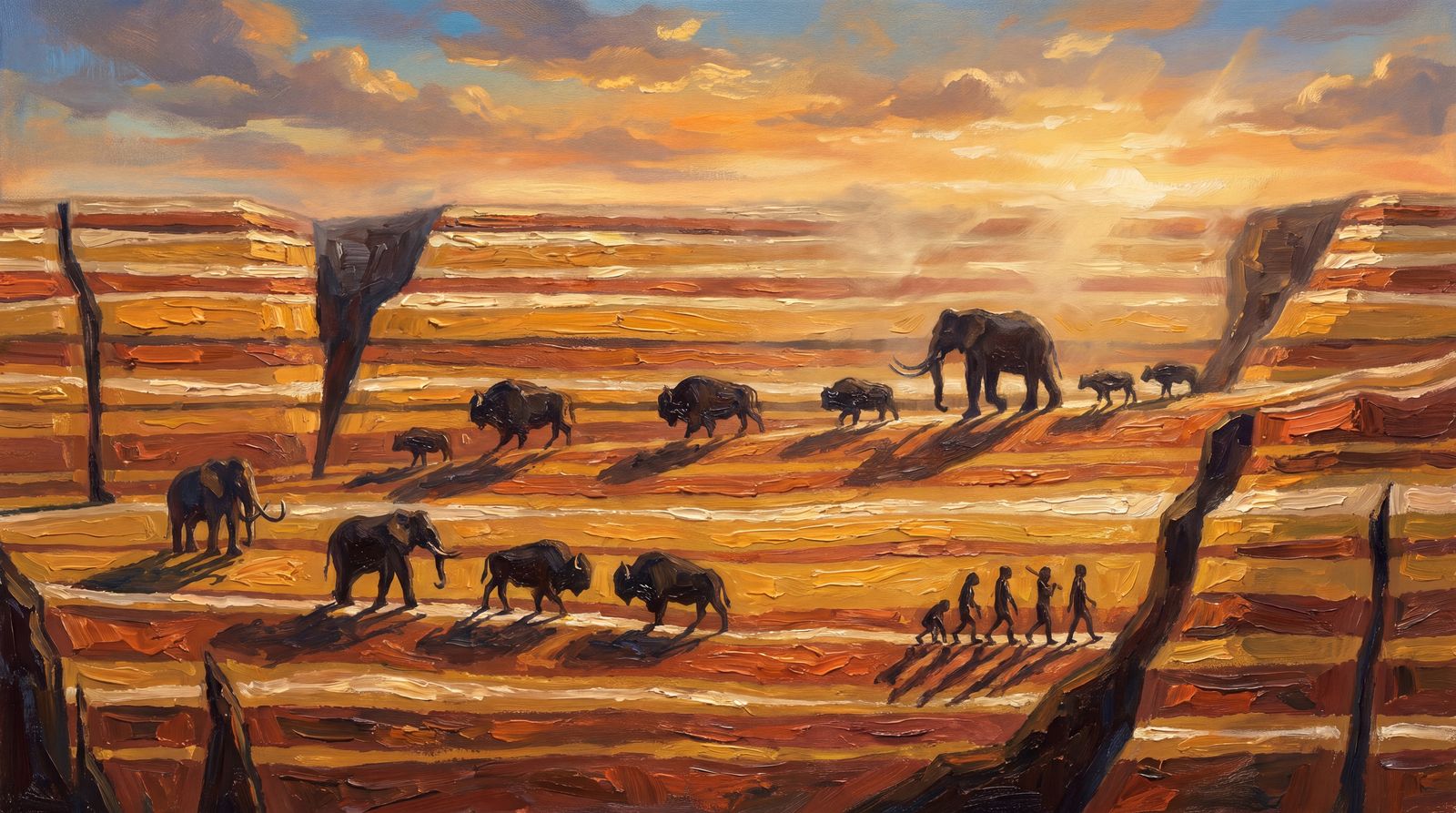
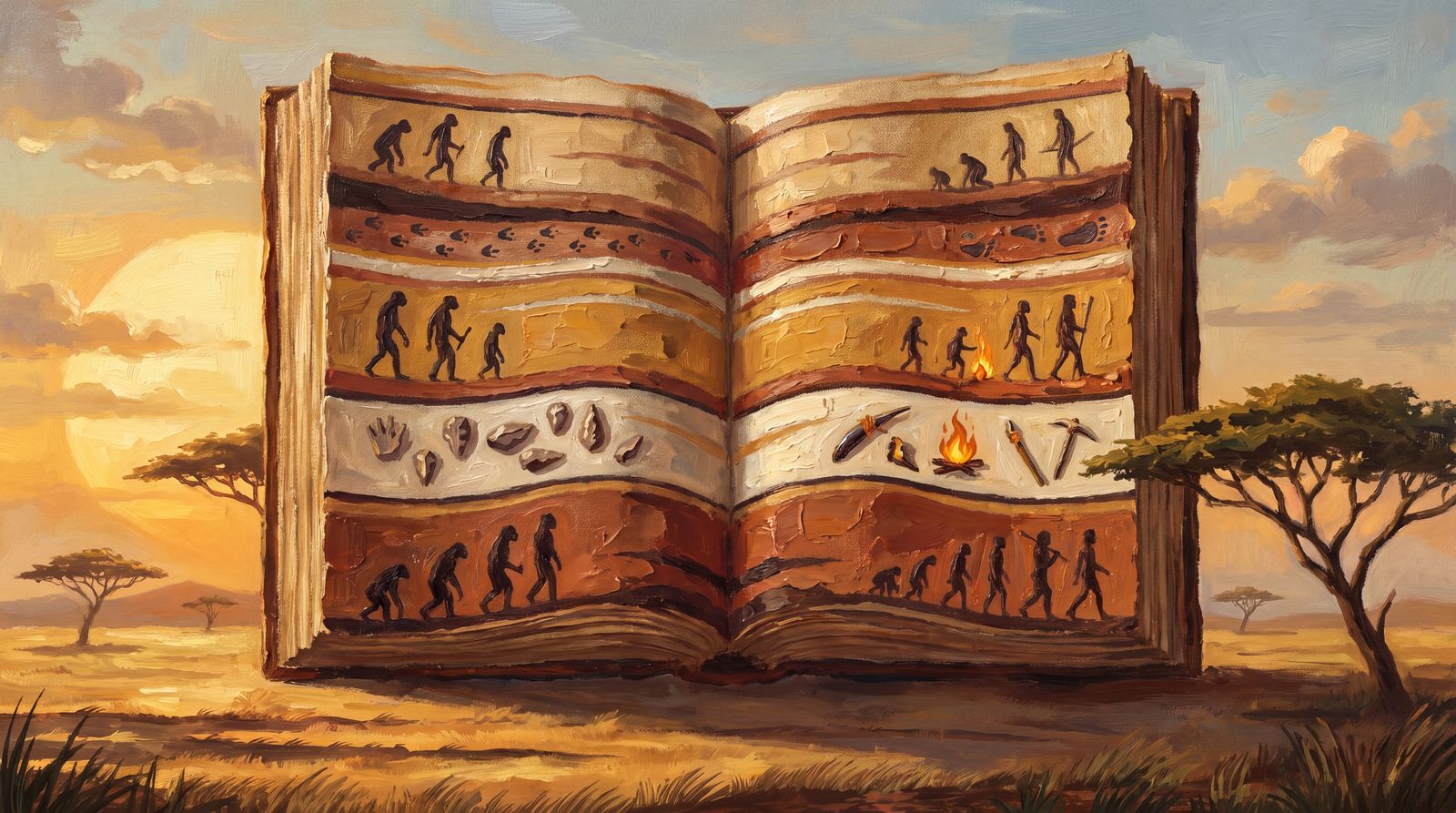
Layer by layer, like the pages of a book written in stone, it holds the bones and tools of our ancestors, stacked in order, oldest at the bottom.

More than almost anywhere on Earth, this is the place where we found out who we used to be.

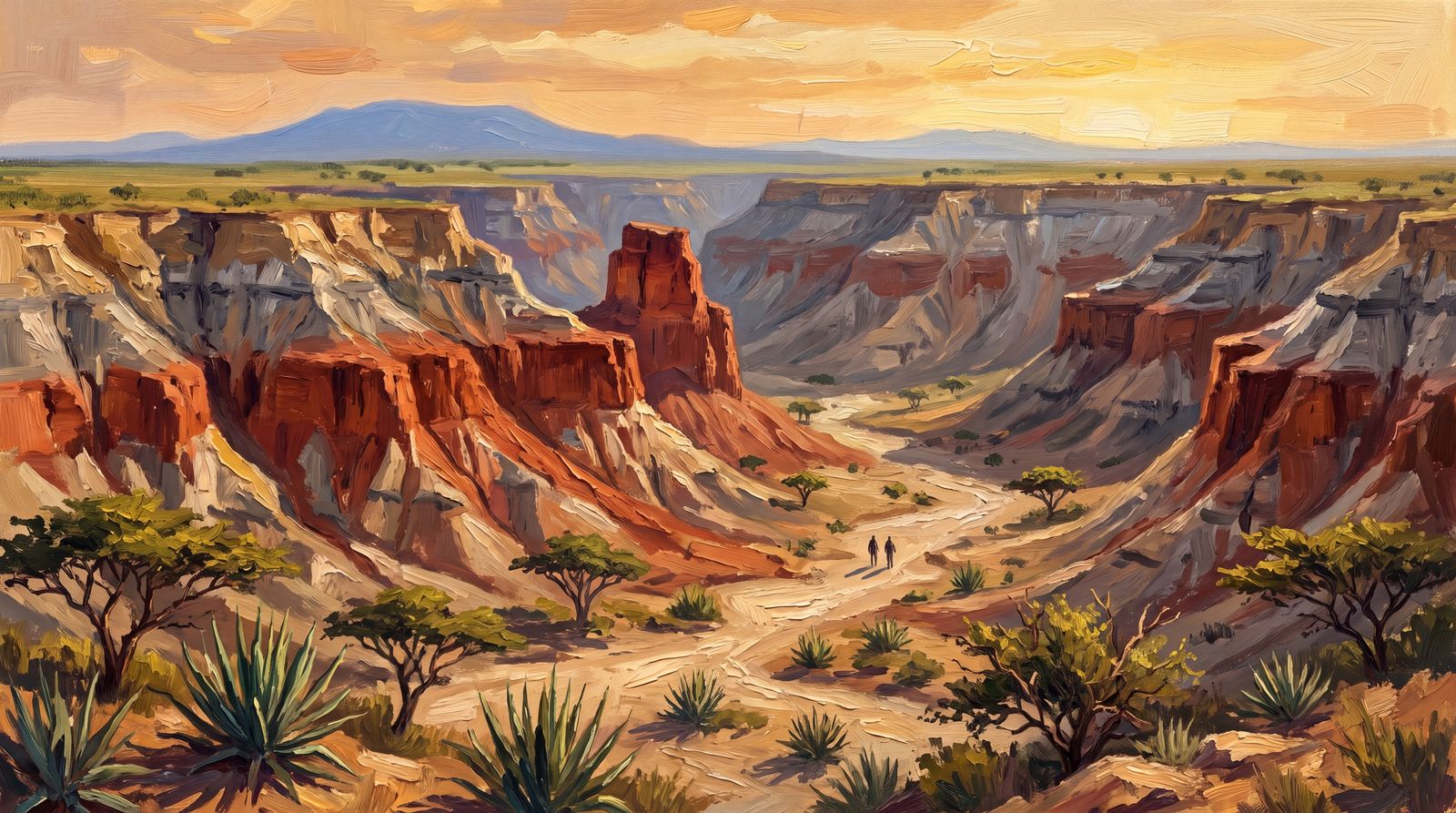
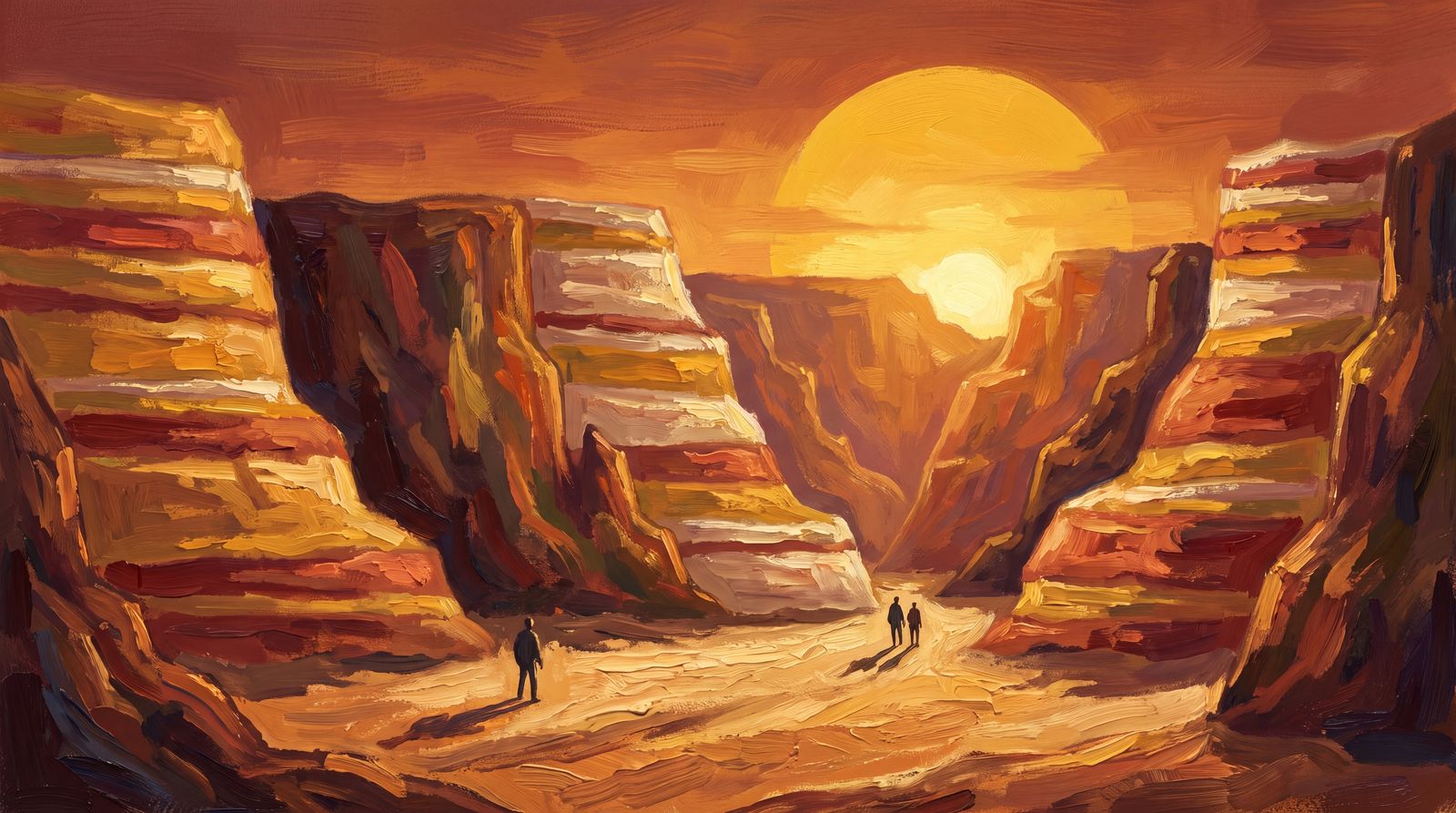
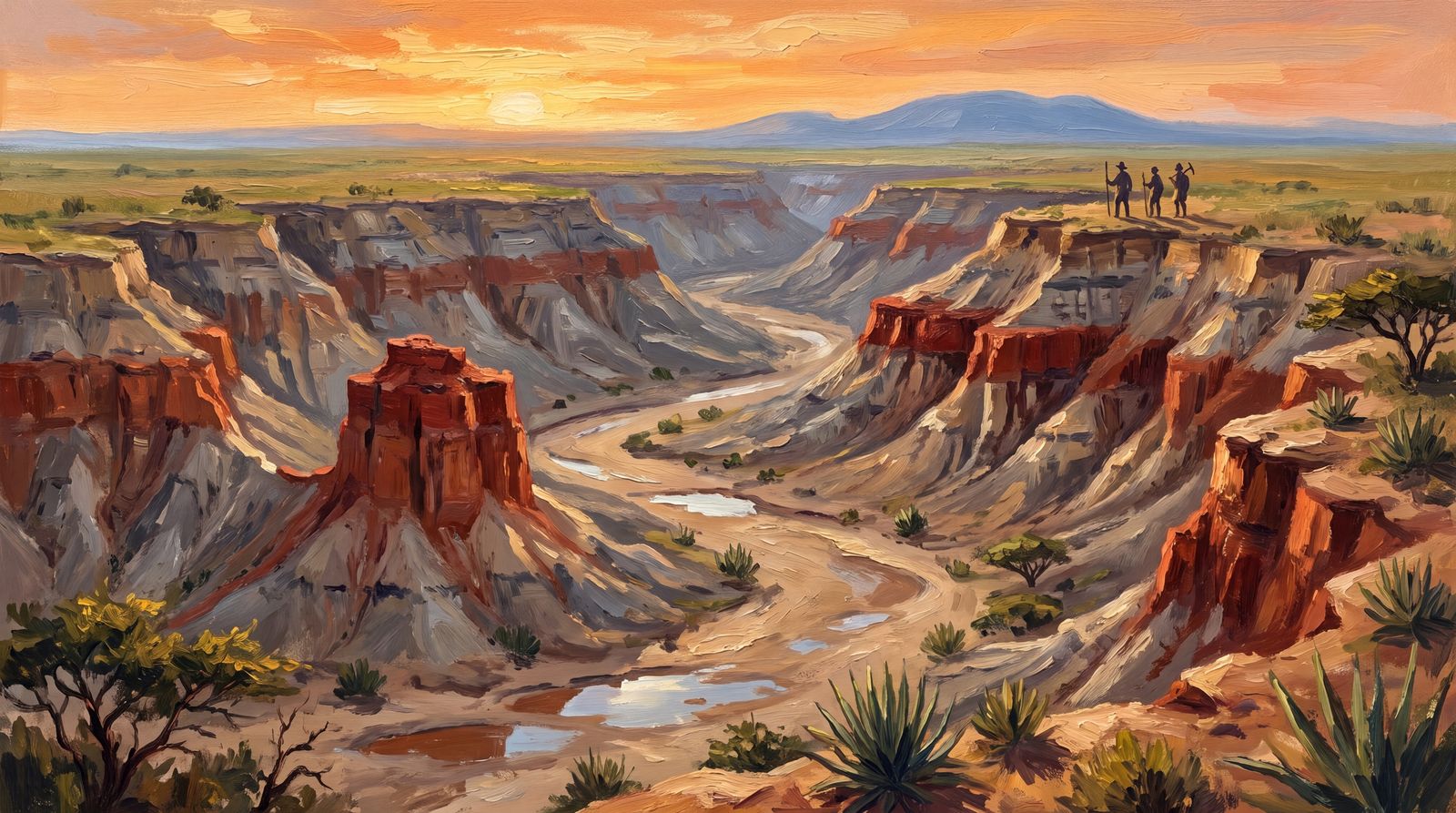
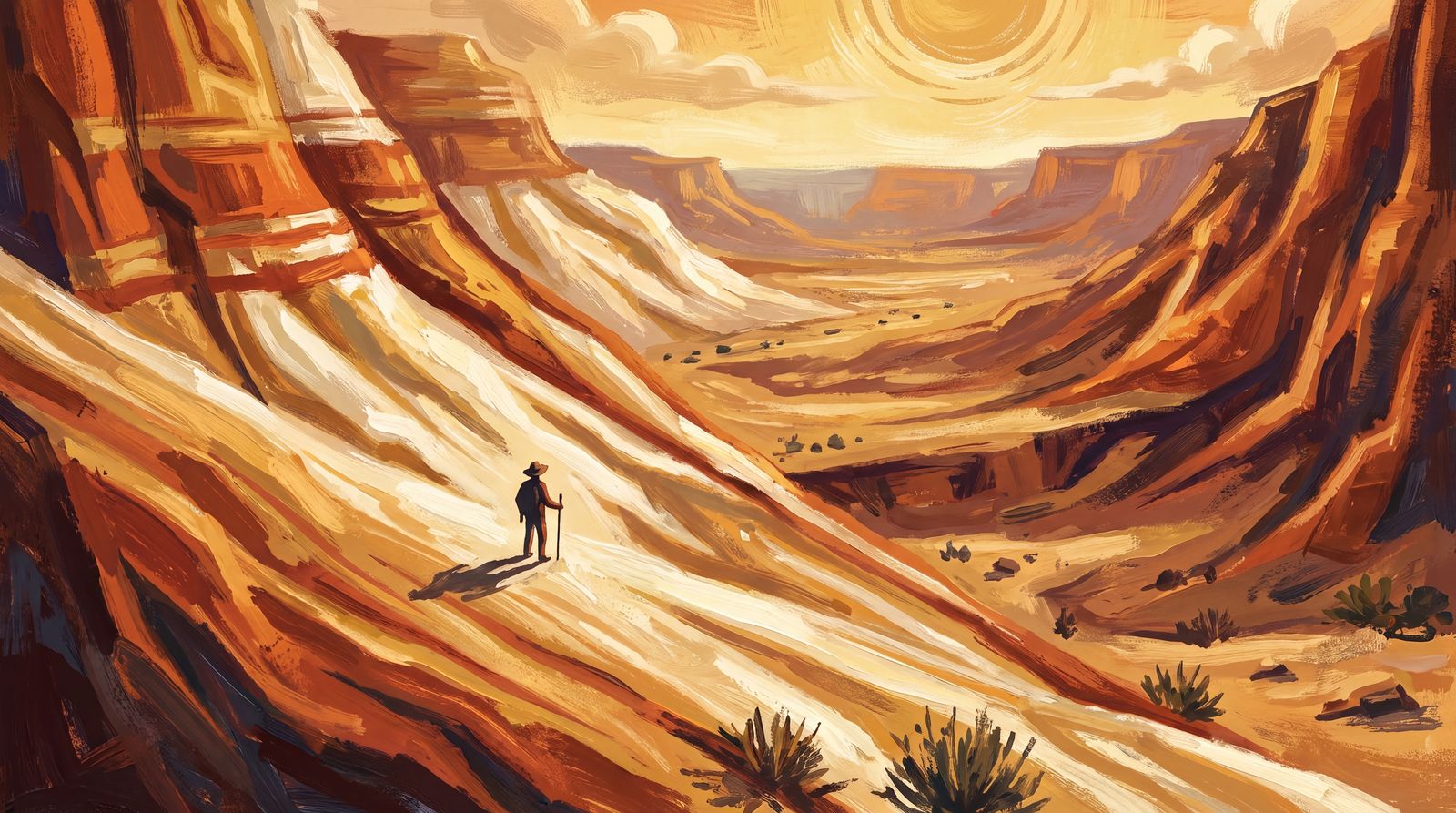
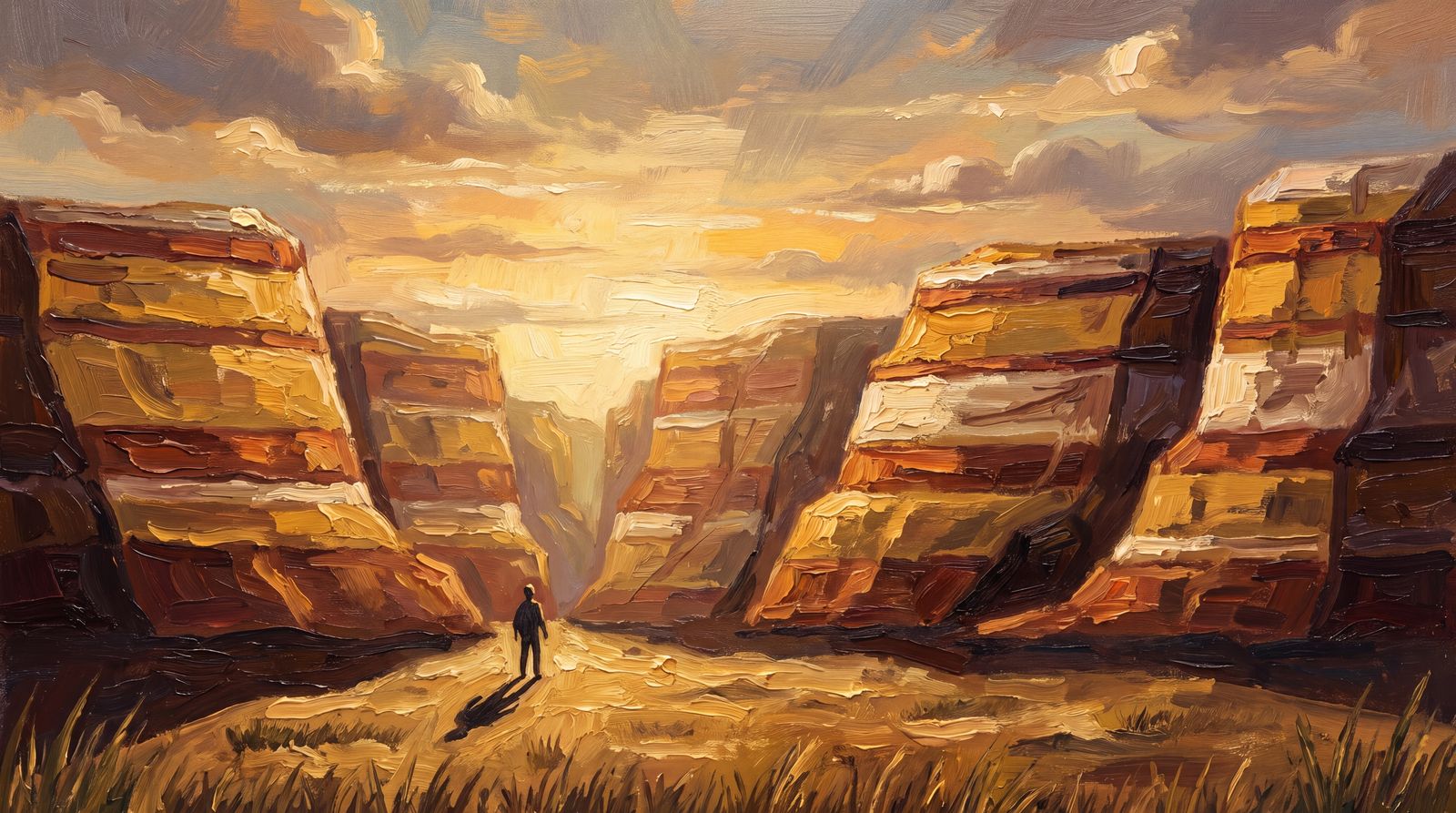
This is Olduvai Gorge, cut into the edge of the Serengeti.

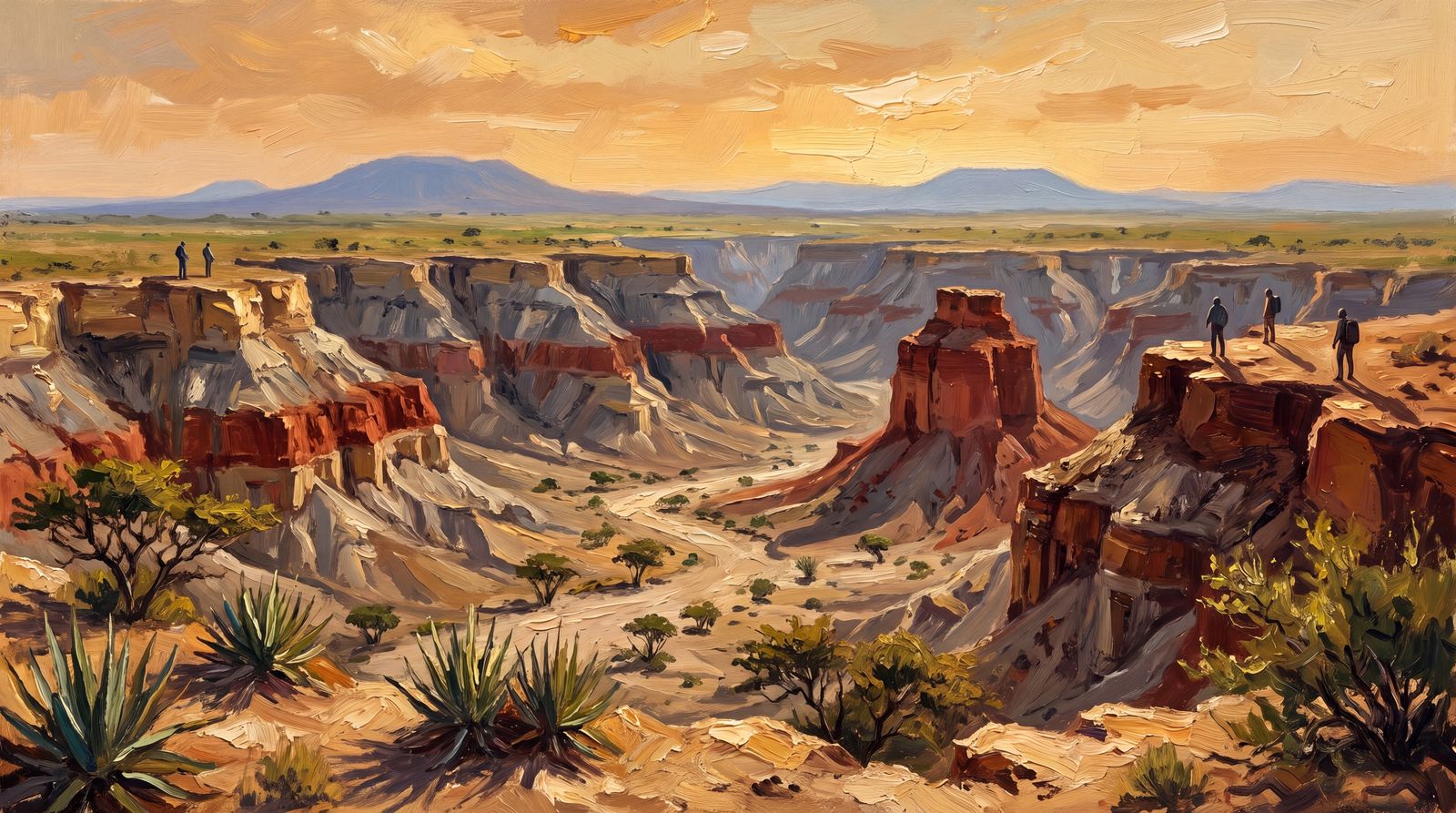
A dry, striped canyon about fifty kilometres long, and one of the most important places in all of science.

So what makes this gorge so special? And what did we find here that changed everything?

Its real name is Oldupai, after a wild sisal plant that grows here. For a century, the world has called it Olduvai by mistake.

The gorge was carved by an ancient river, slicing down through layers of volcanic ash and old lake bed.

And because those ash layers can be dated, the gorge became a natural clock. Dig down, and you travel back in time.

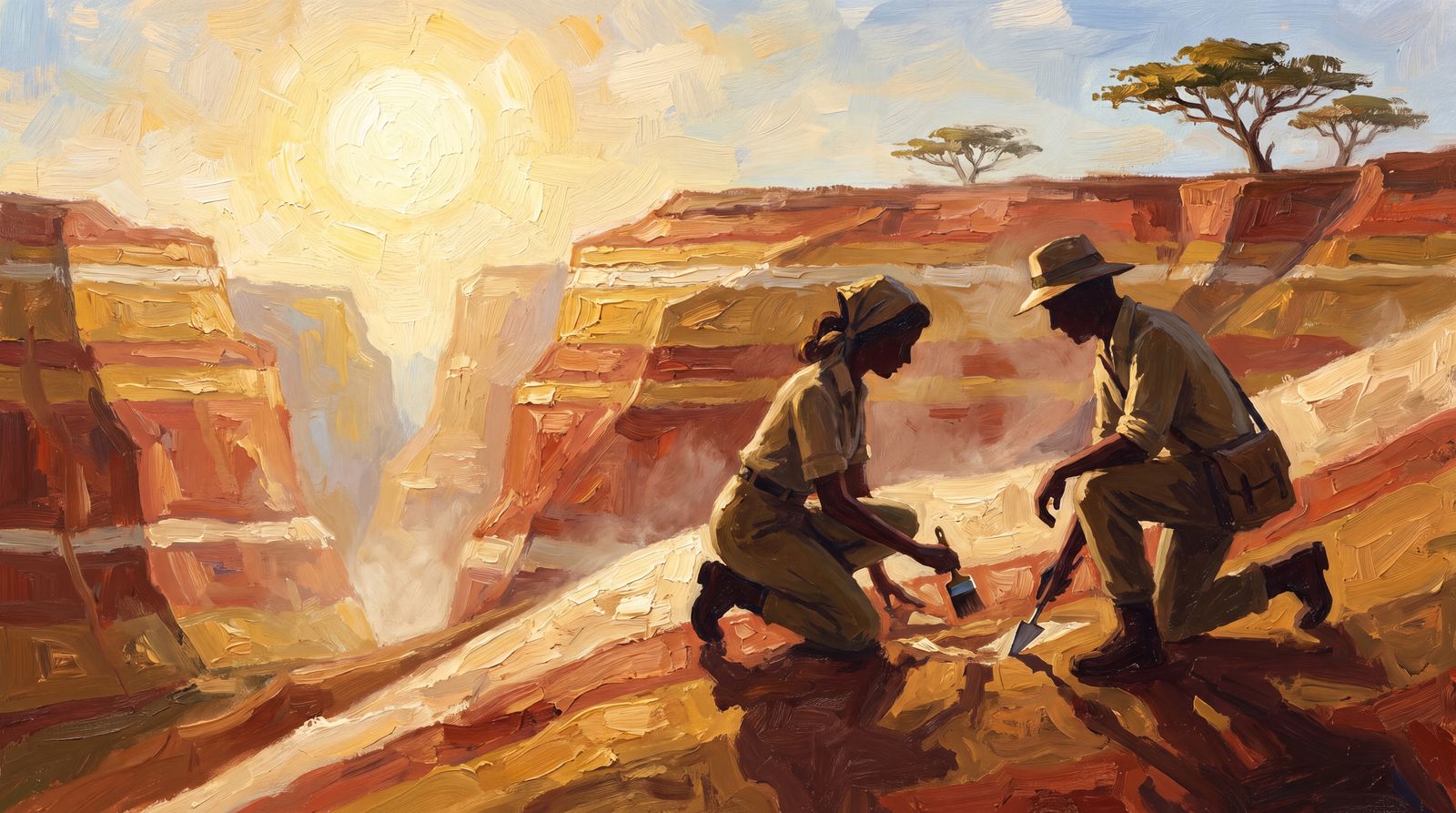
For decades, two scientists gave their lives to this place. Louis and Mary Leakey.

They searched these slopes year after year, often finding almost nothing.

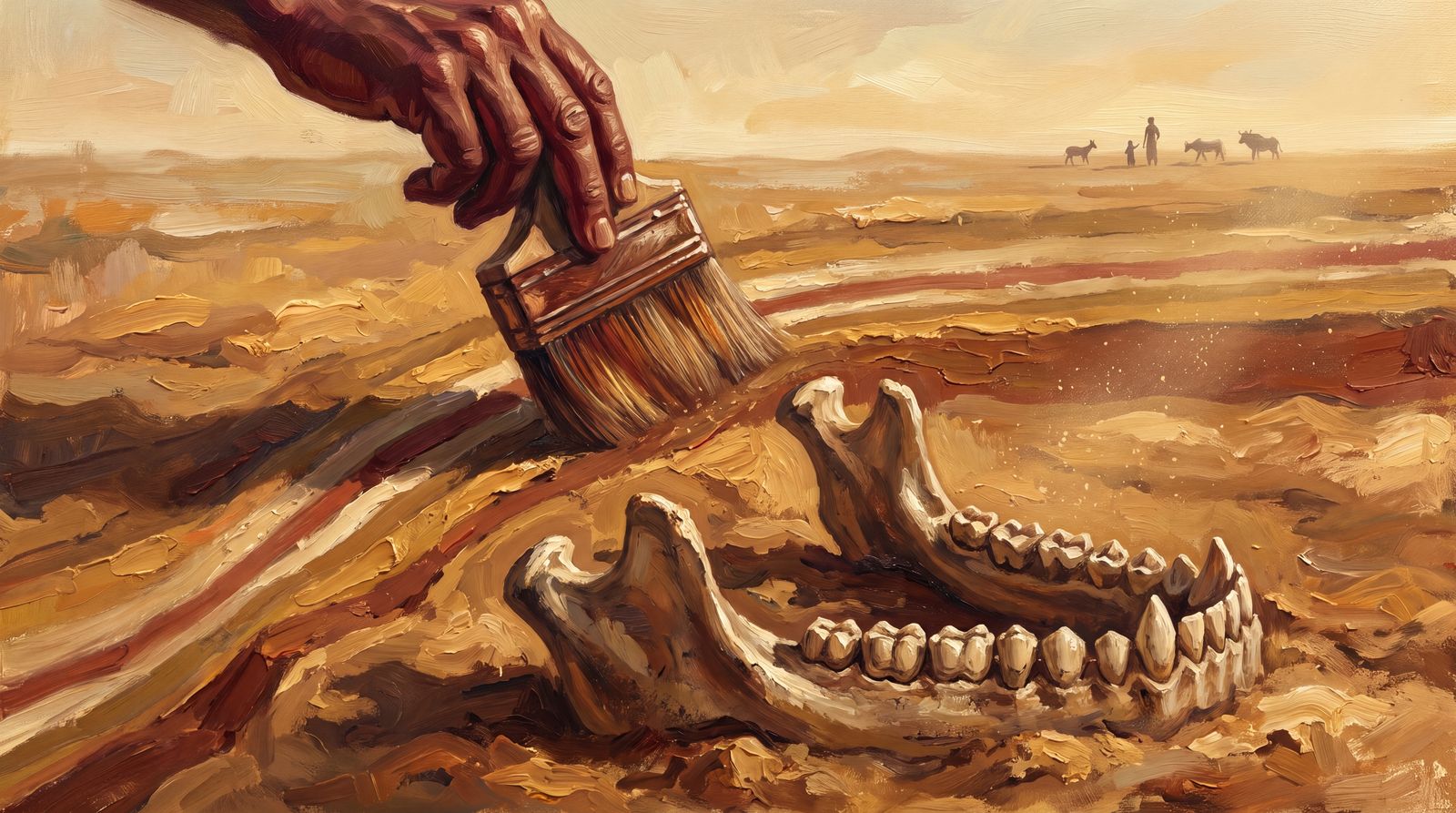
Then, in 1959, Mary Leakey spotted teeth in the dirt.

They belonged to a heavy-jawed, small-brained relative we now nickname Nutcracker Man, for his enormous molars.

It was nearly two million years old, and it made headlines around the world.

But the bigger discovery was still to come.

Soon after, the Leakeys found something else in the same gorge. A different creature, with a larger brain and lighter jaws.

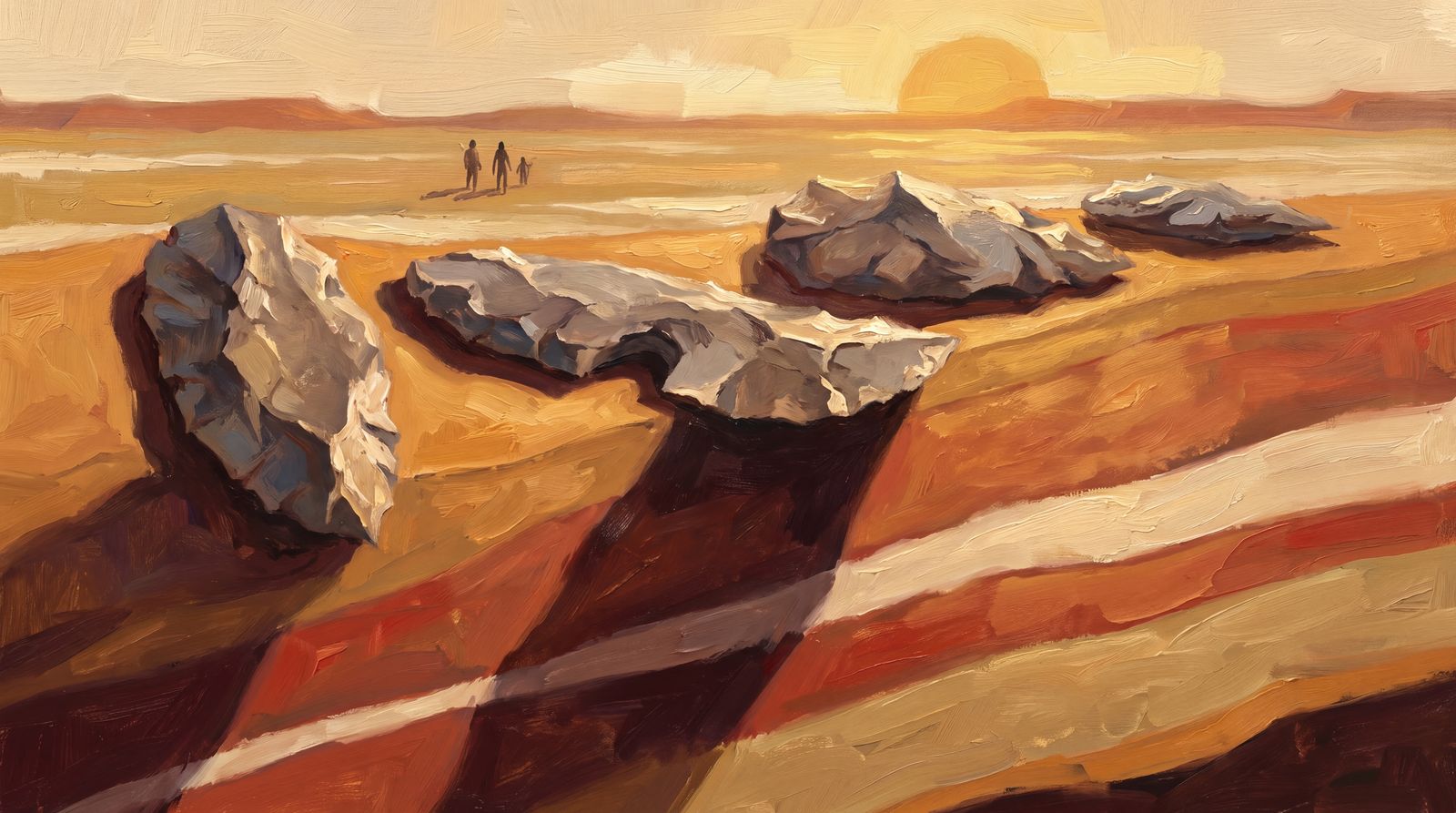
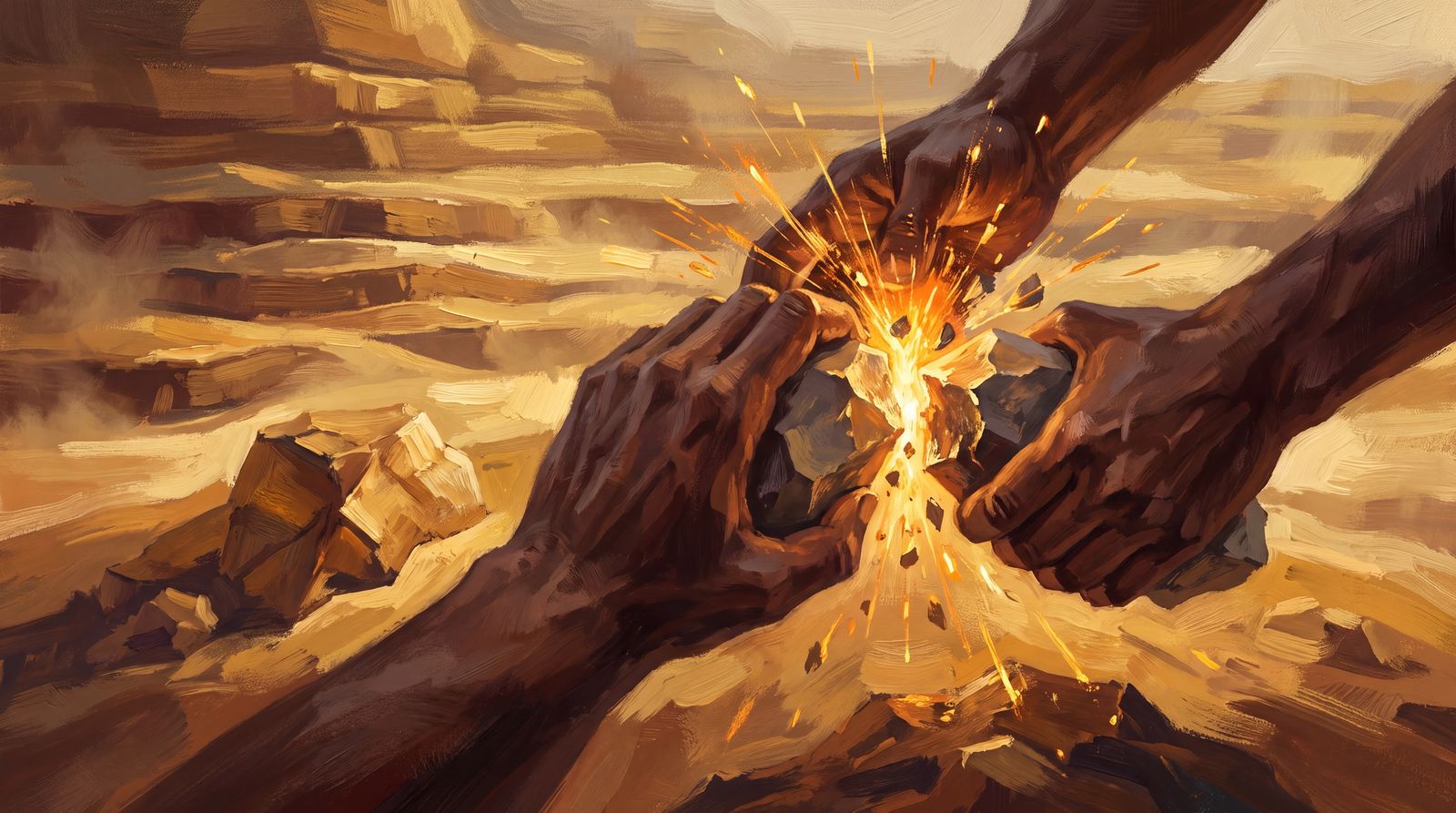
And beside it, something astonishing. Stones, deliberately chipped into simple tools.

They named this creature Homo habilis, the handy man. One of the earliest members of our own genus, Homo.

These were the first toolmakers we know of, striking one rock against another to make a sharp cutting edge.

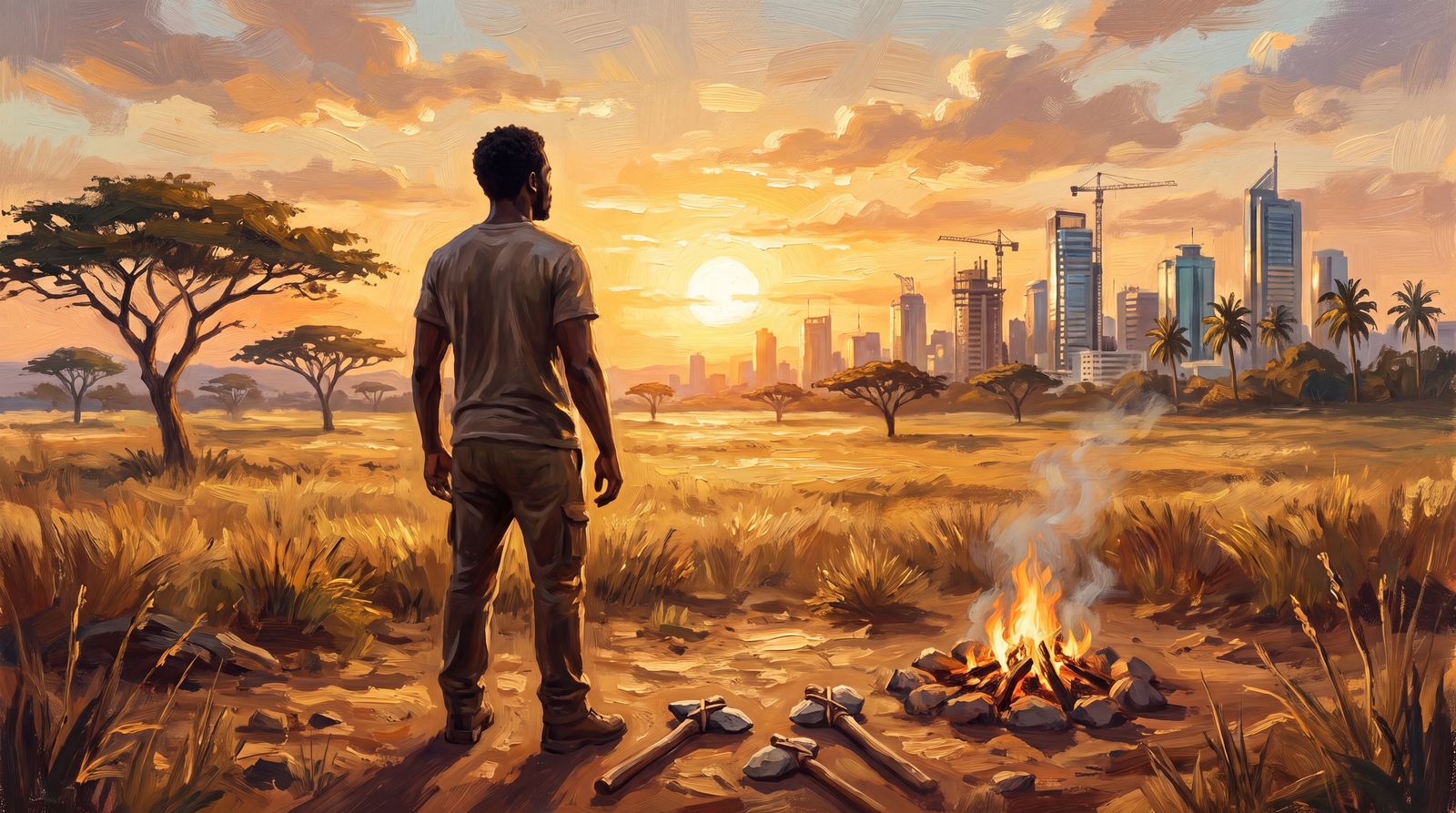
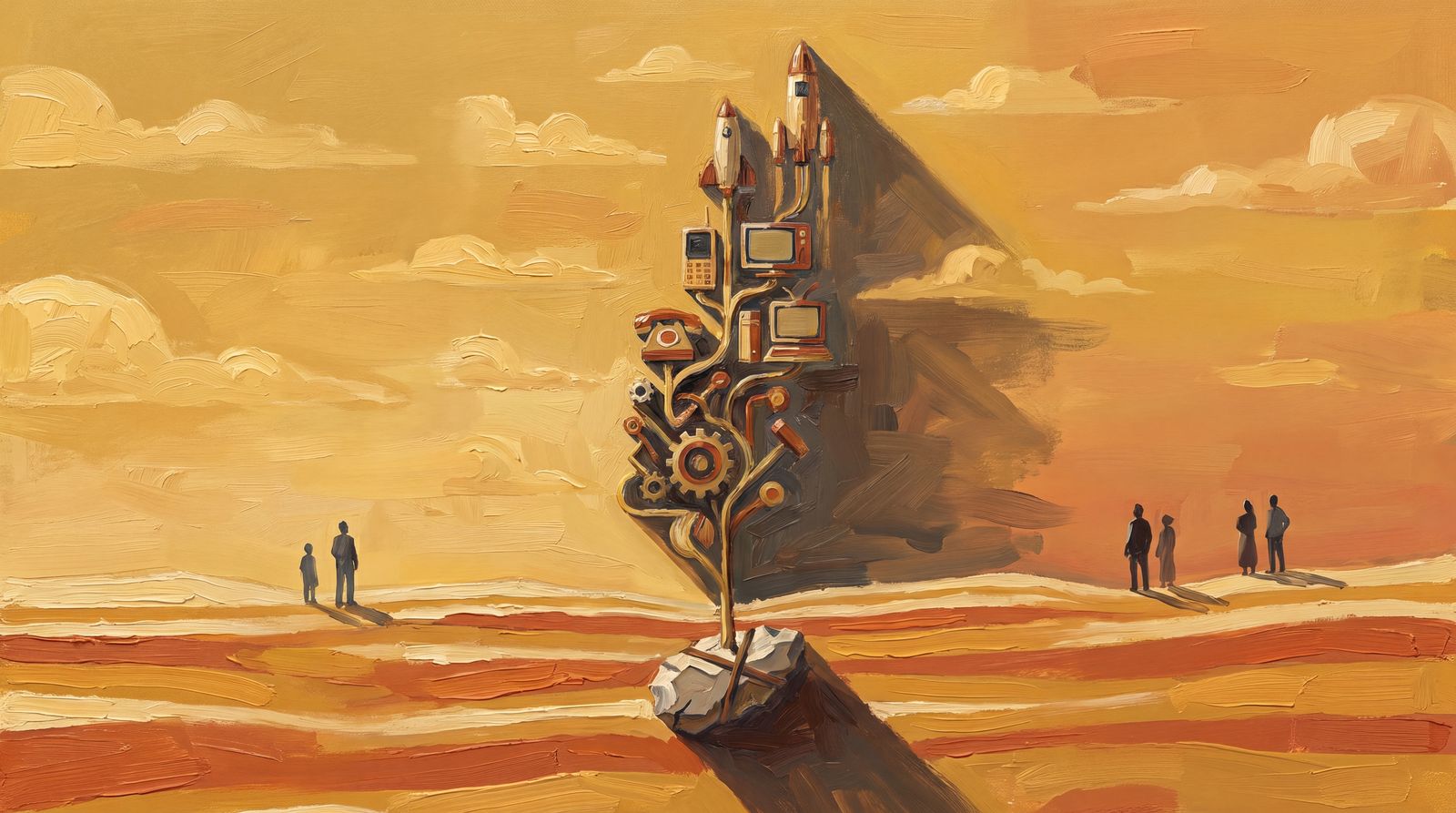
That simple chipped stone is the beginning of all technology. Every machine, every phone, every rocket, traces back to a moment like this, in a gorge like this.

And the gorge kept giving. Layer after layer revealed ancient elephants, giant buffalo, and more of our ancestors, across nearly two million years.

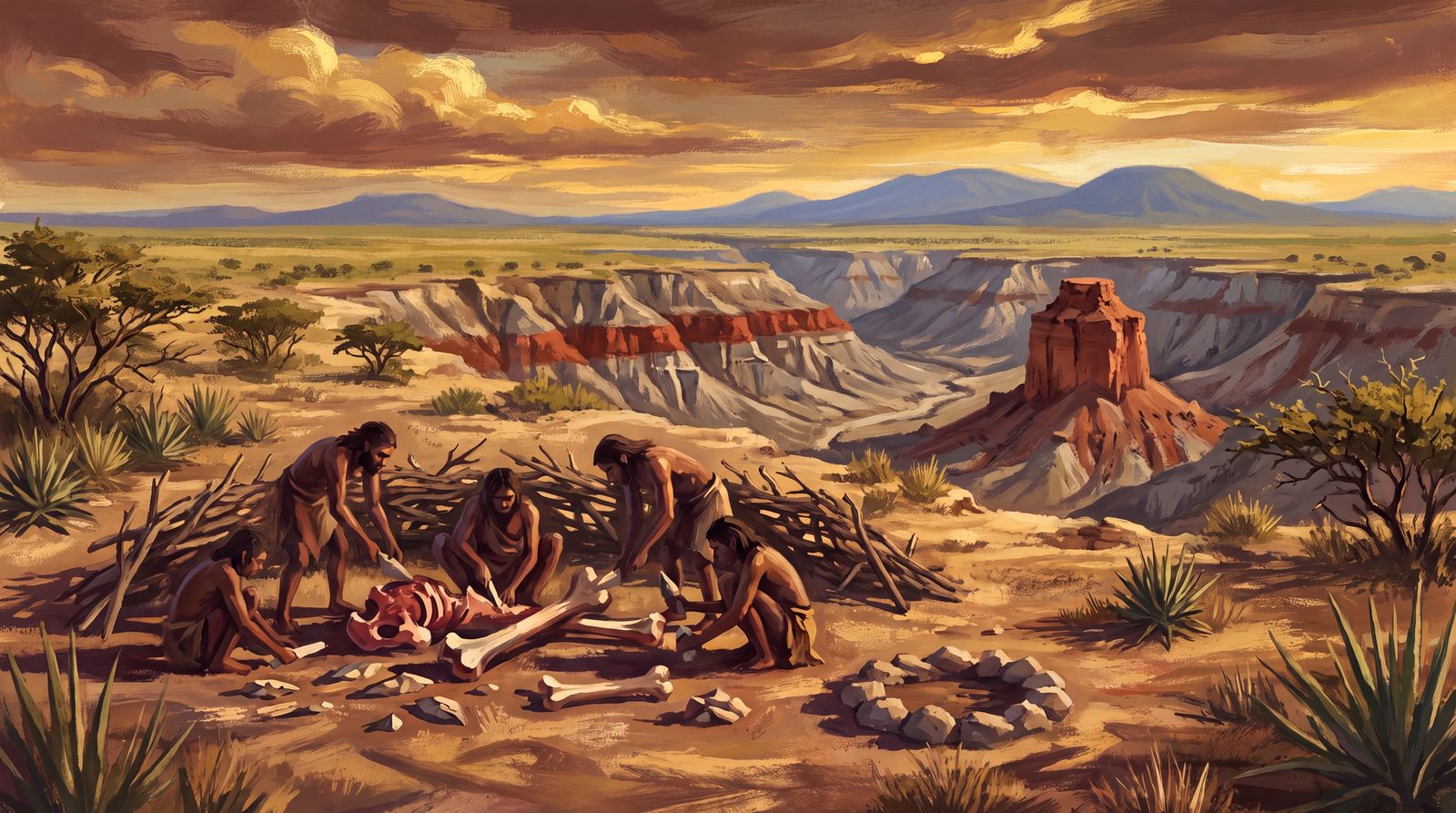
Butchered bones and scattered tools slowly revealed how these early humans lived, and ate, and survived.

It's why Olduvai earned a nickname of its own. The Cradle of Mankind.

Not because humanity began in this exact gorge, but because here, more than anywhere, we can watch it happening, step by step, written in the rock.

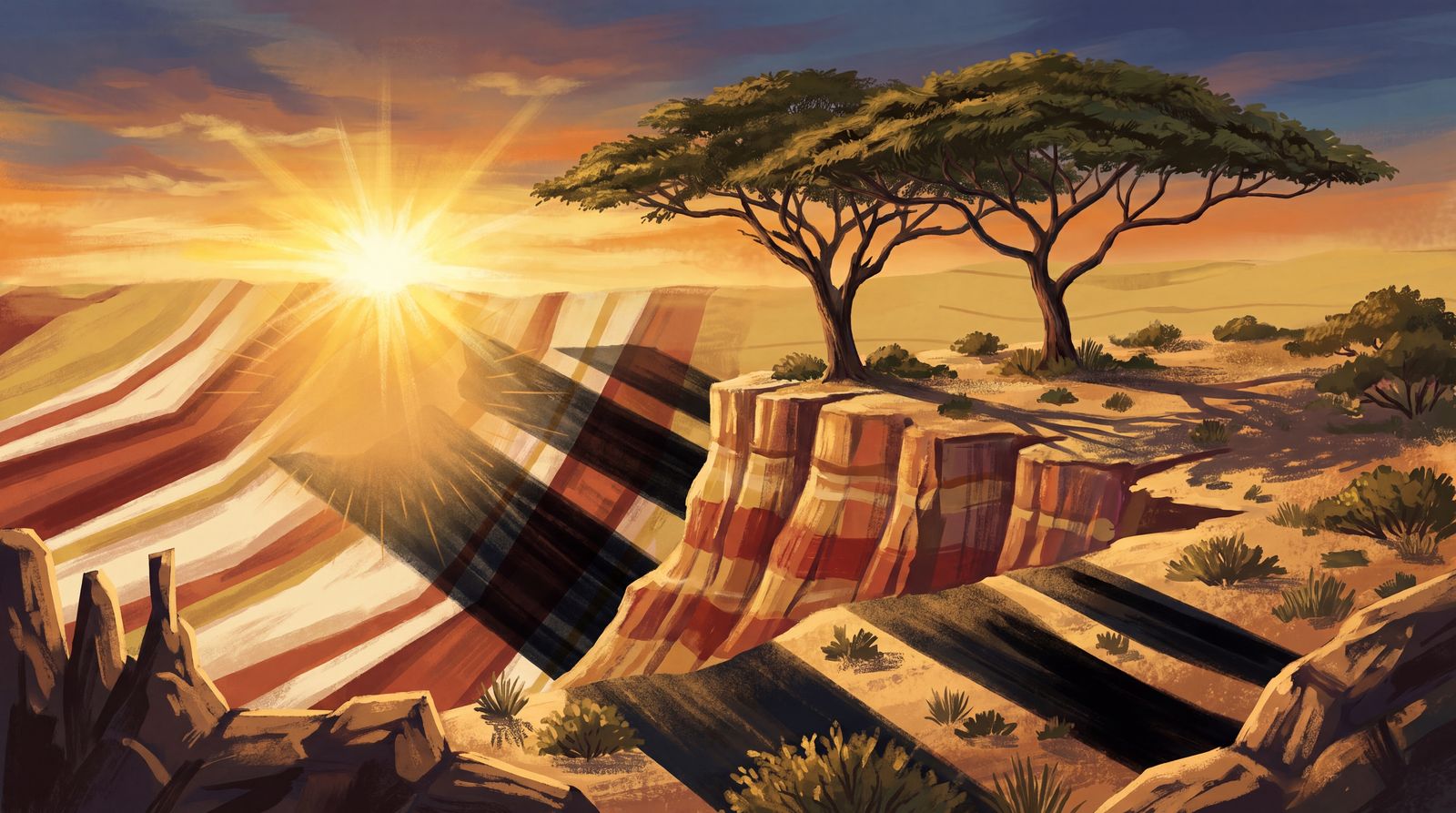
Stand at the edge, and every stripe in the cliff below you is a chapter. The deeper you look, the older, and stranger, our family becomes.

Our ancestors did not walk this land alone. The plains that raised them are still alive, and every single year they carry the greatest march of animals on Earth.

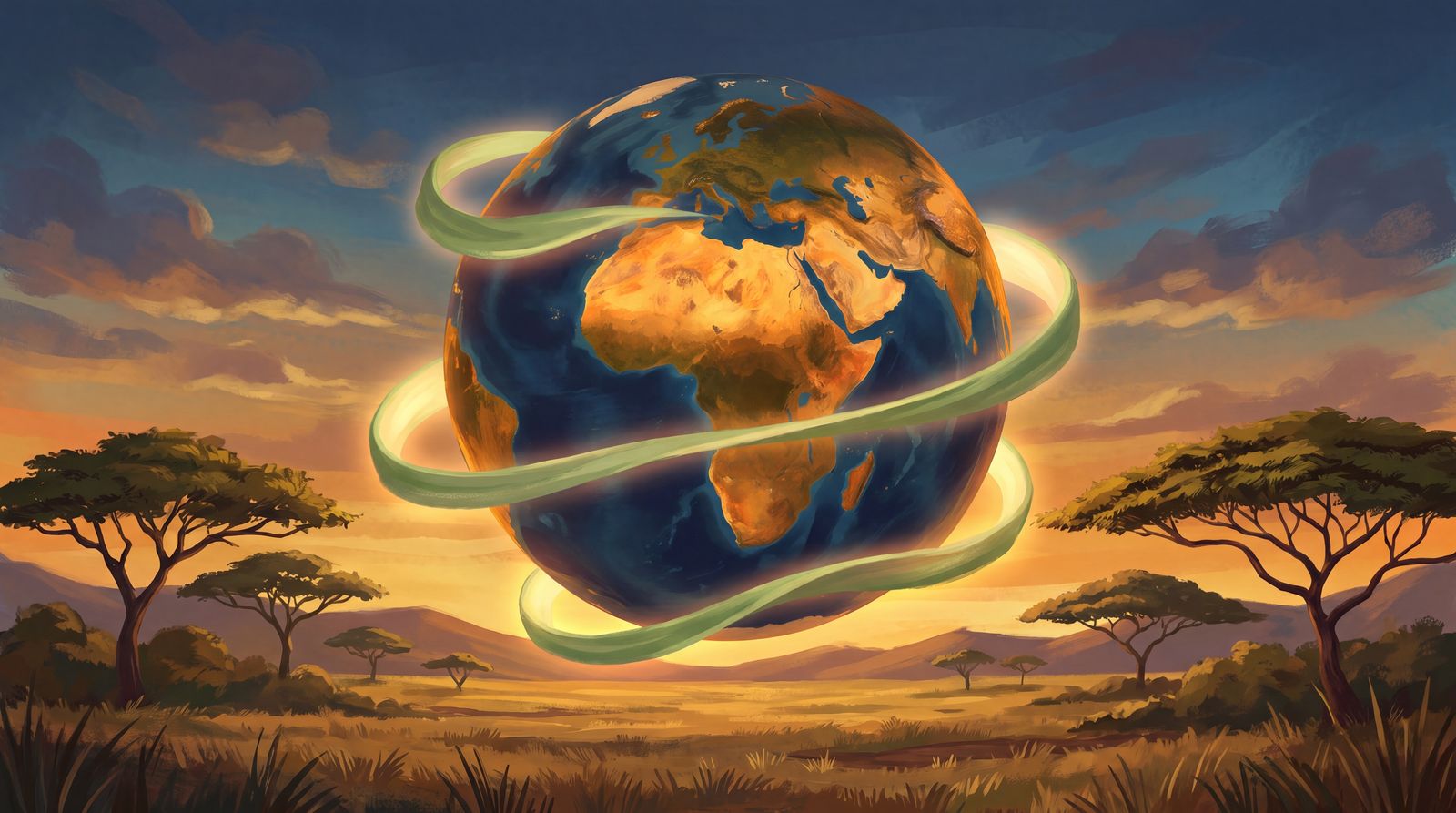
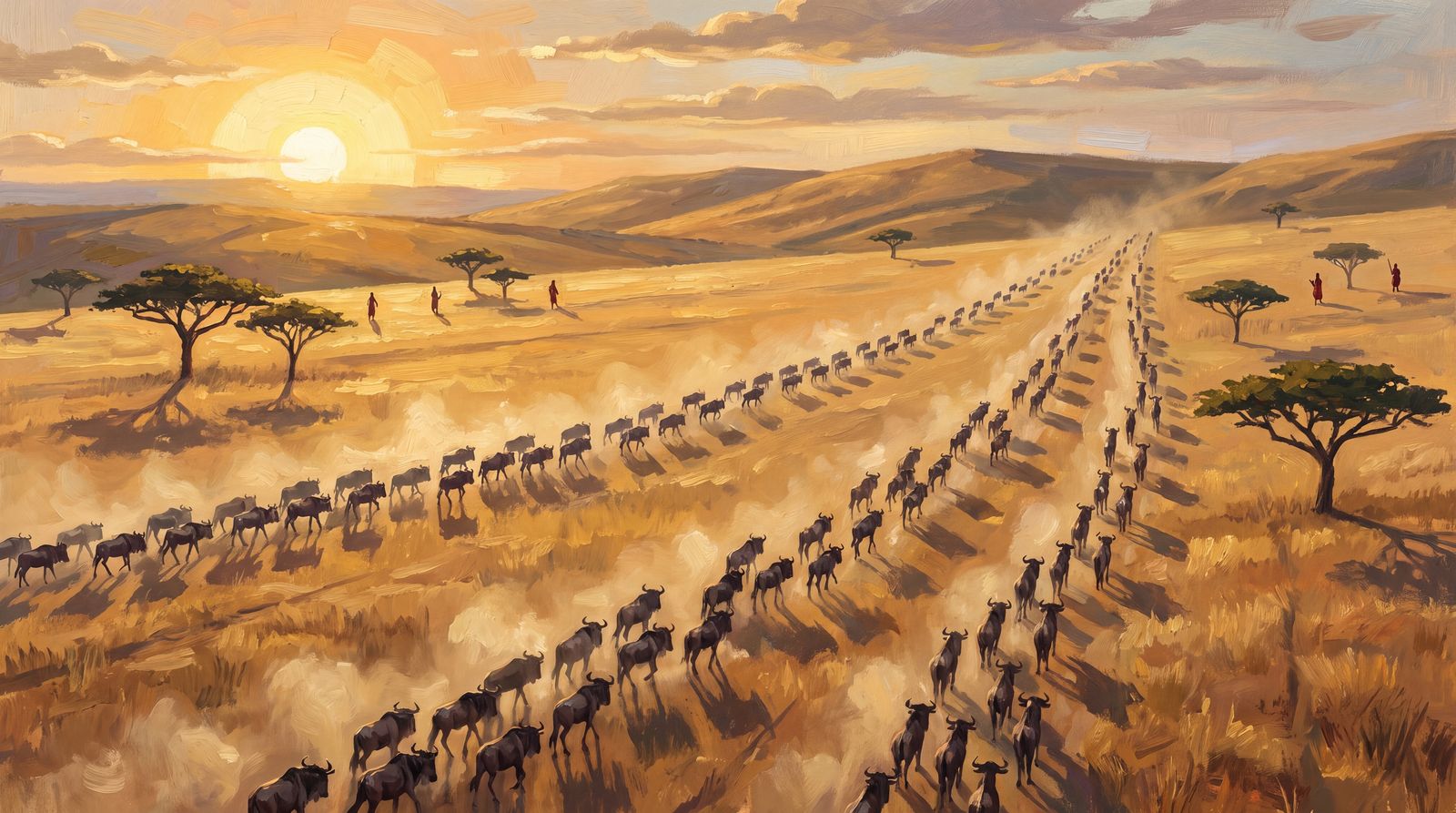
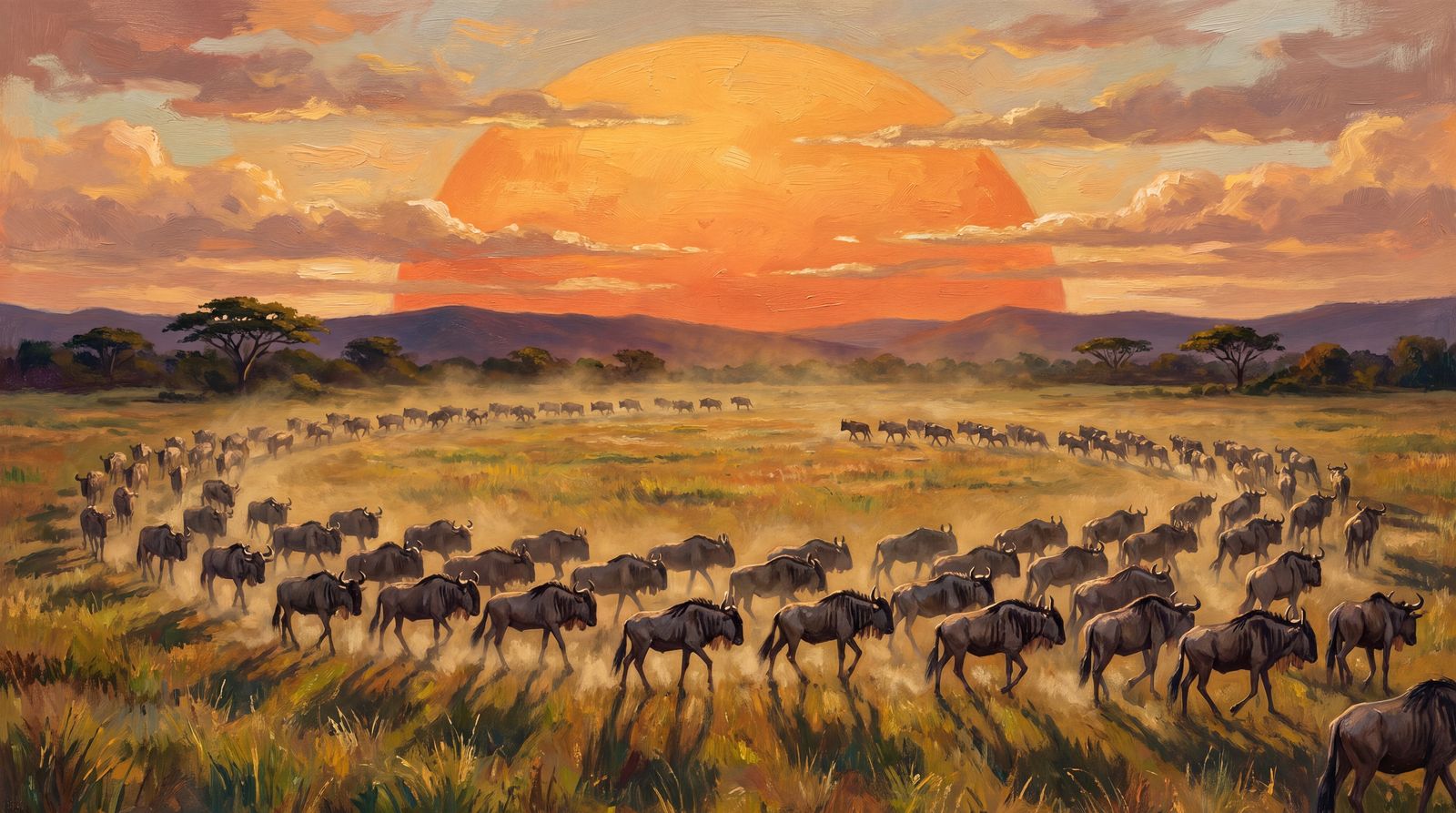
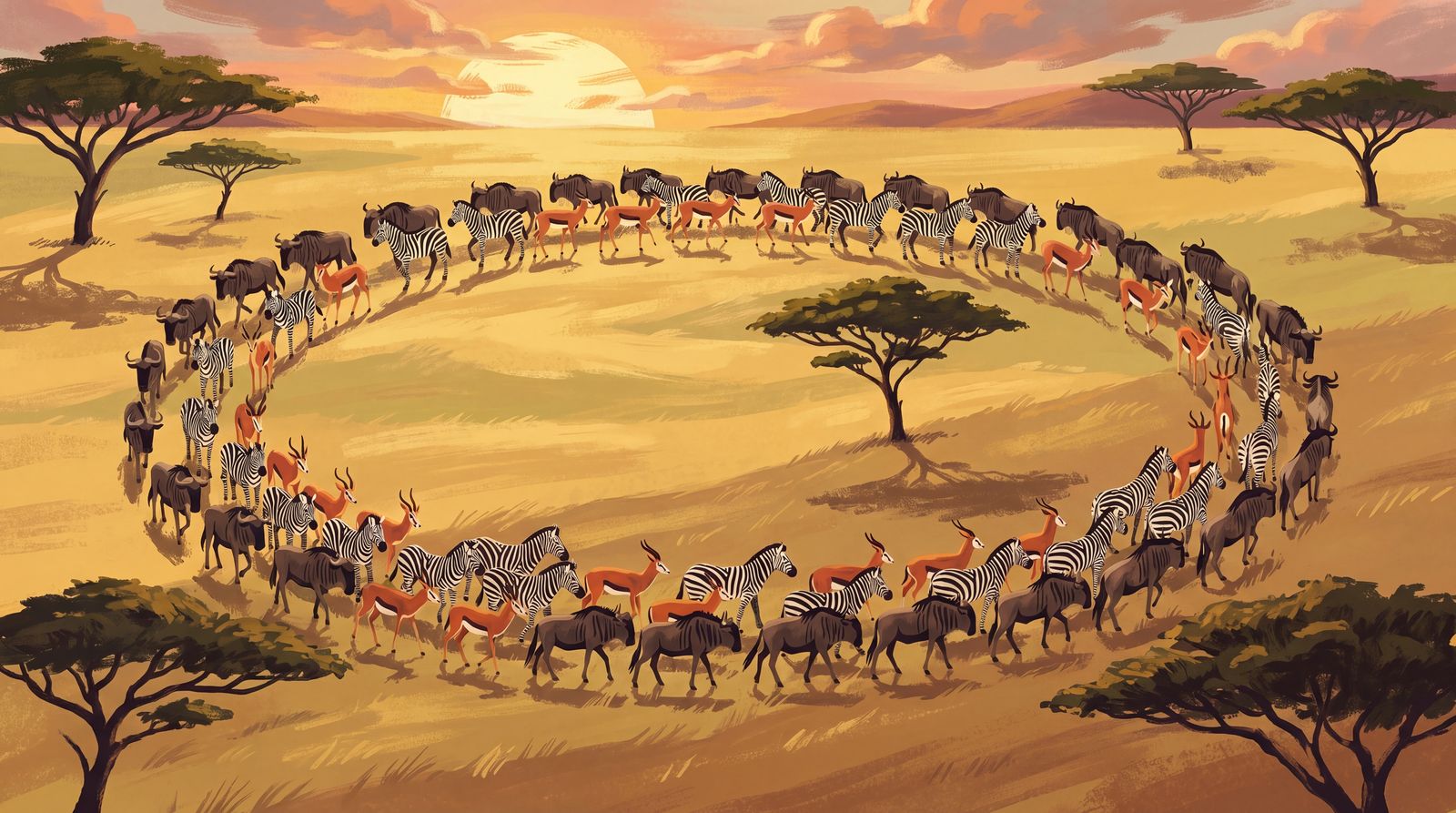
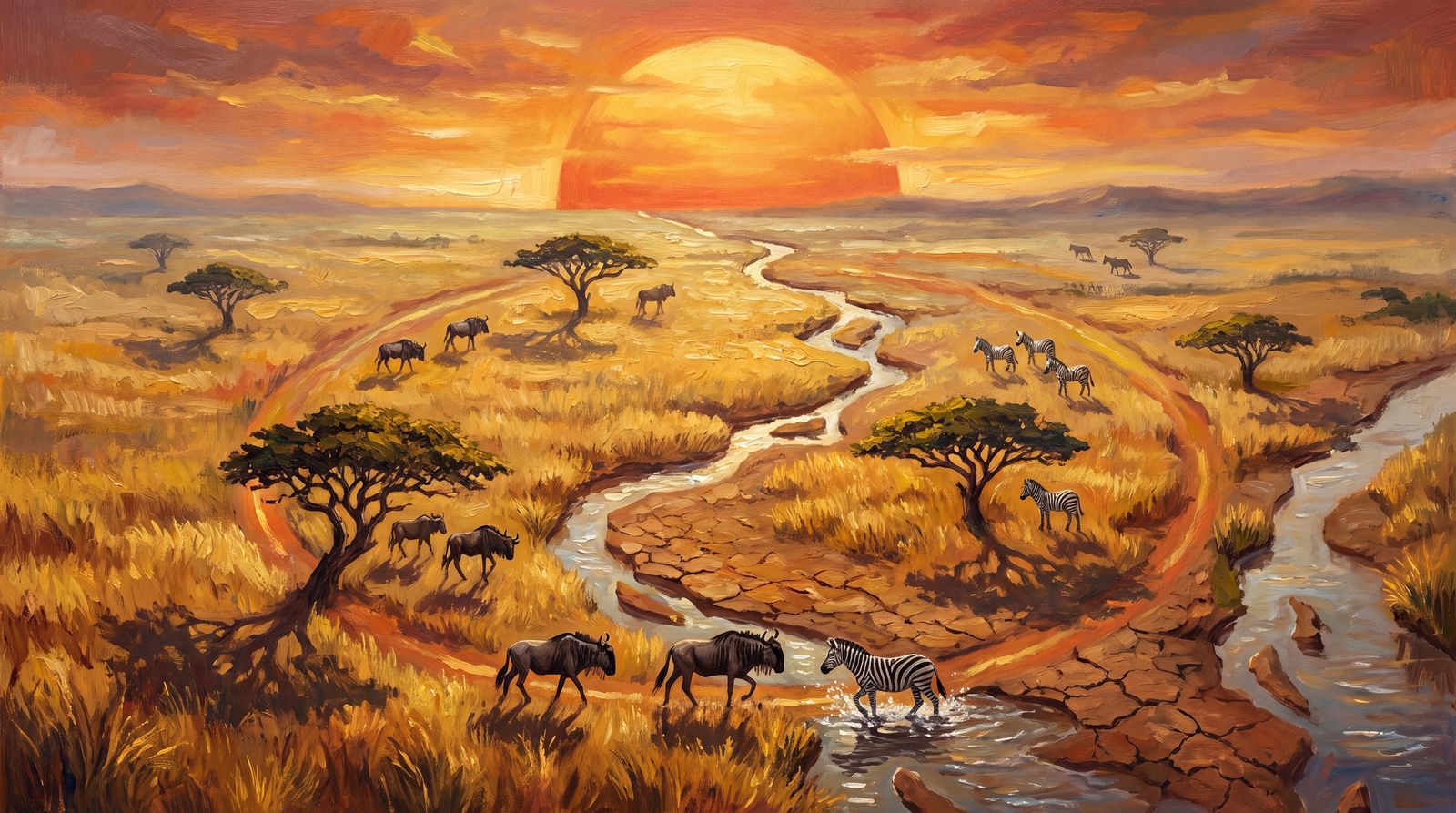
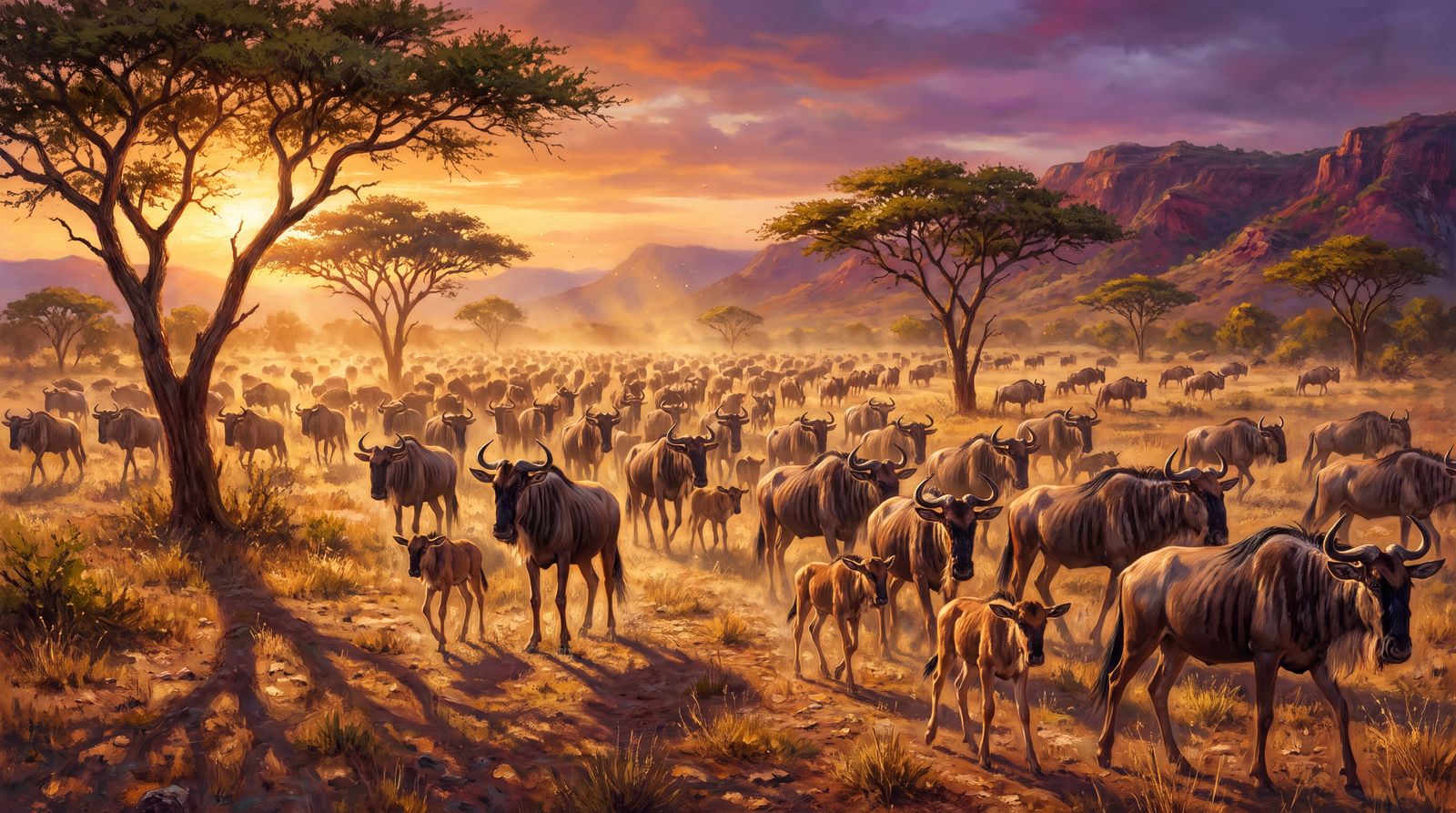
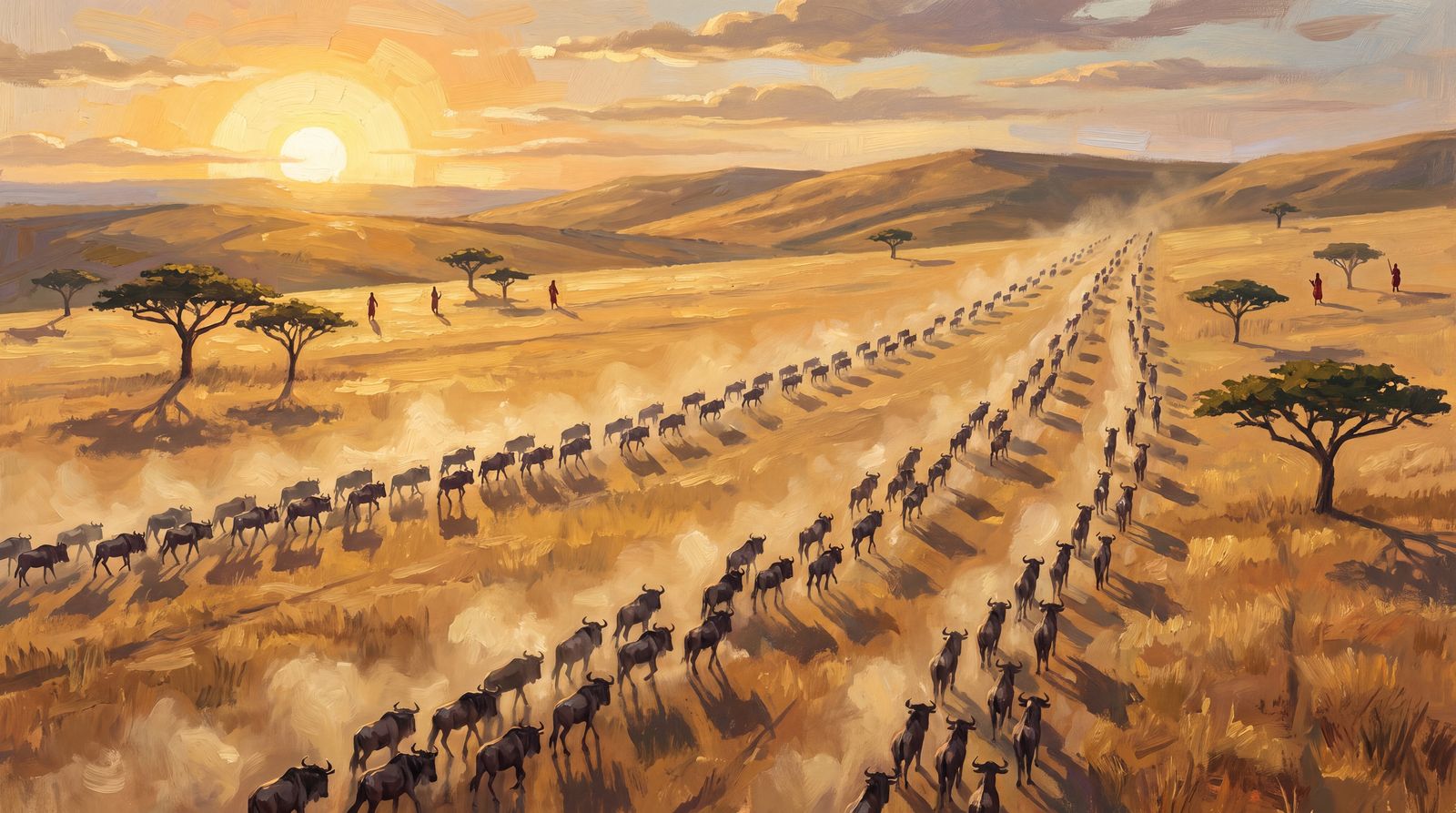
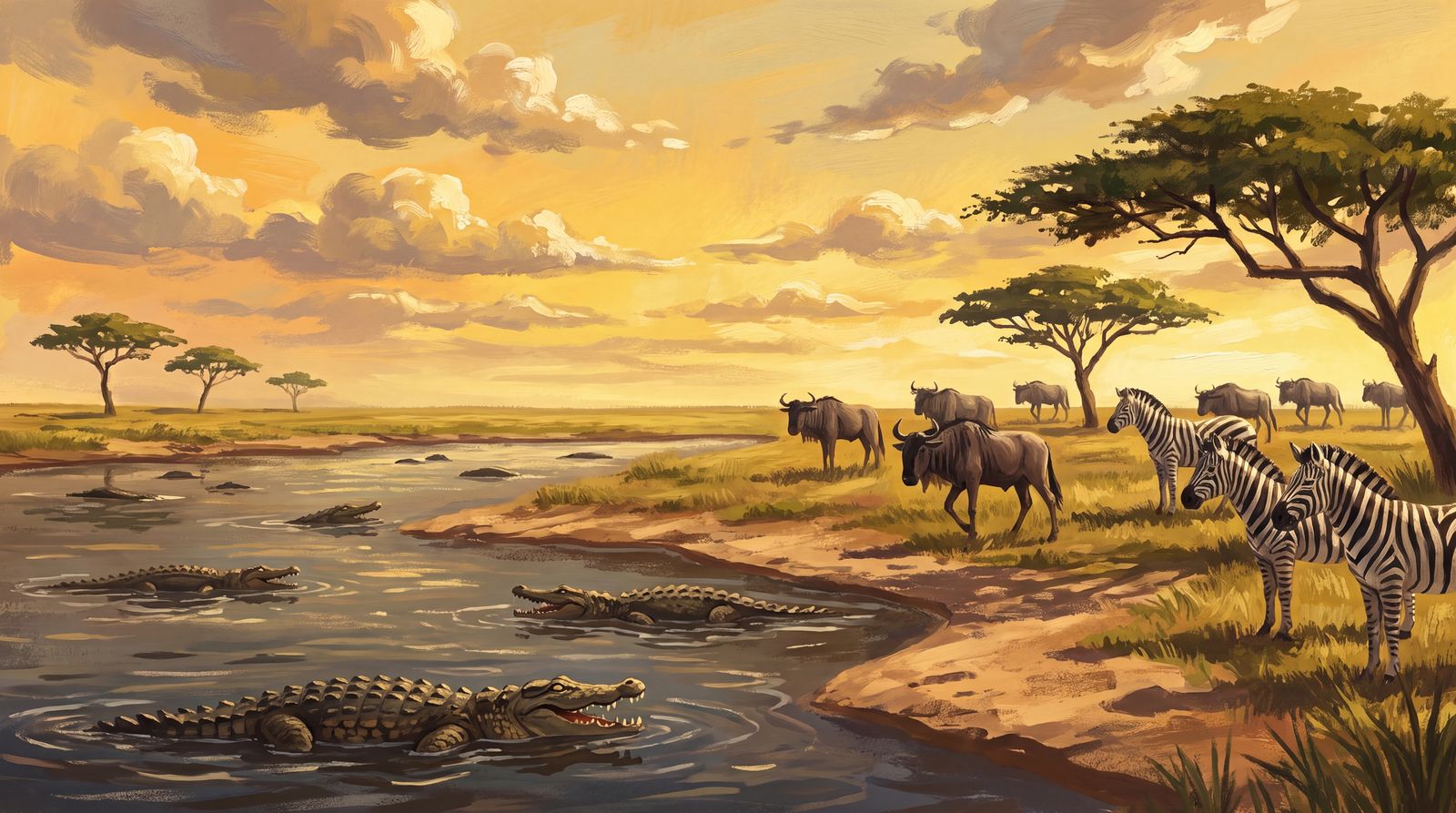
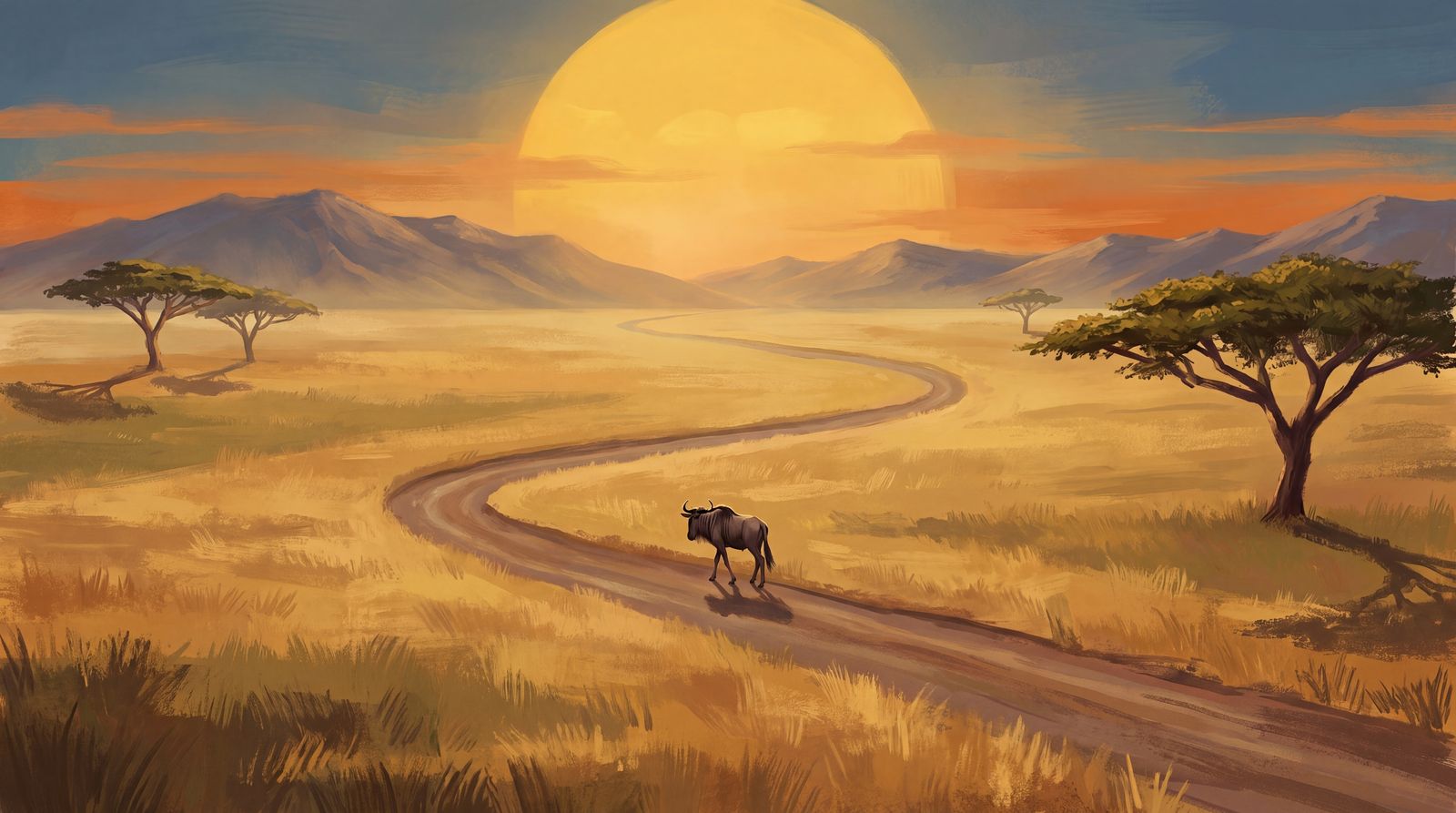
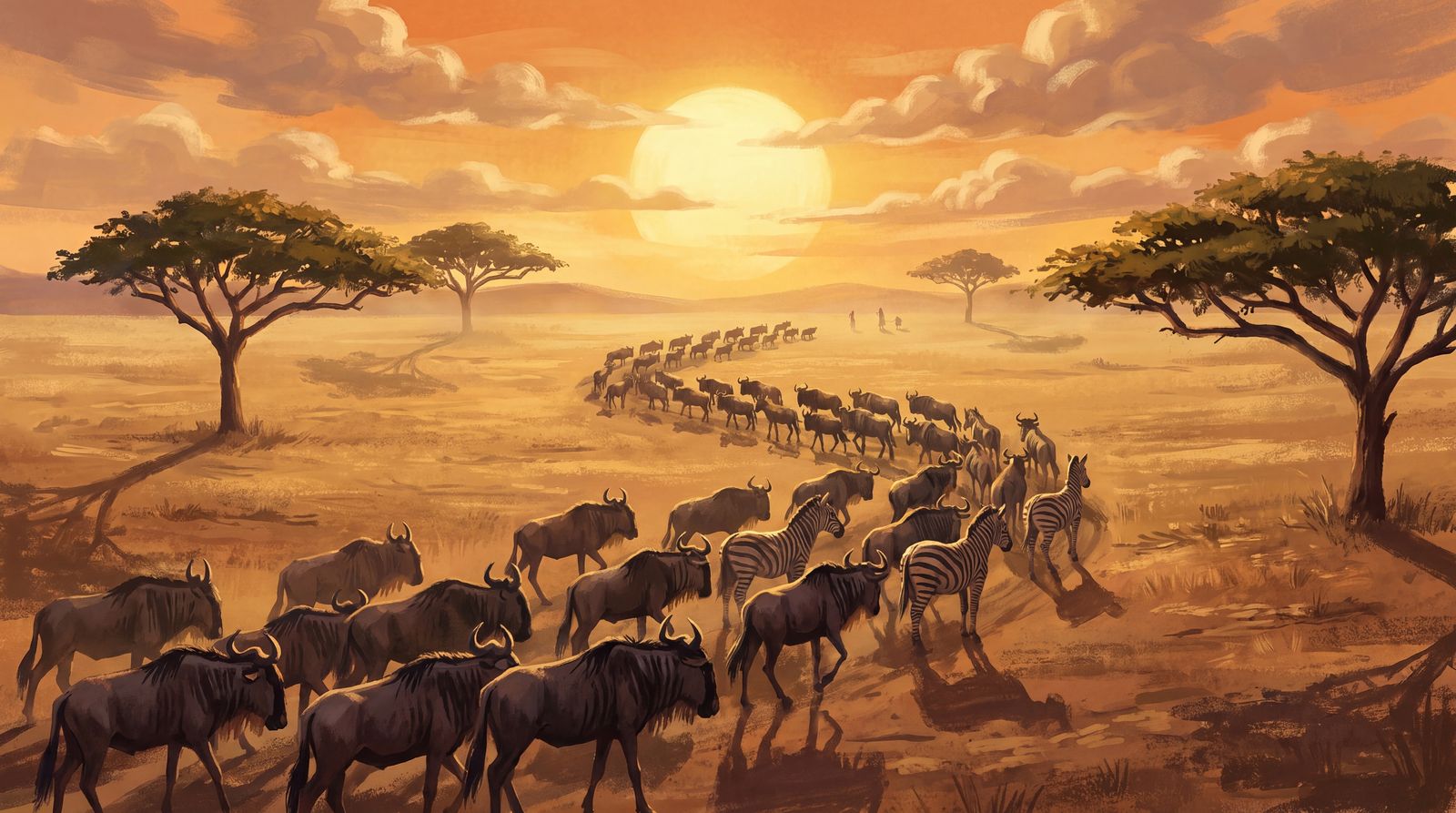
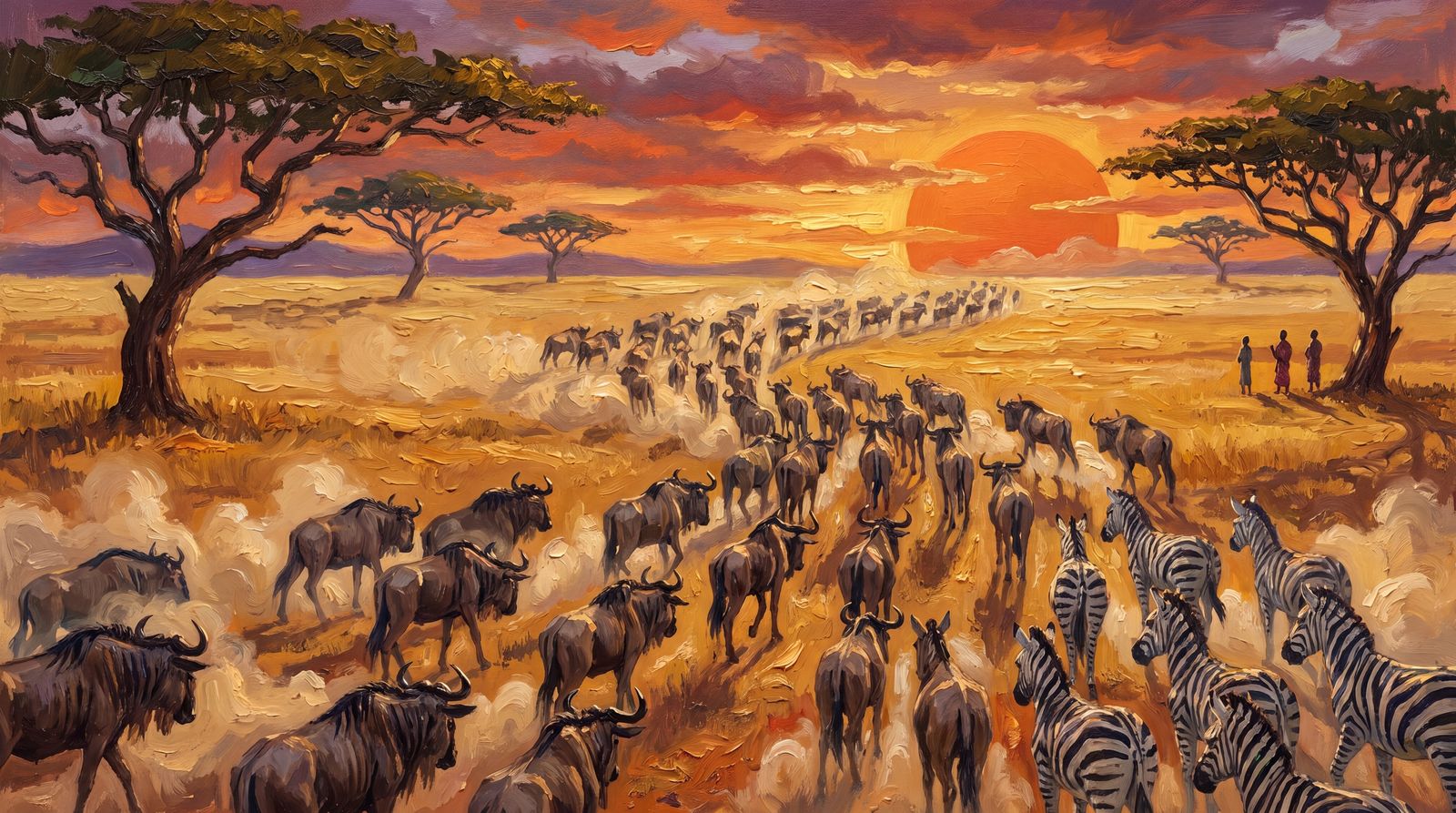
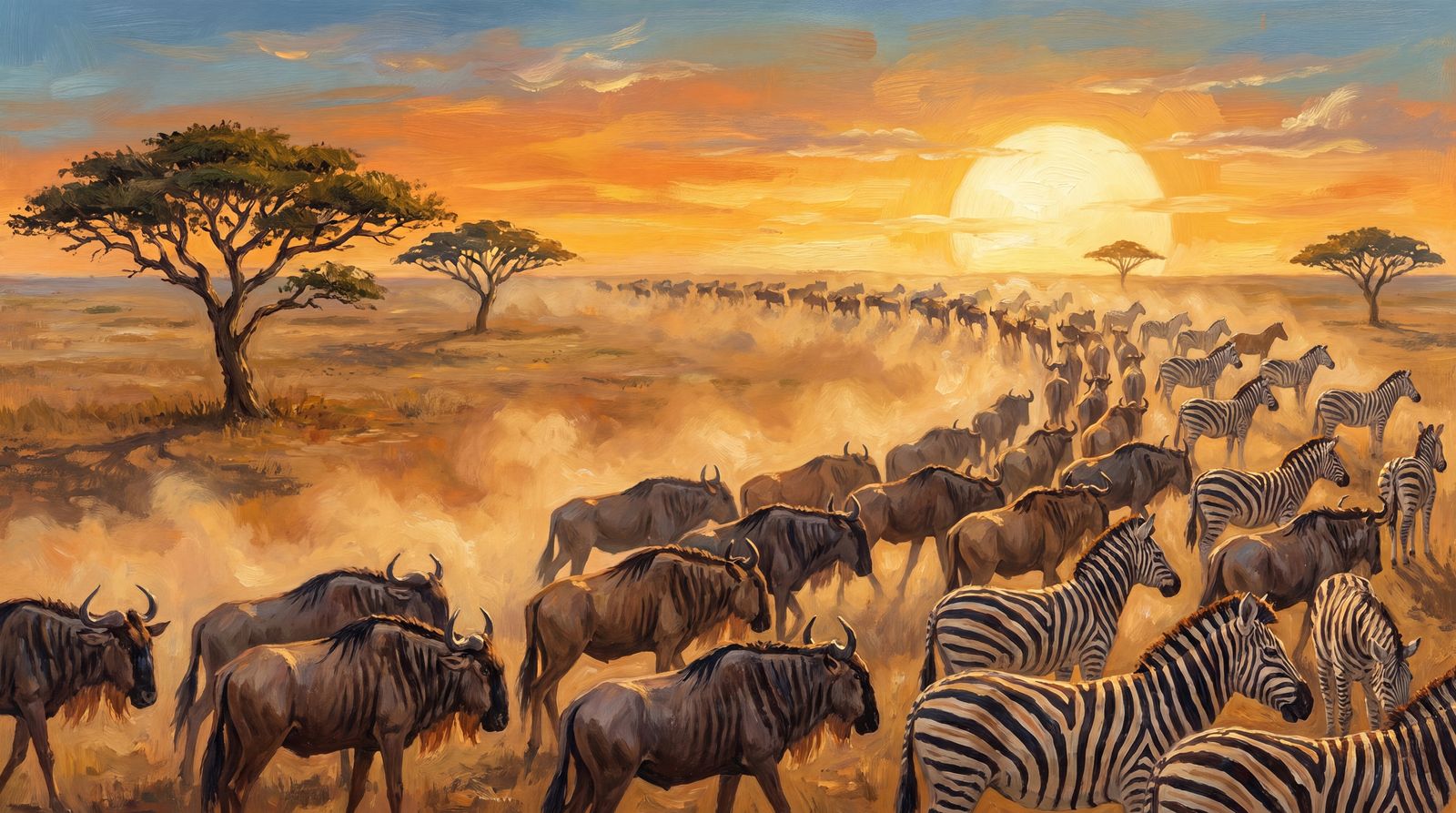
Every single year, on the plains of East Africa, around two million animals set off on a journey in one giant, endless circle. It is the largest march of land animals anywhere on Earth.

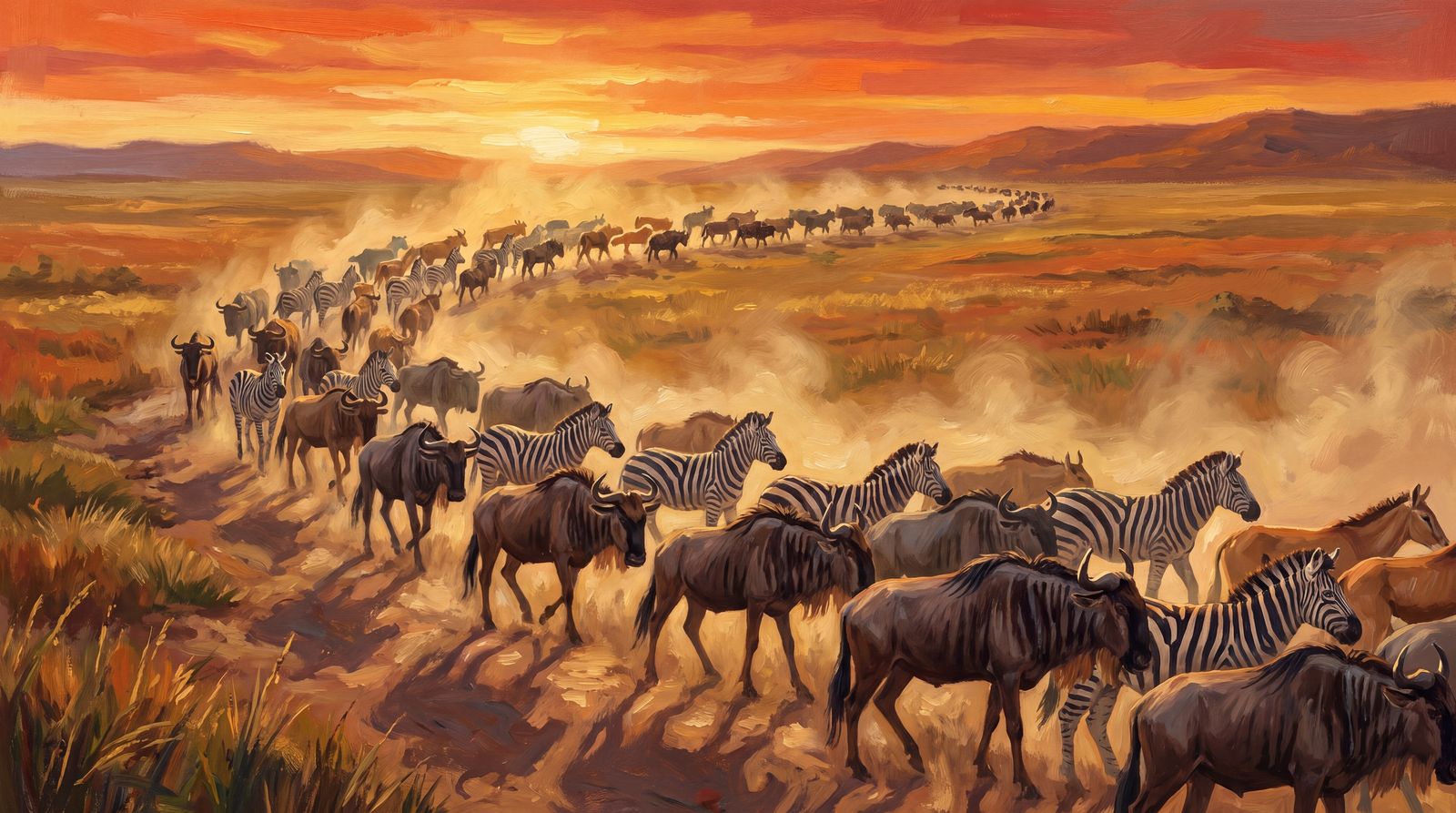
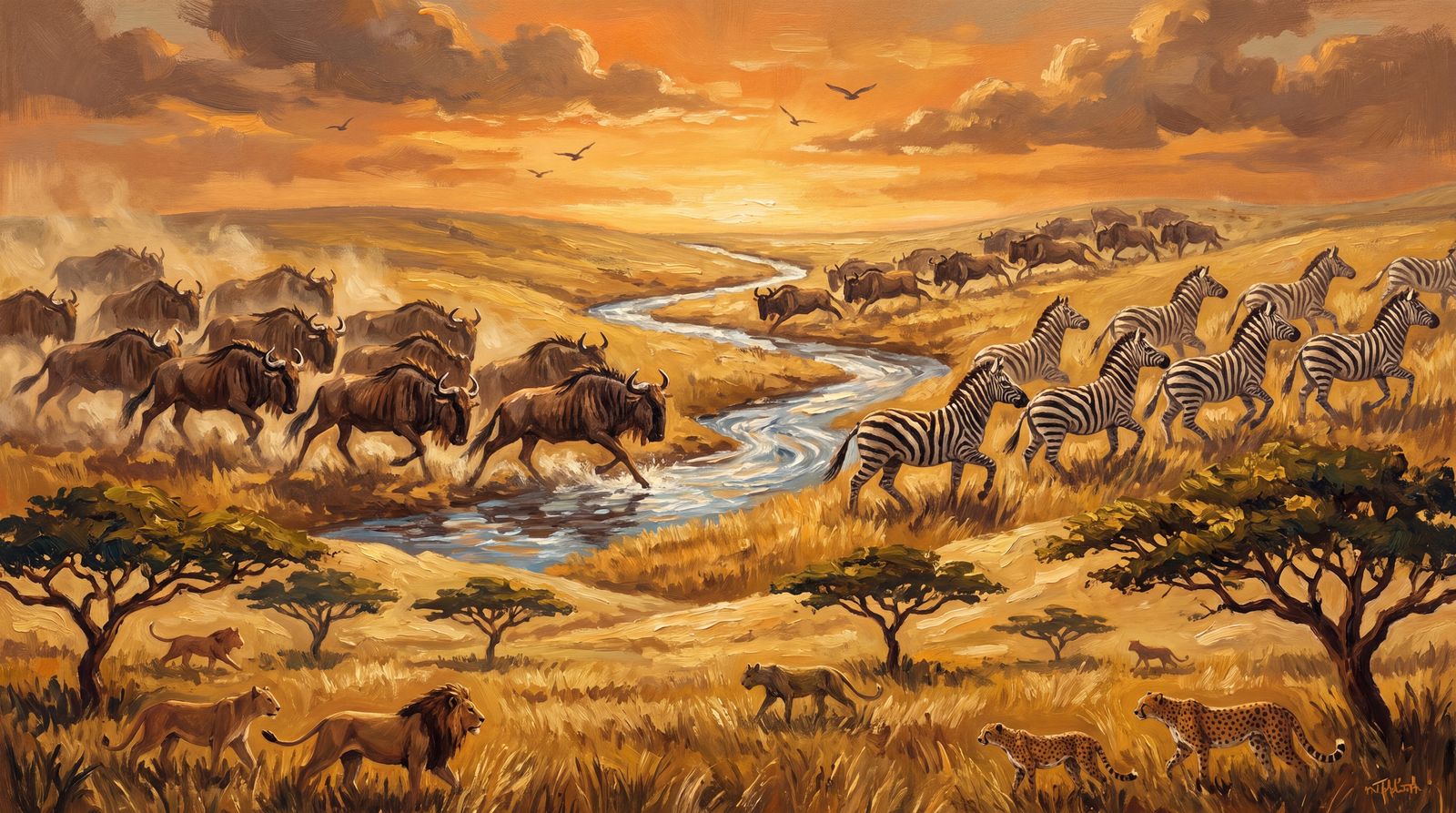
More than a million wildebeest, together with hundreds of thousands of zebra and gazelle, moving as one vast living river across the grass.

They never truly stop. Round and round, year after year, chasing the rain.

This is the Great Migration, across the Serengeti of Tanzania and the Mara of Kenya.

The word Serengeti comes from a Maasai phrase meaning the endless plains. And across those endless plains, the herds are always moving.

So what drives two million animals to walk in a circle forever? And what waits for them along the way?

The whole journey is a chase after one thing. Fresh grass, and the rain that grows it.

It begins in the south, on short-grass plains made rich by minerals from ancient volcanic ash.

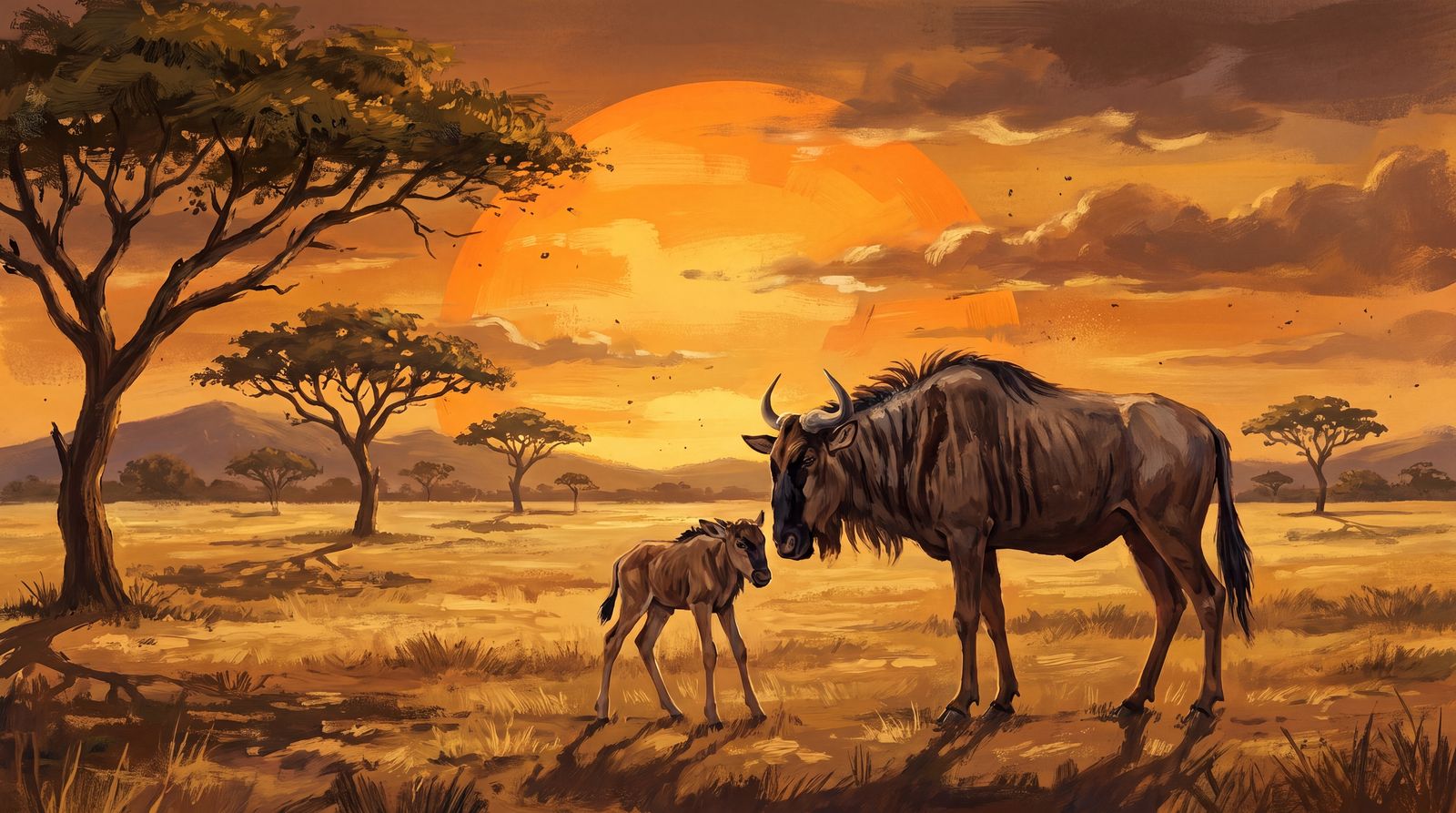
Here, in just a few weeks early in the year, something extraordinary happens. Hundreds of thousands of calves are born, almost all at once.

A newborn wildebeest can stand and run within minutes. It has to. Because it is born into a land full of hunger.

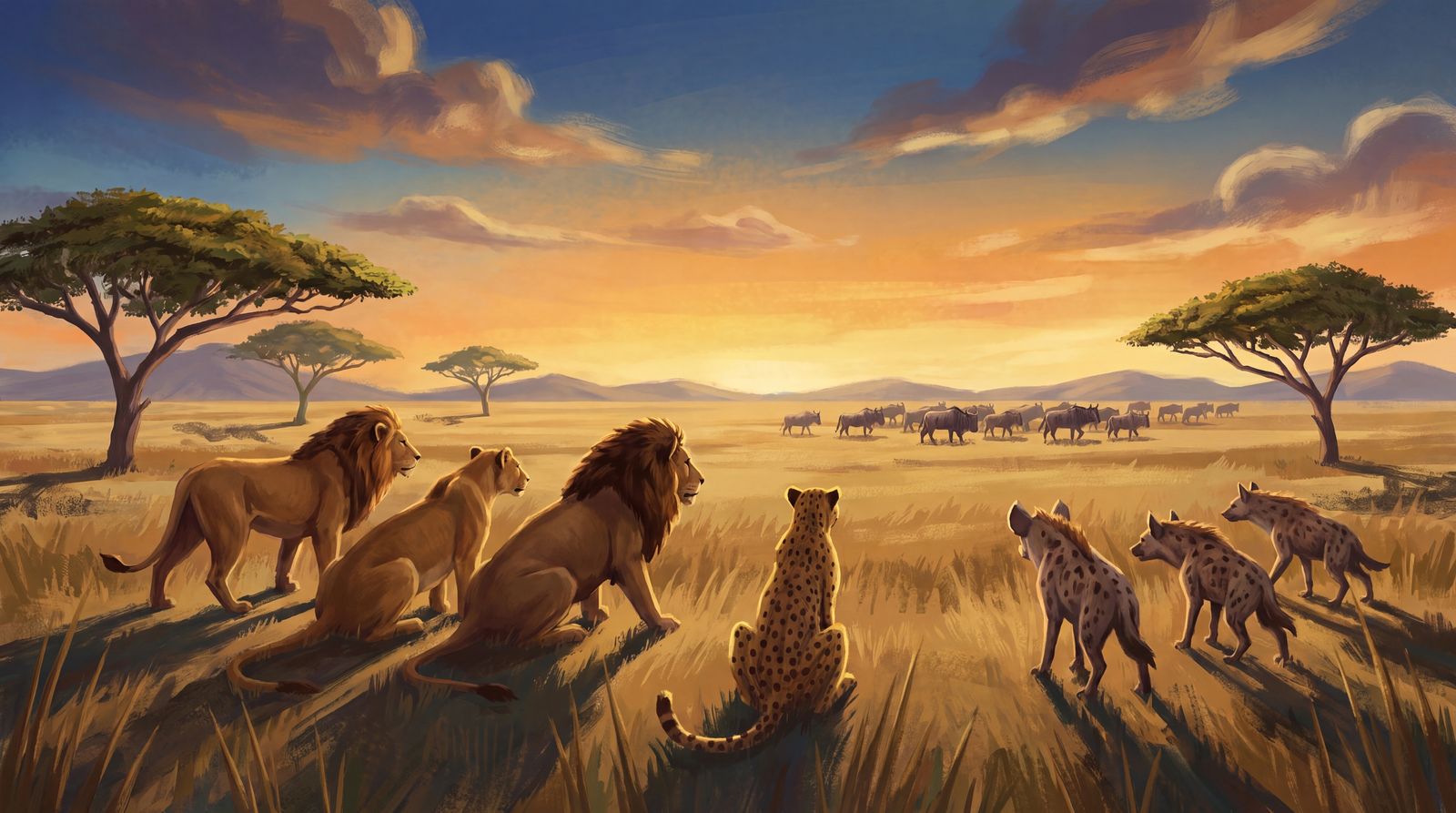
Lions, cheetahs, hyenas and leopards shadow the herds, taking the young, the old, and the slow.

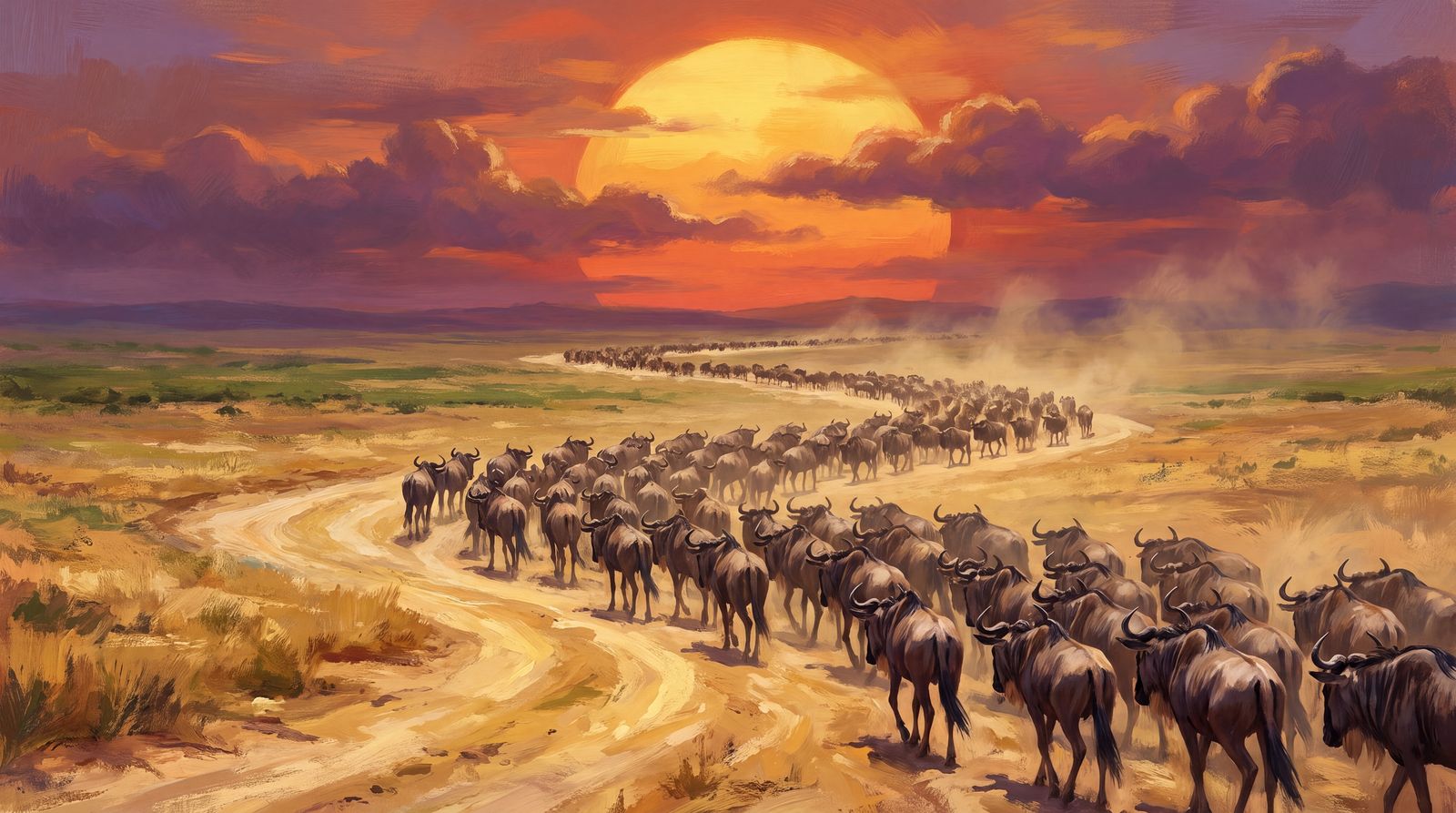
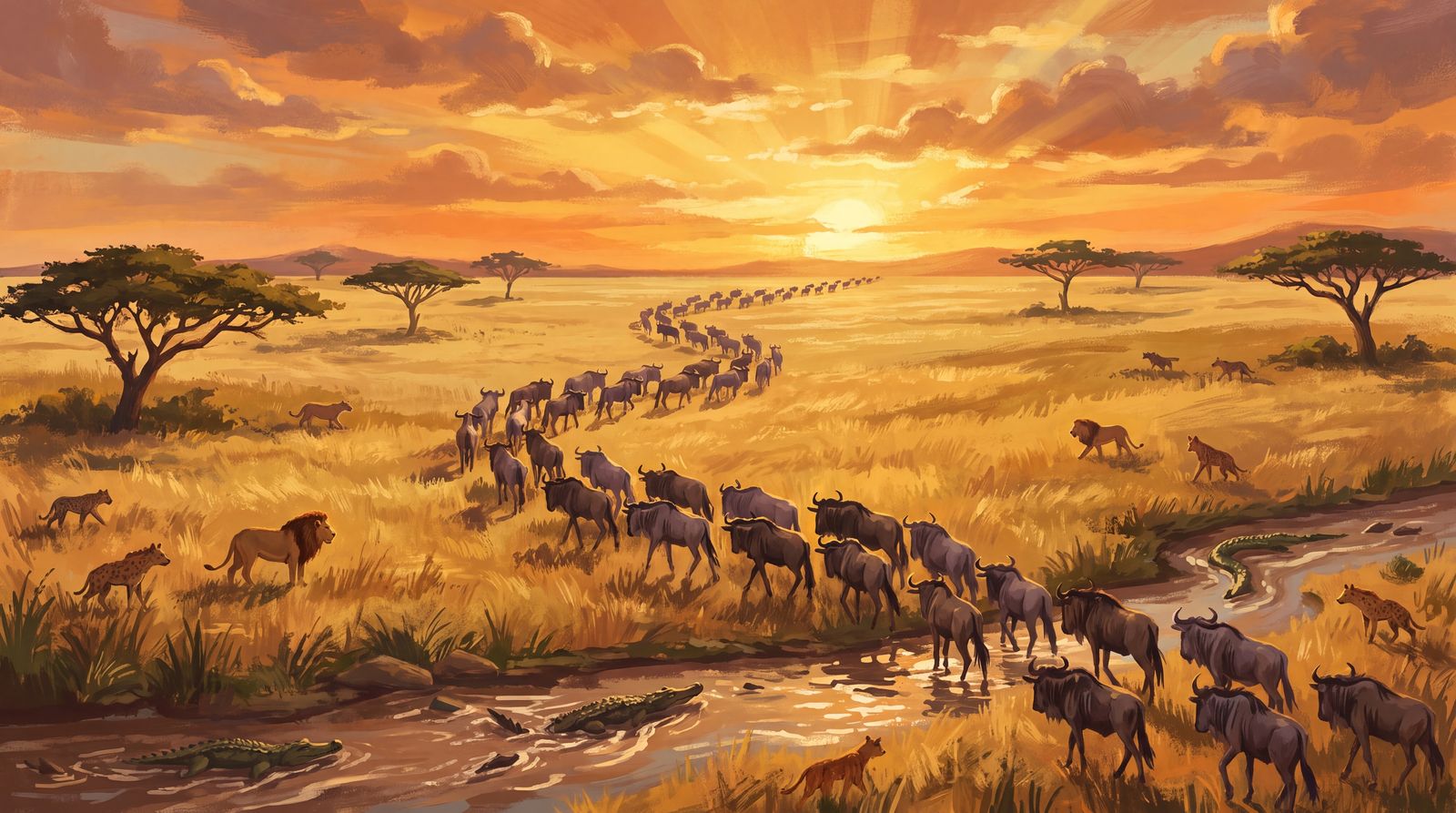
As the dry season comes and the southern grass fades, the herds turn, and begin to move north, in columns that can stretch for miles.

And ahead of them lies the greatest test of all.

The rivers.

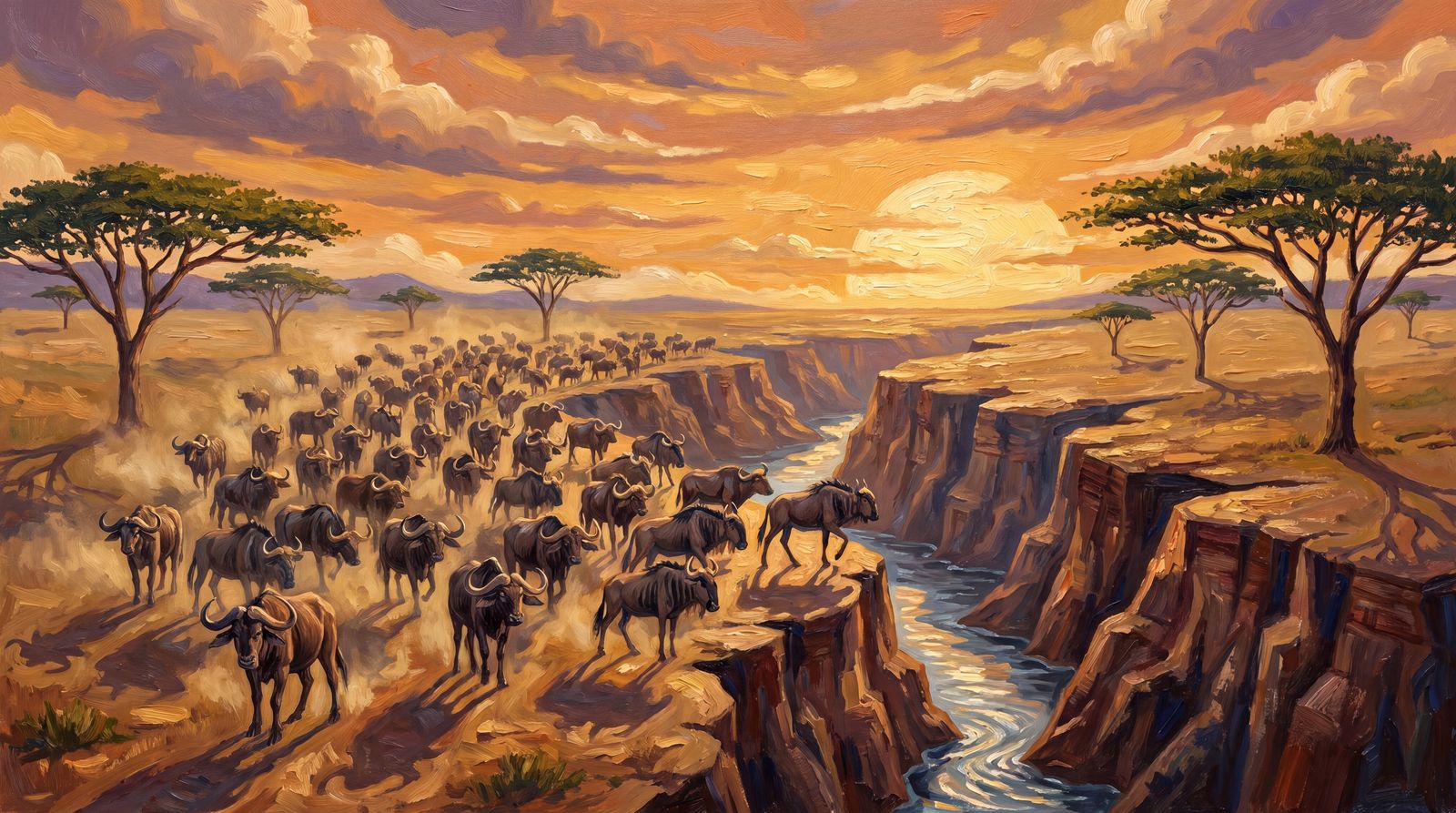
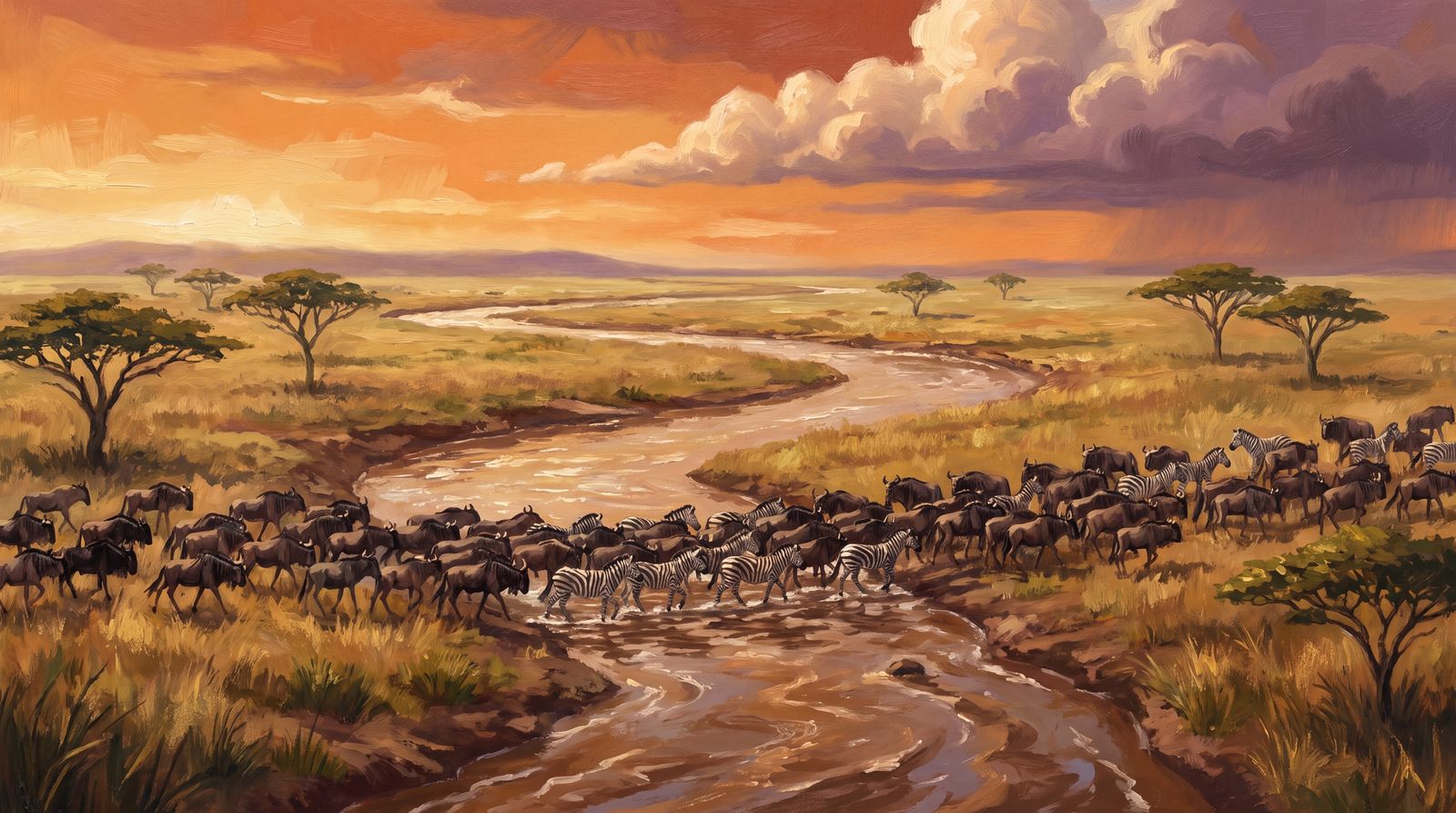
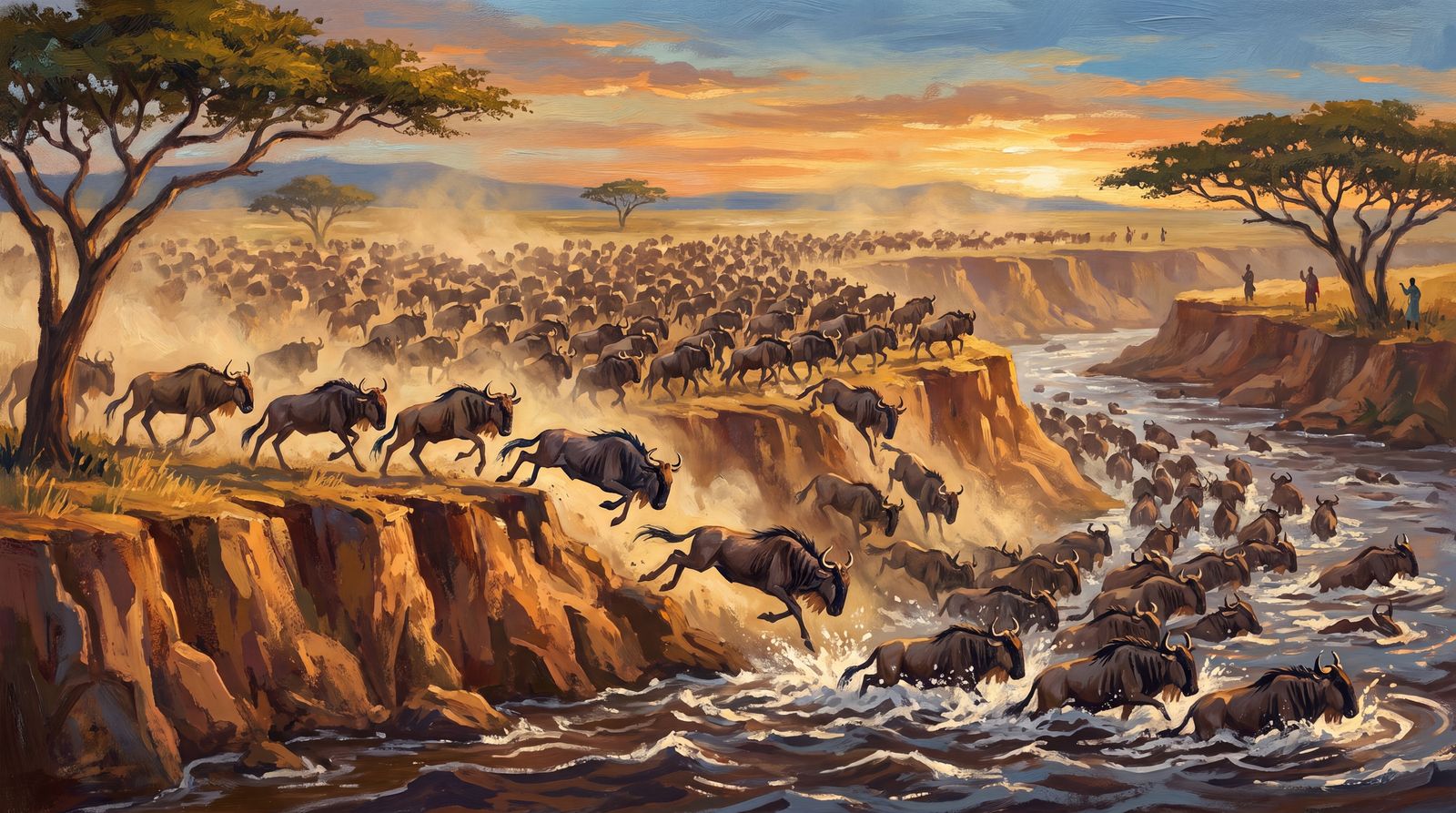
To reach fresh grazing, the herds must cross wide, muddy rivers like the Grumeti and the Mara.

And in that water wait some of the largest crocodiles on Earth, who spend much of the year simply waiting for this one feast.

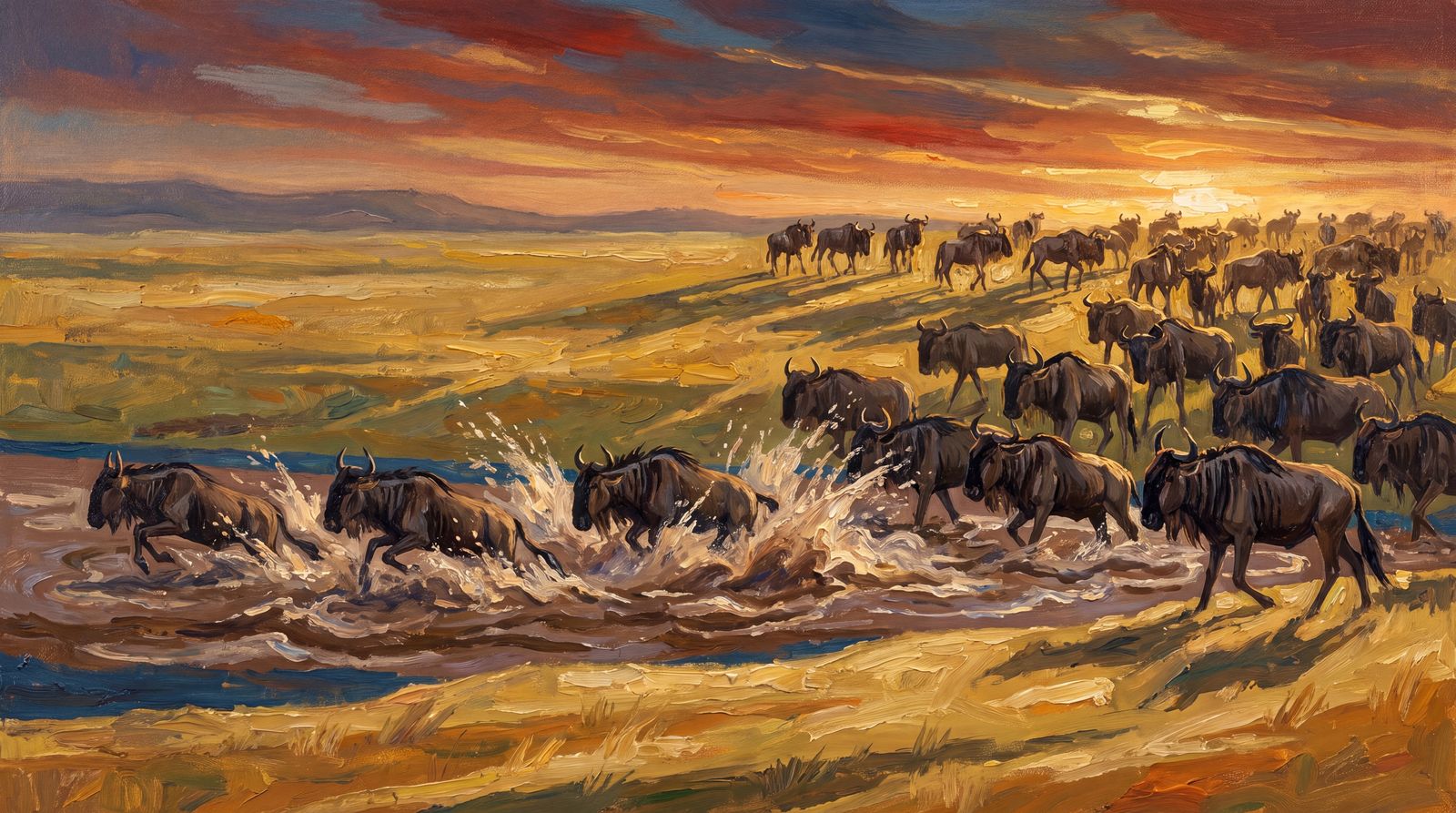
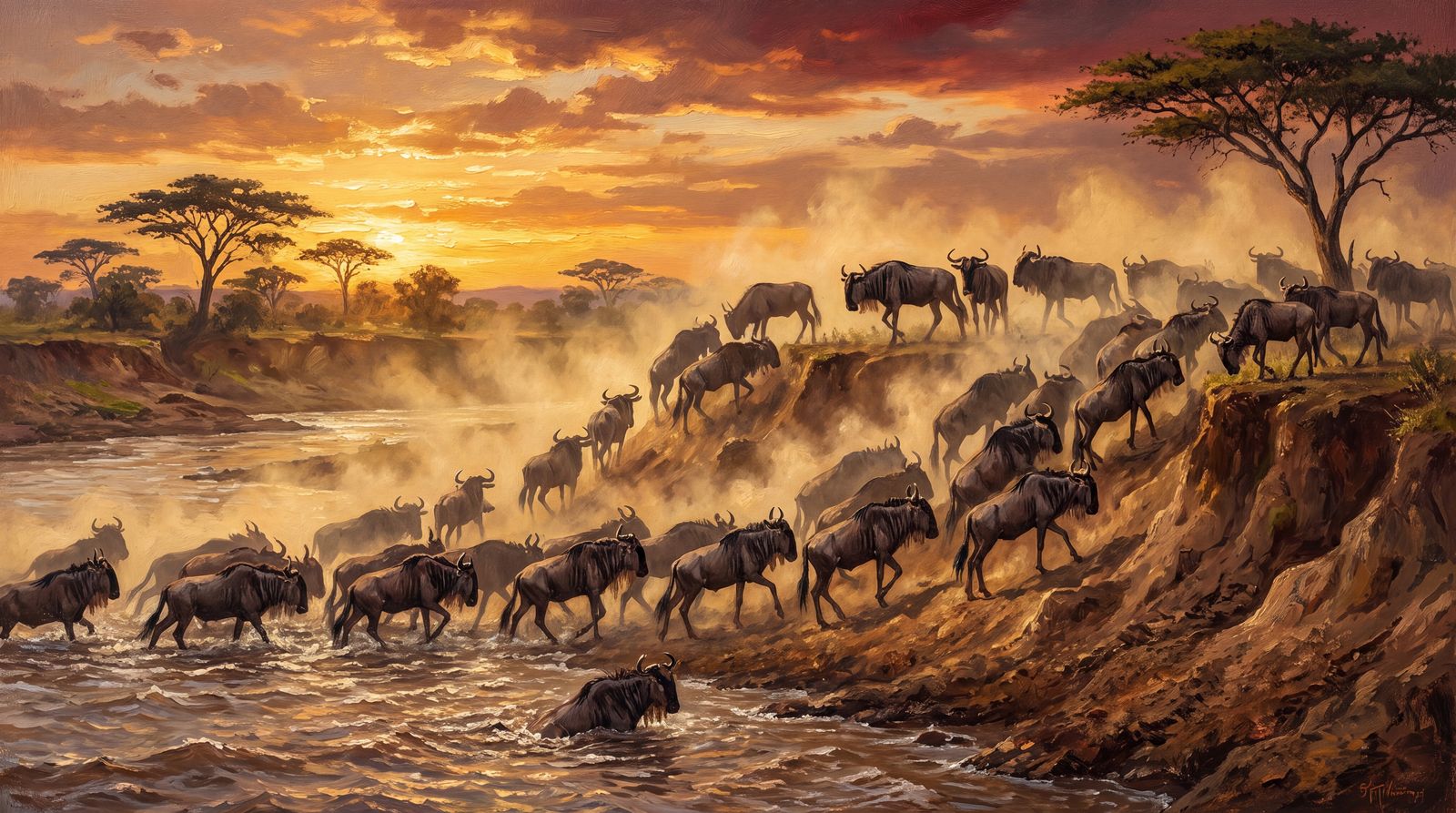
The animals gather on the bank, hesitating, packing tighter and tighter. Then one leaps, and thousands follow, in a churning, desperate rush.

Some drown. Some are taken. But most make it across, and press on north.

They reach the northern plains, graze through the dry months, and then, as the rains return to the south, they turn around, and do it all again.

A single wildebeest may walk more than a thousand kilometres in one year, on this endless loop.

And here is the wonder of it. This is not chaos. It is one of the great engines of an entire ecosystem.

The herds fertilize the plains as they pass. They feed the predators. Their crossings feed the rivers.

Two million lives, moving together, keeping one of the last great wild places on Earth alive.

It has rolled on like this for longer than humans have farmed, or built cities, or written a single word.

A living river of hooves and horns, circling forever beneath the African sky.

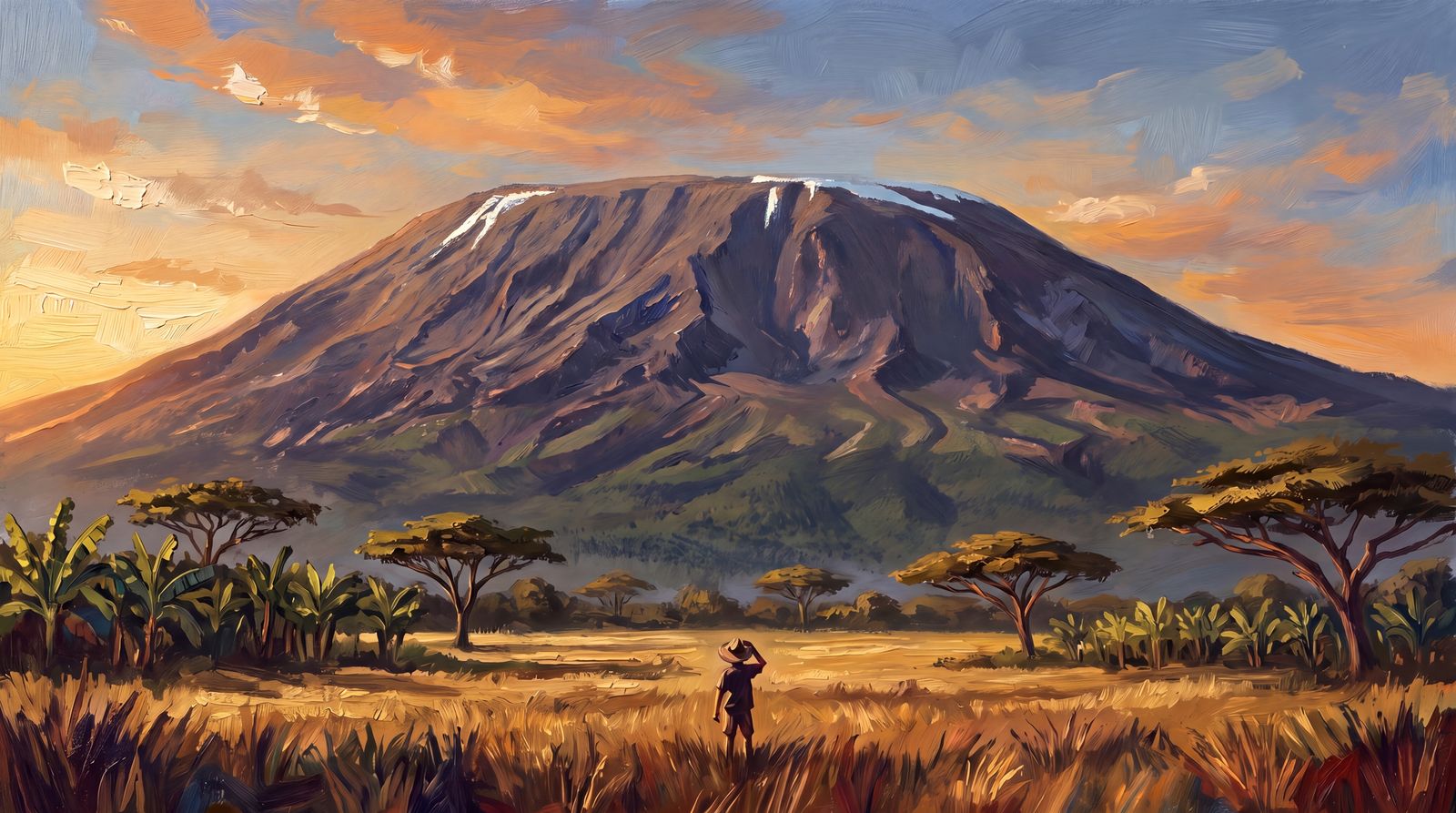
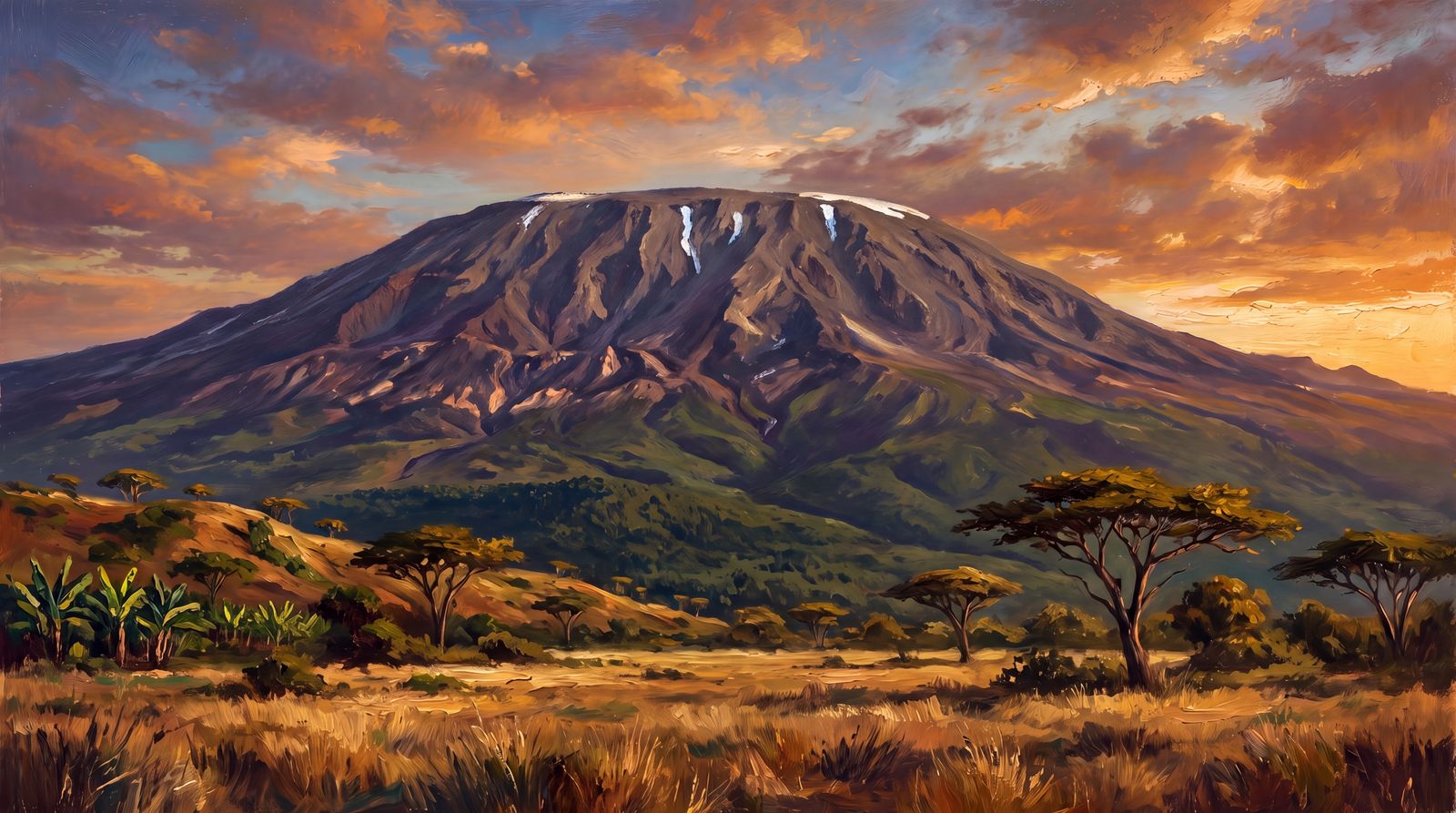
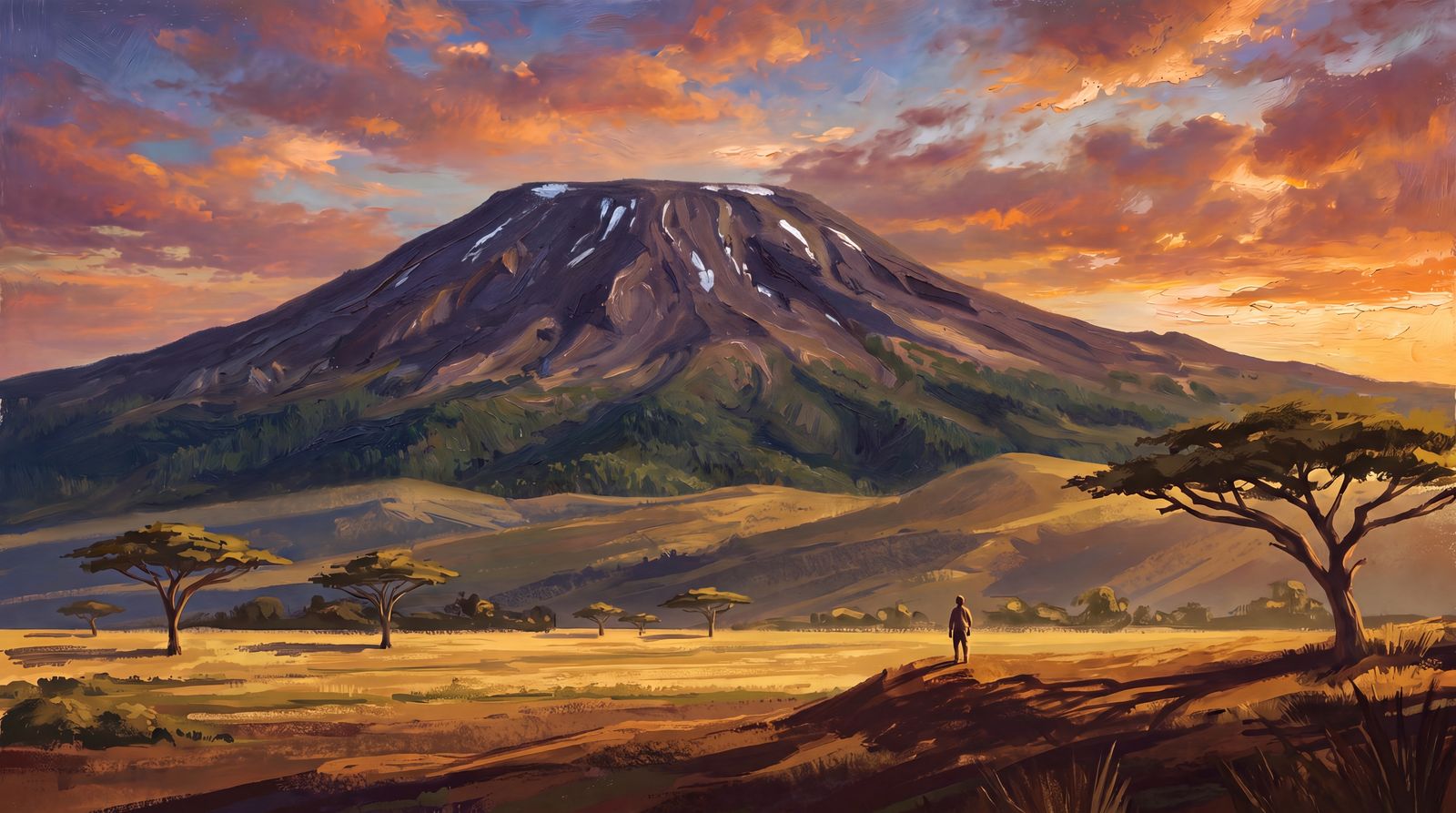
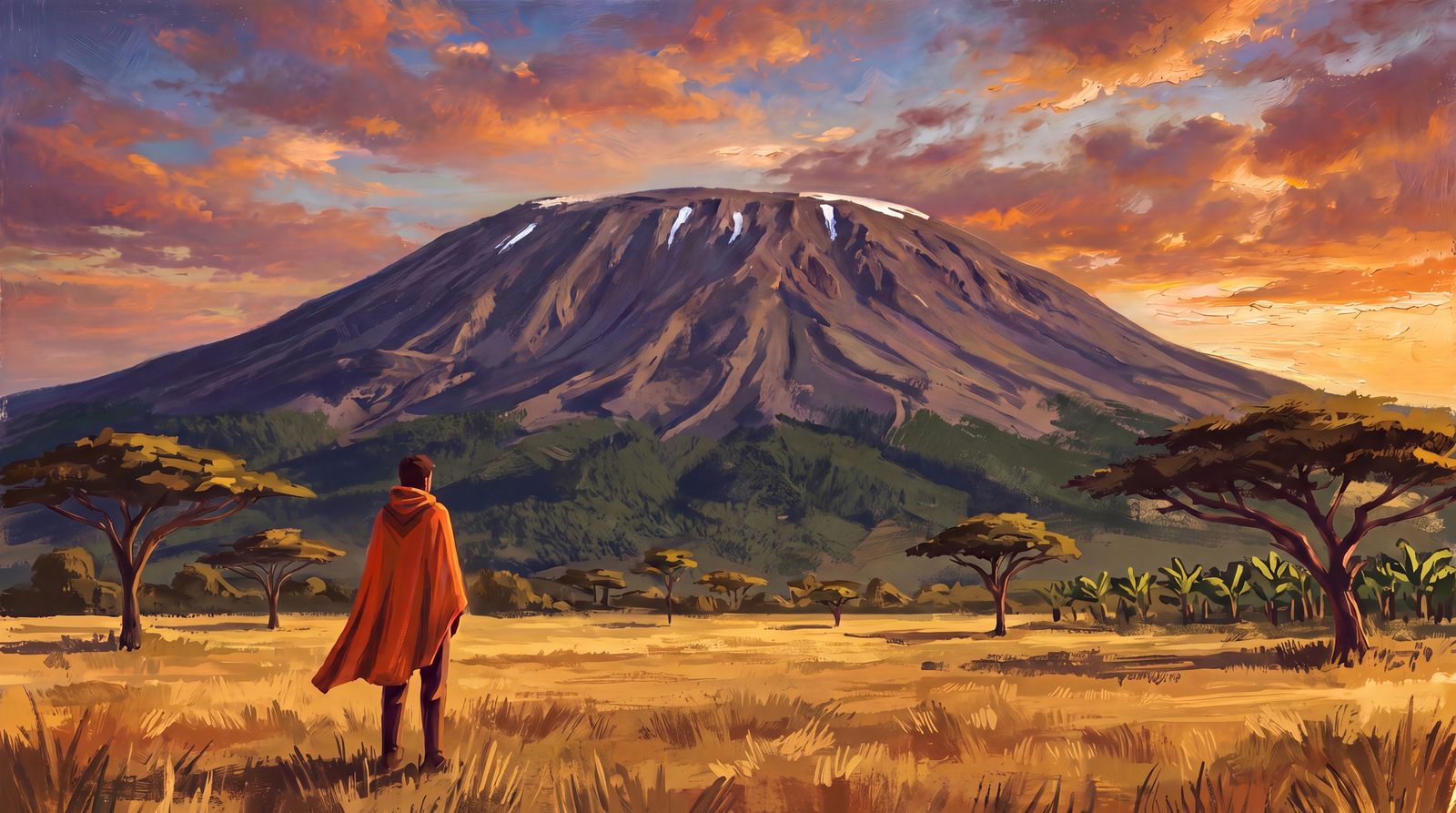
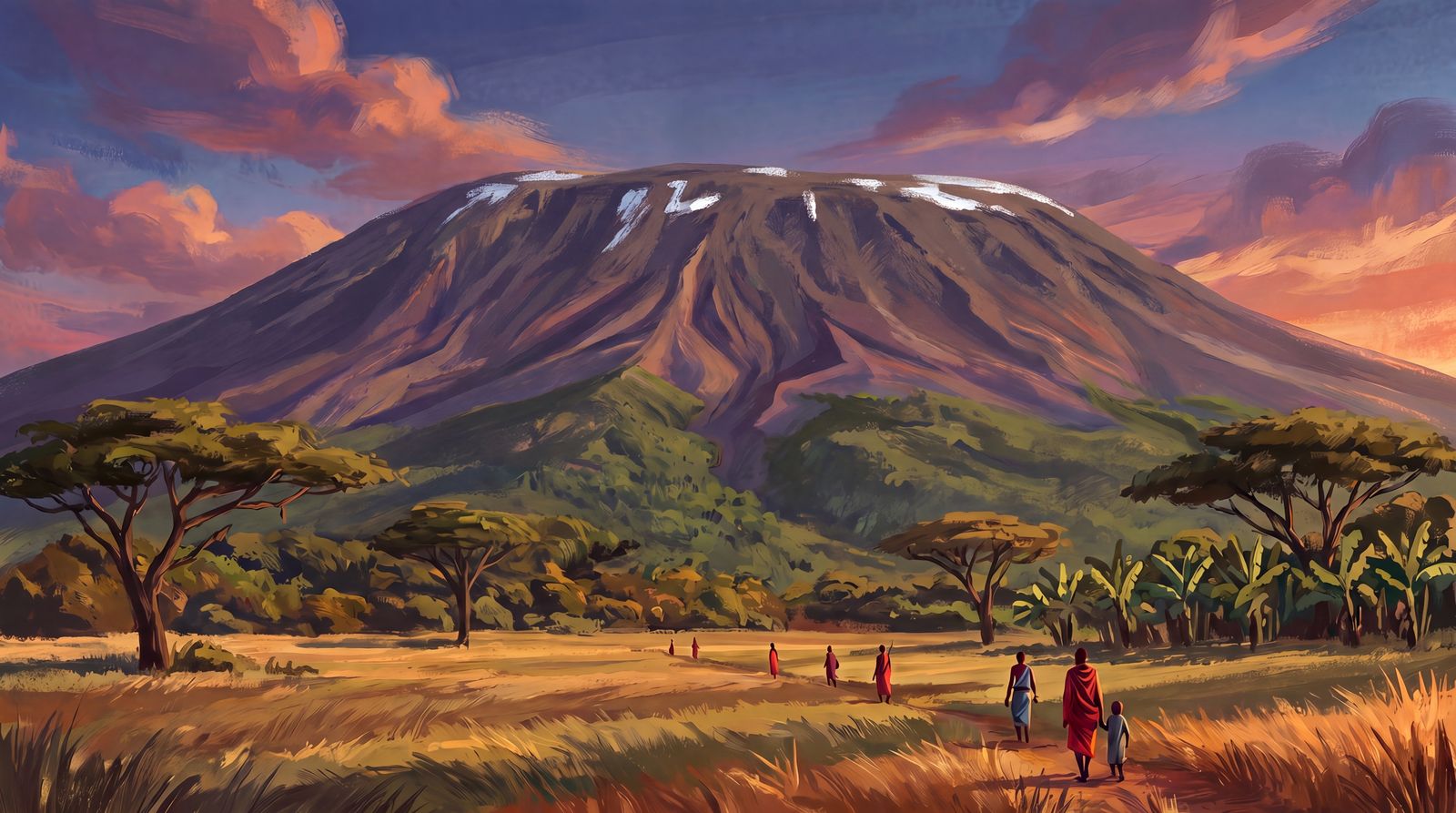
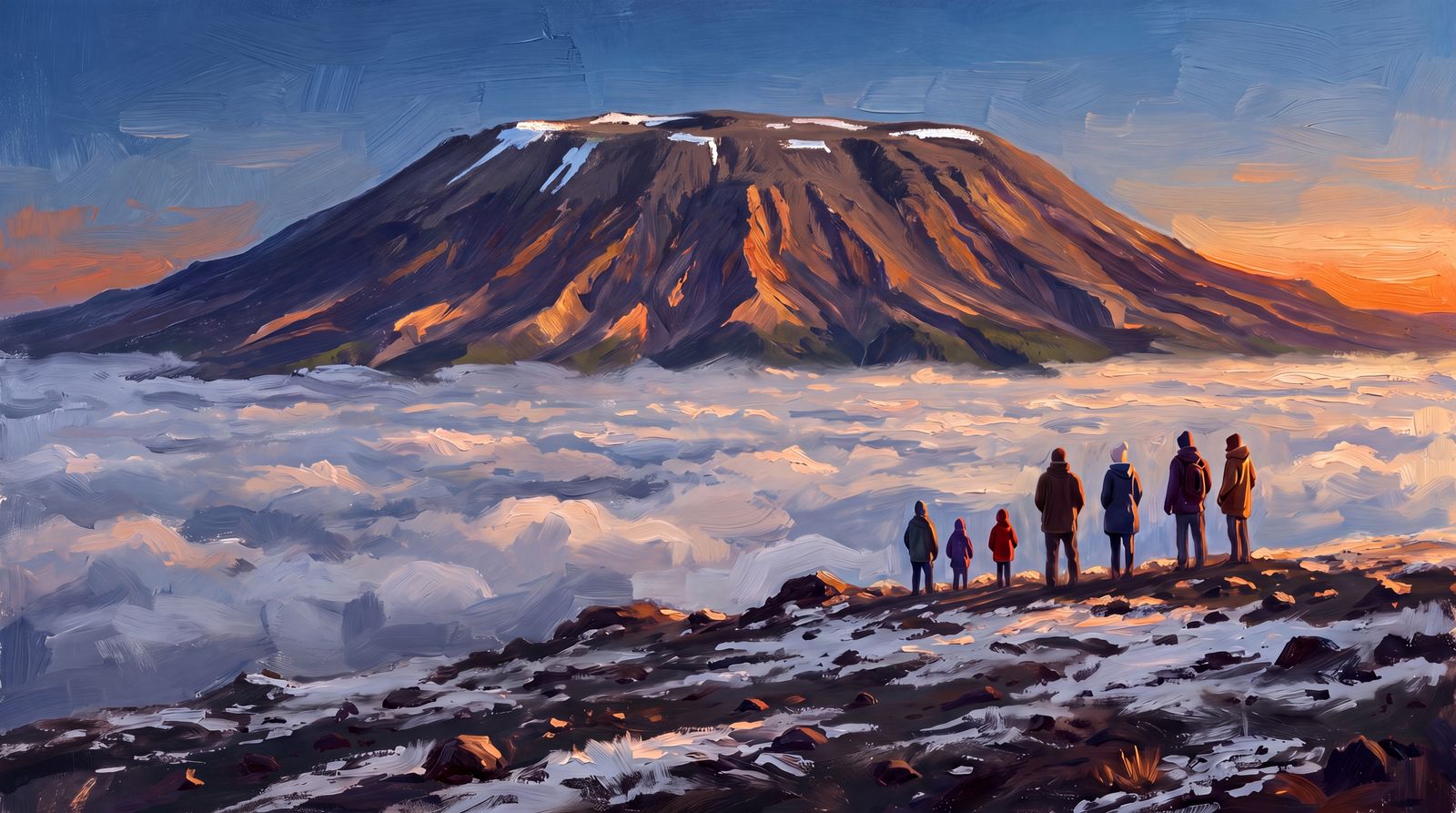
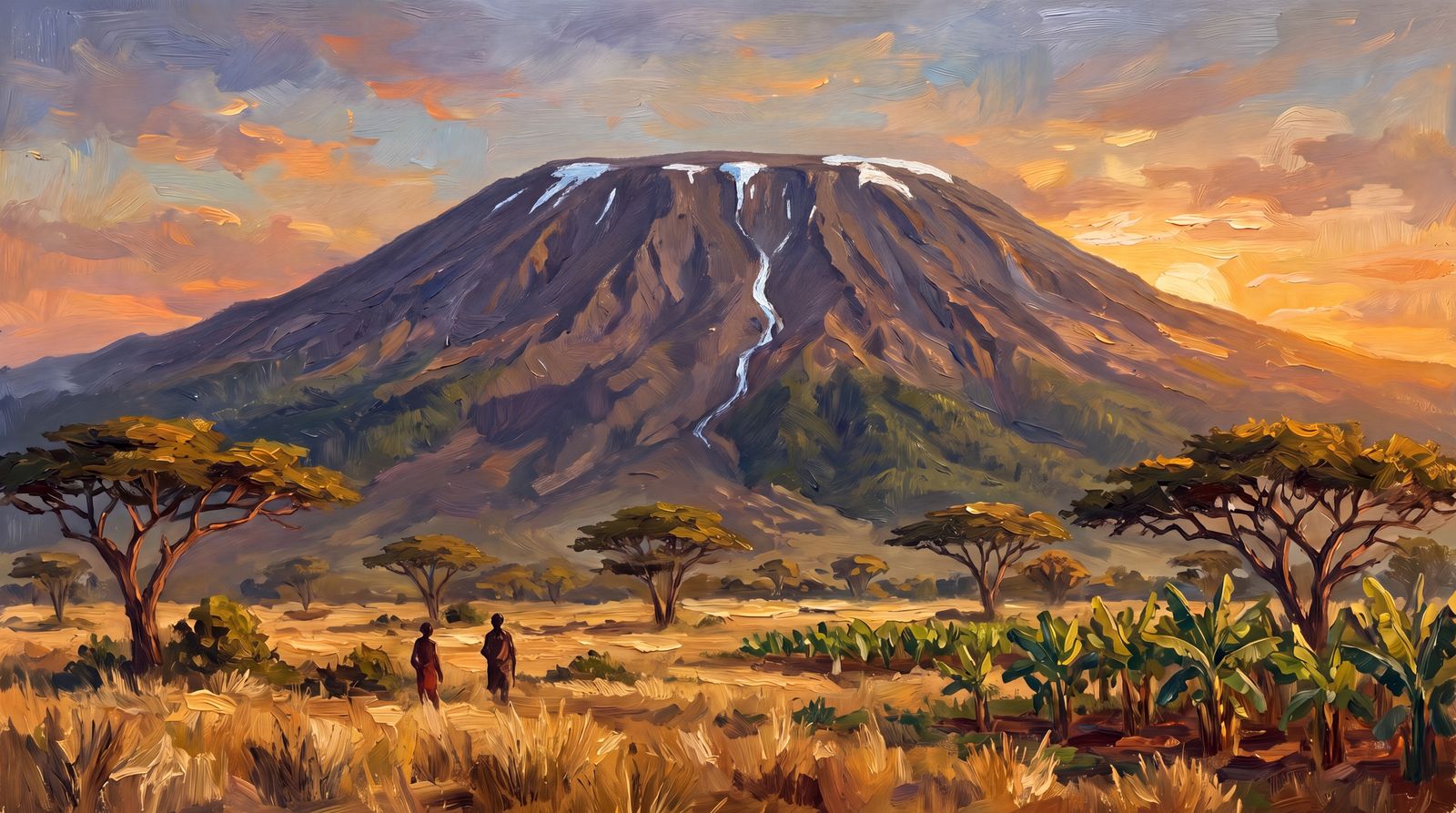
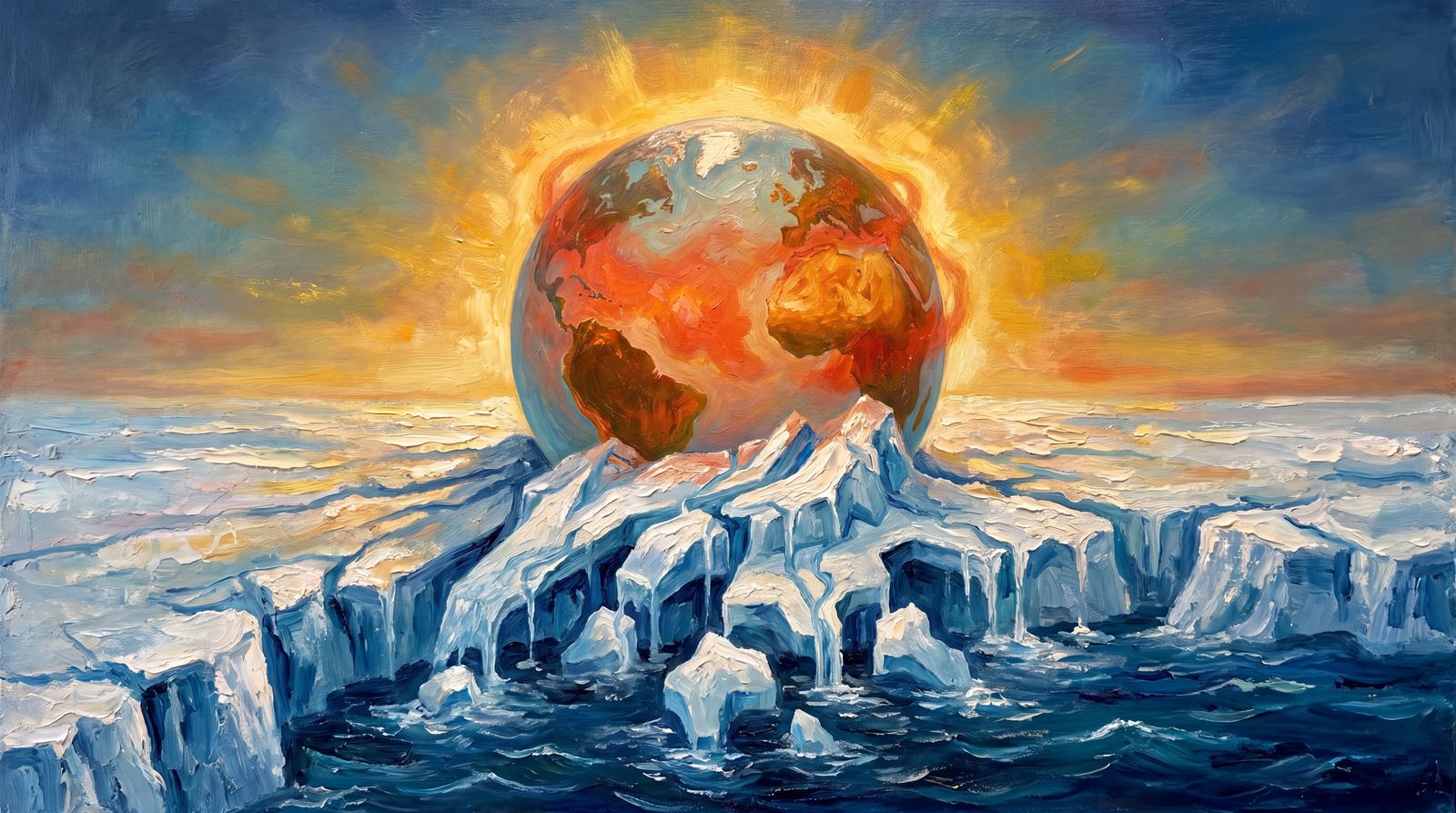
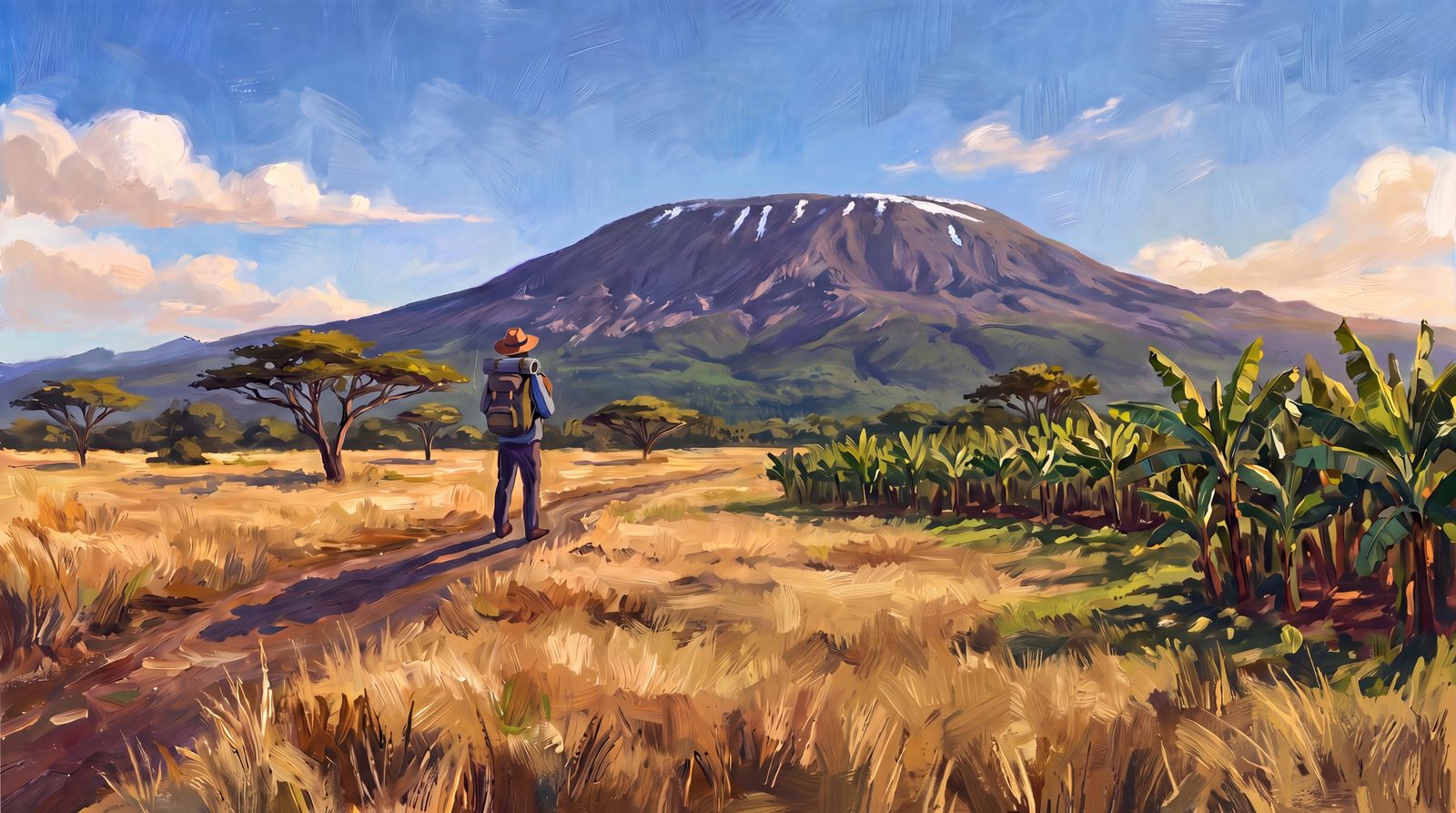
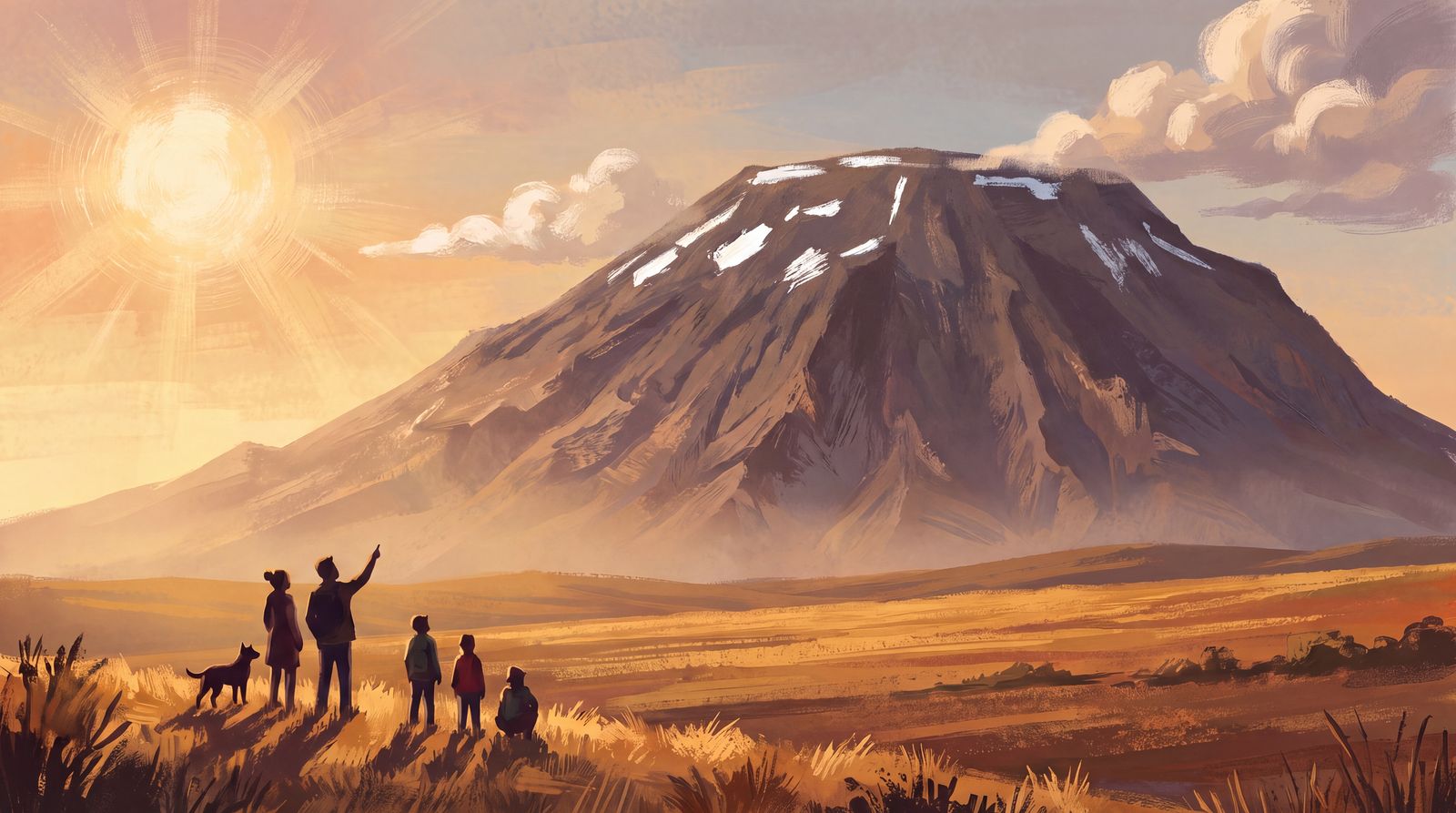
And above those plains stands the mountain our ancestors would have seen on the horizon. Kilimanjaro, crowned with ice. Ice that is vanishing in our own lifetime, changing the very landscape that made us.

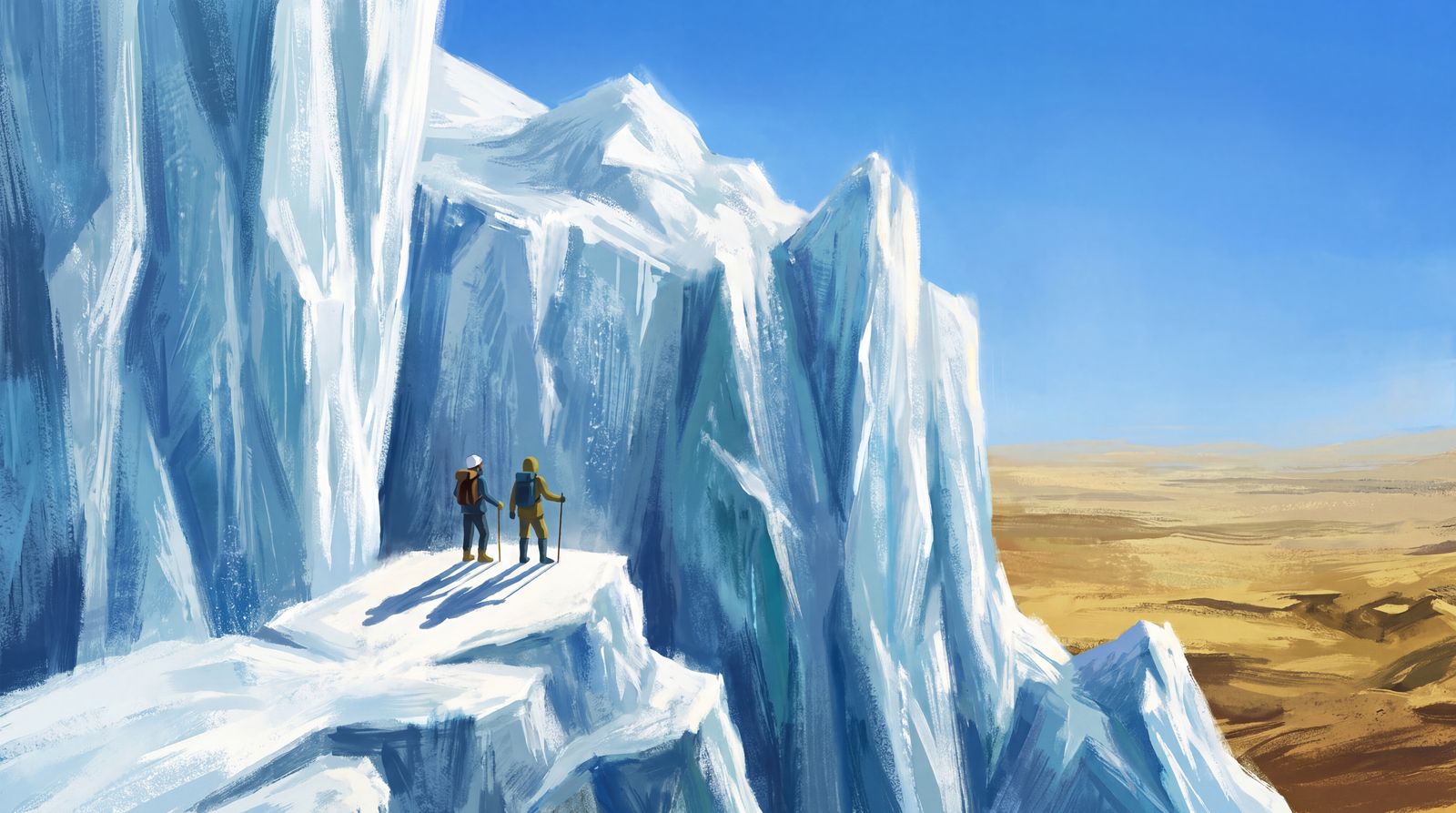
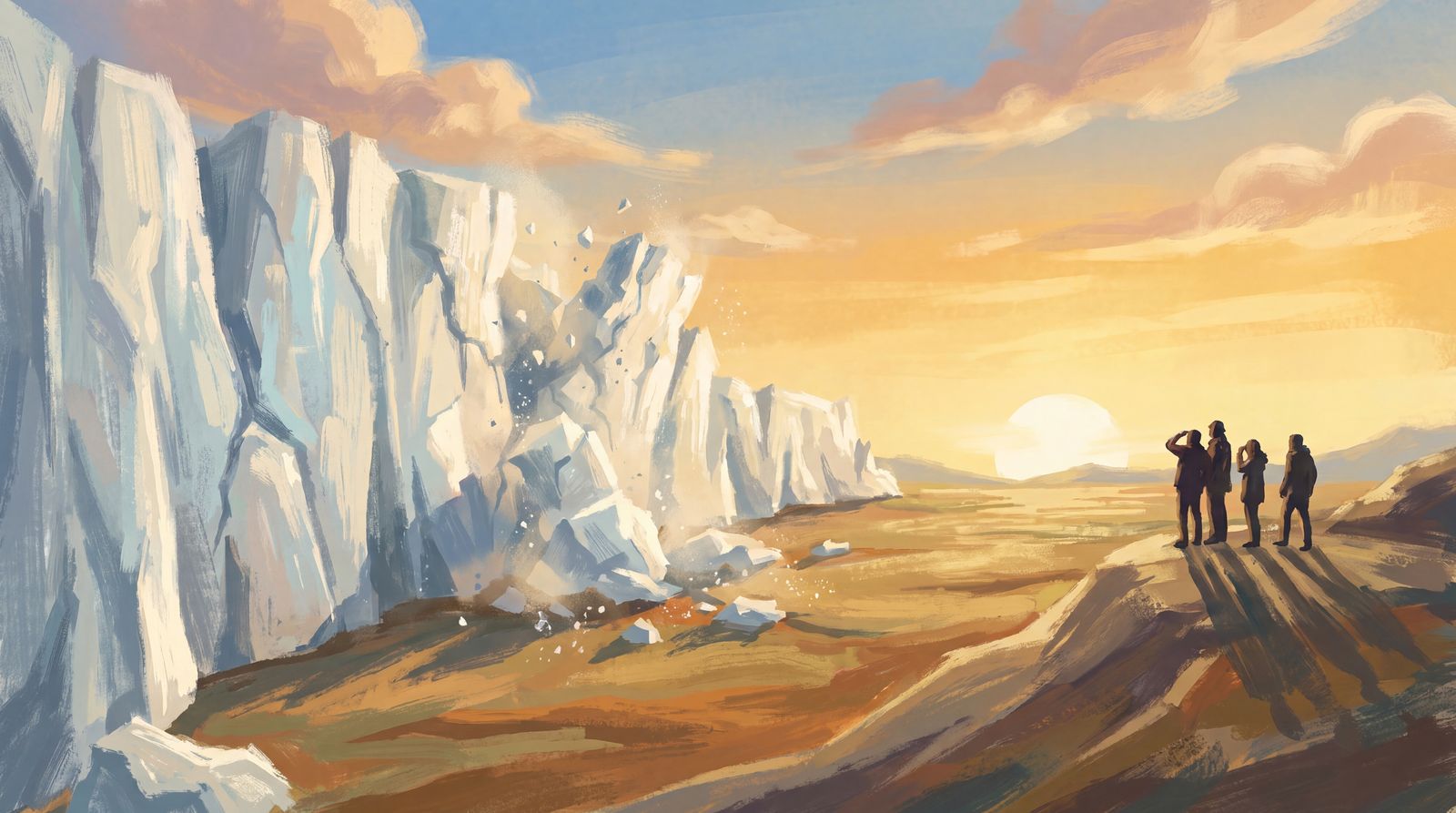
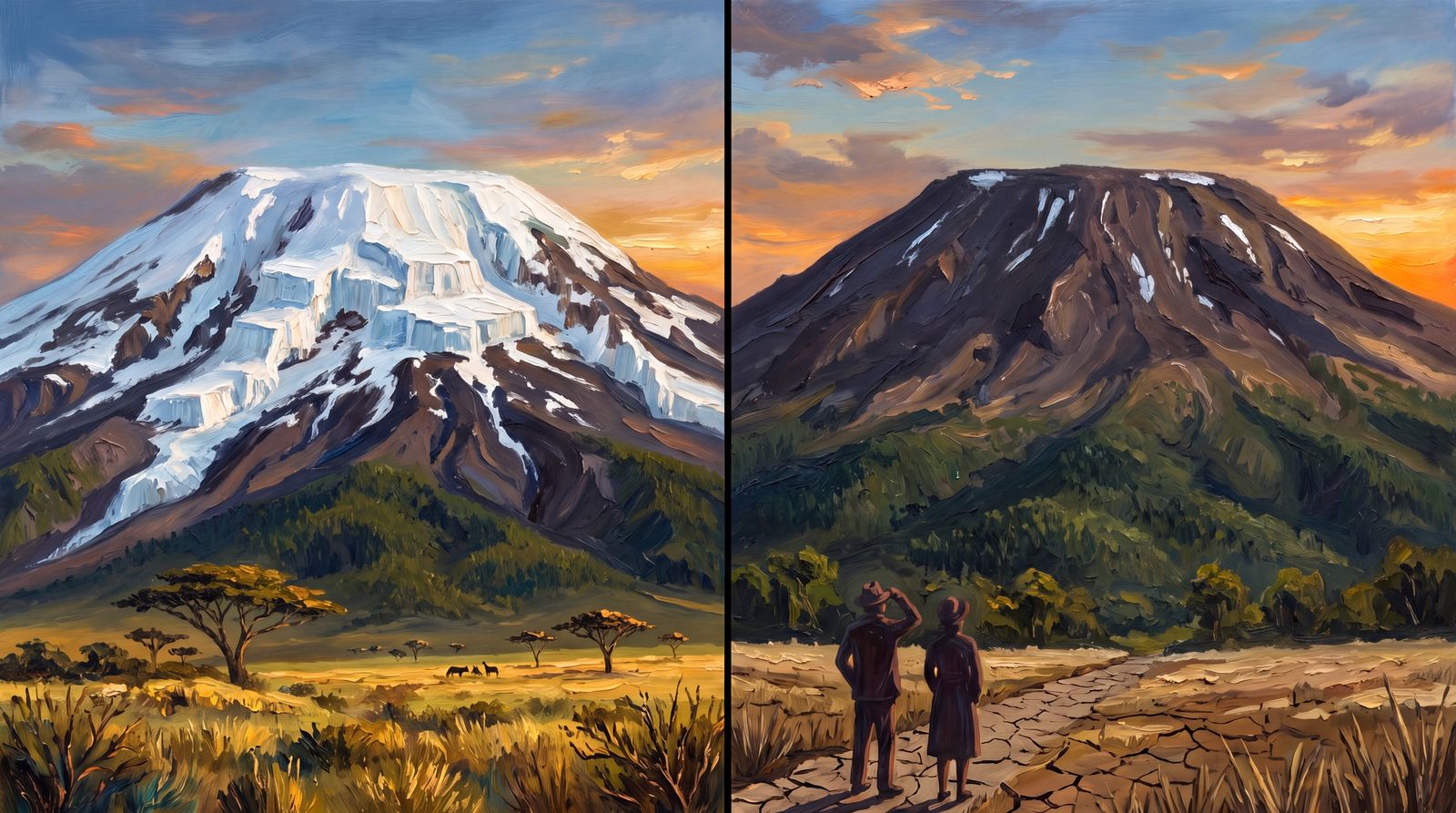
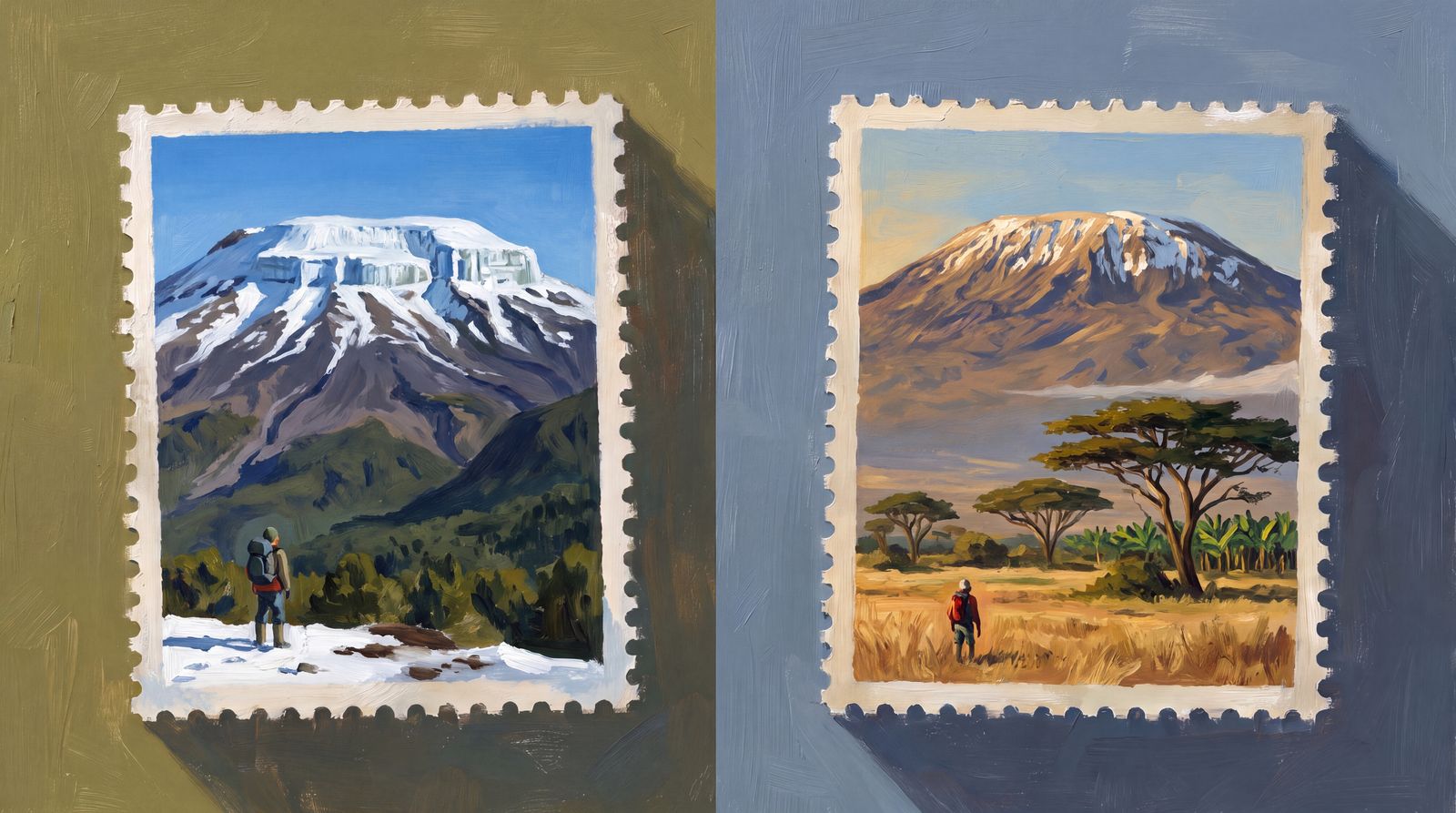
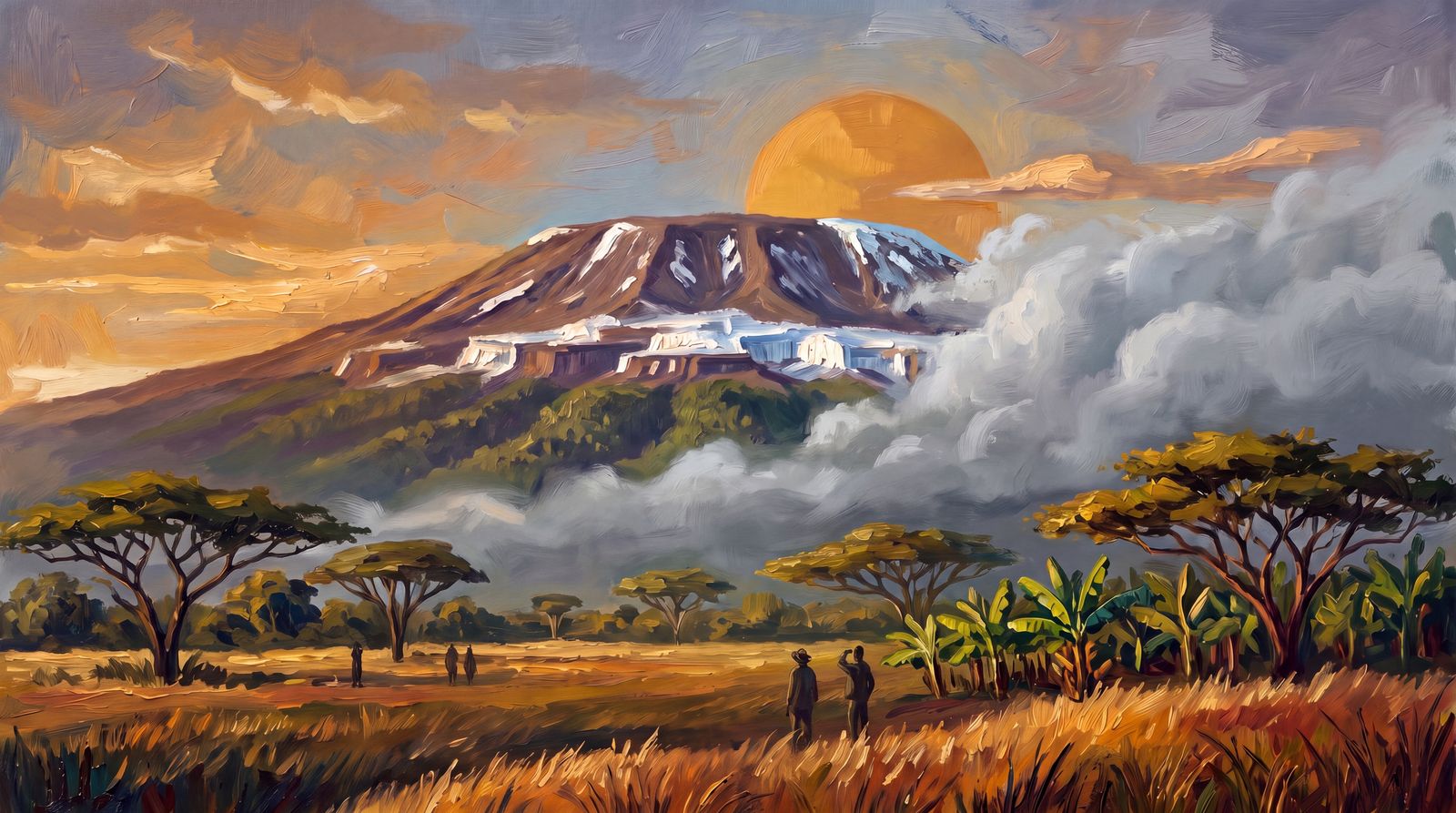
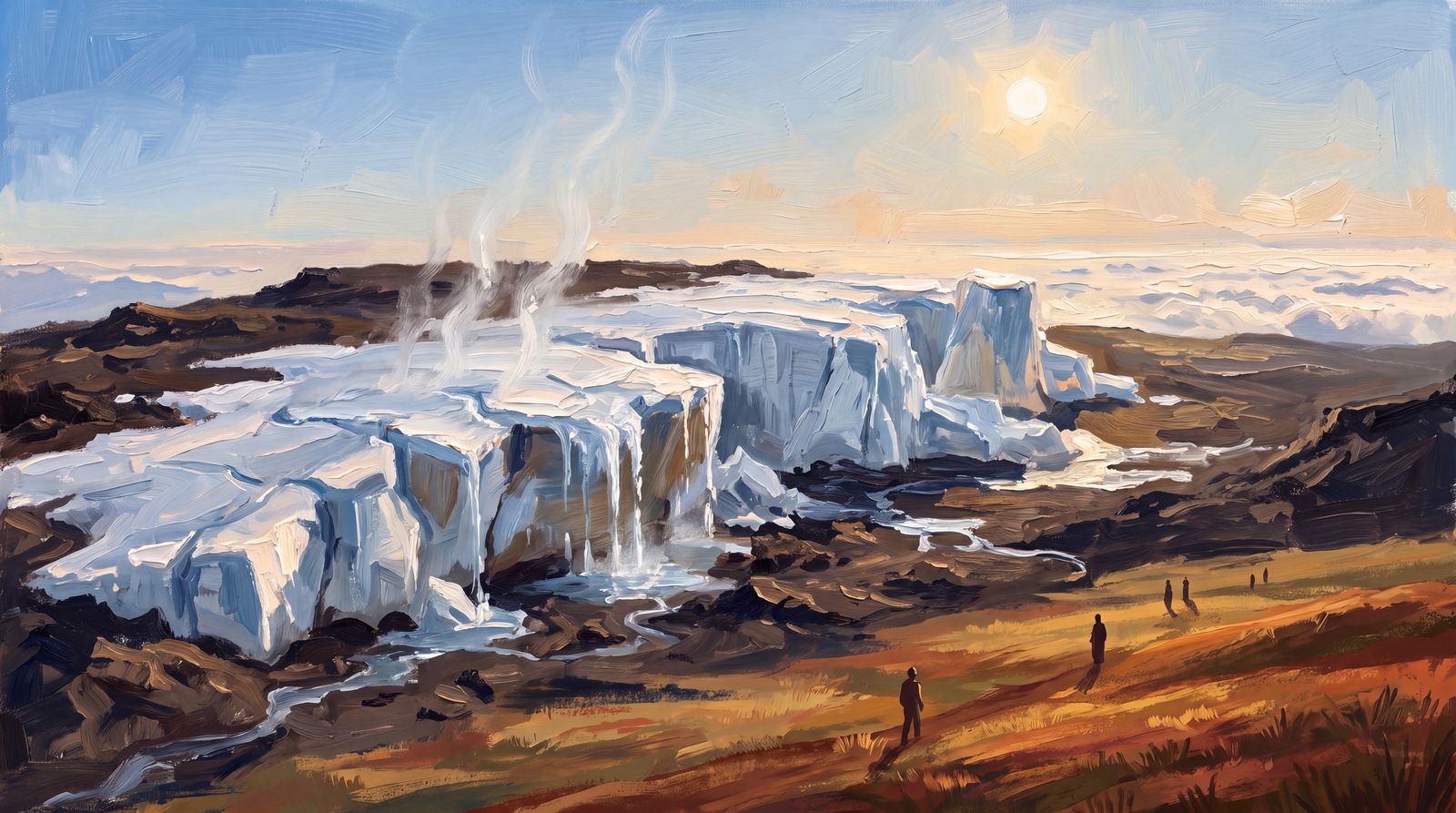
When the first climbers reached the top of Kilimanjaro, its summit was buried in glaciers, great walls and towers of ice gleaming above the plains of Tanzania.

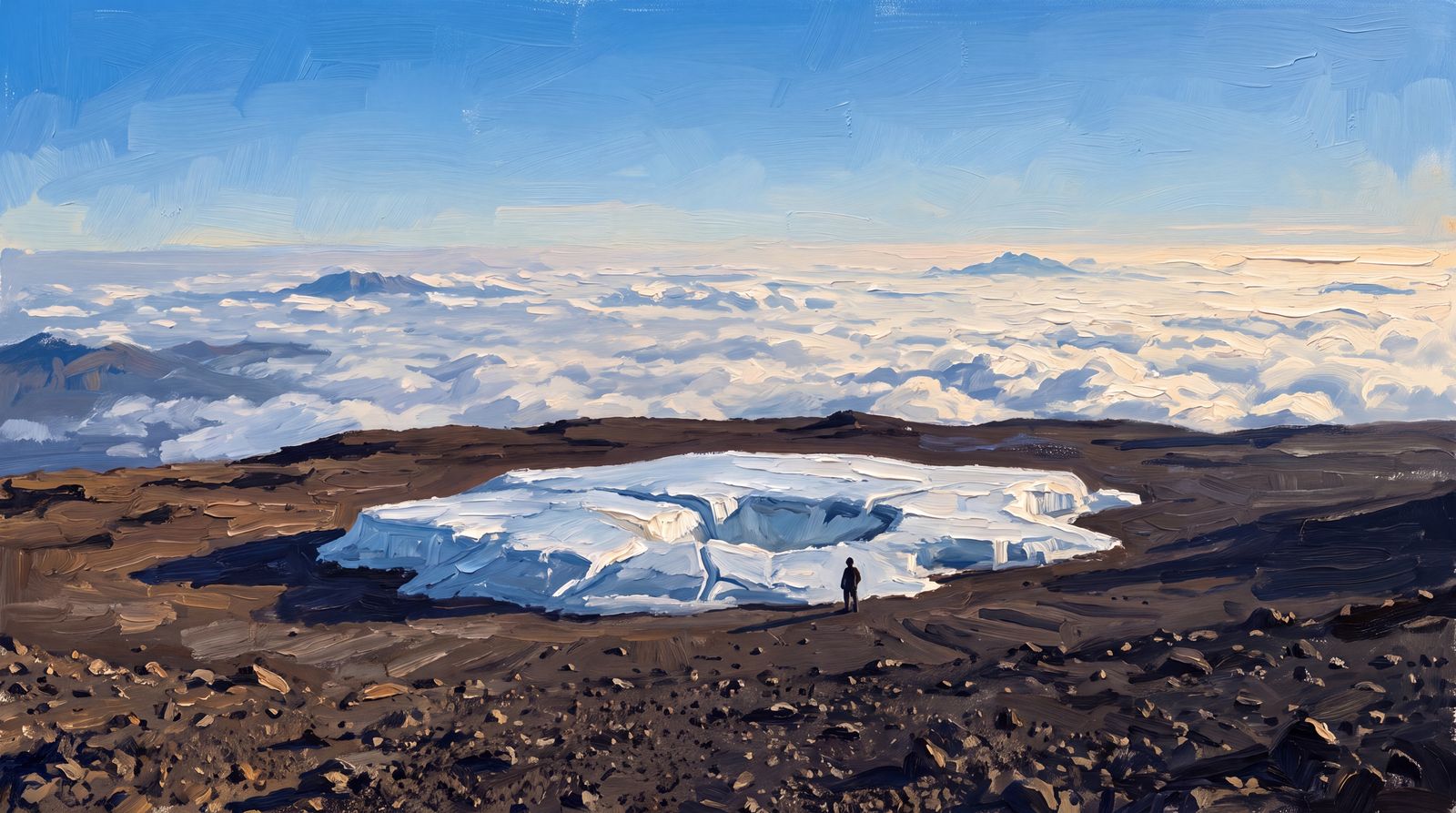
Today, most of that ice is simply gone. And what remains may vanish within a few decades.

This is the story of the snows of Kilimanjaro, and why they are melting away.

So how did ice this old survive so close to the equator? And why is it dying now?

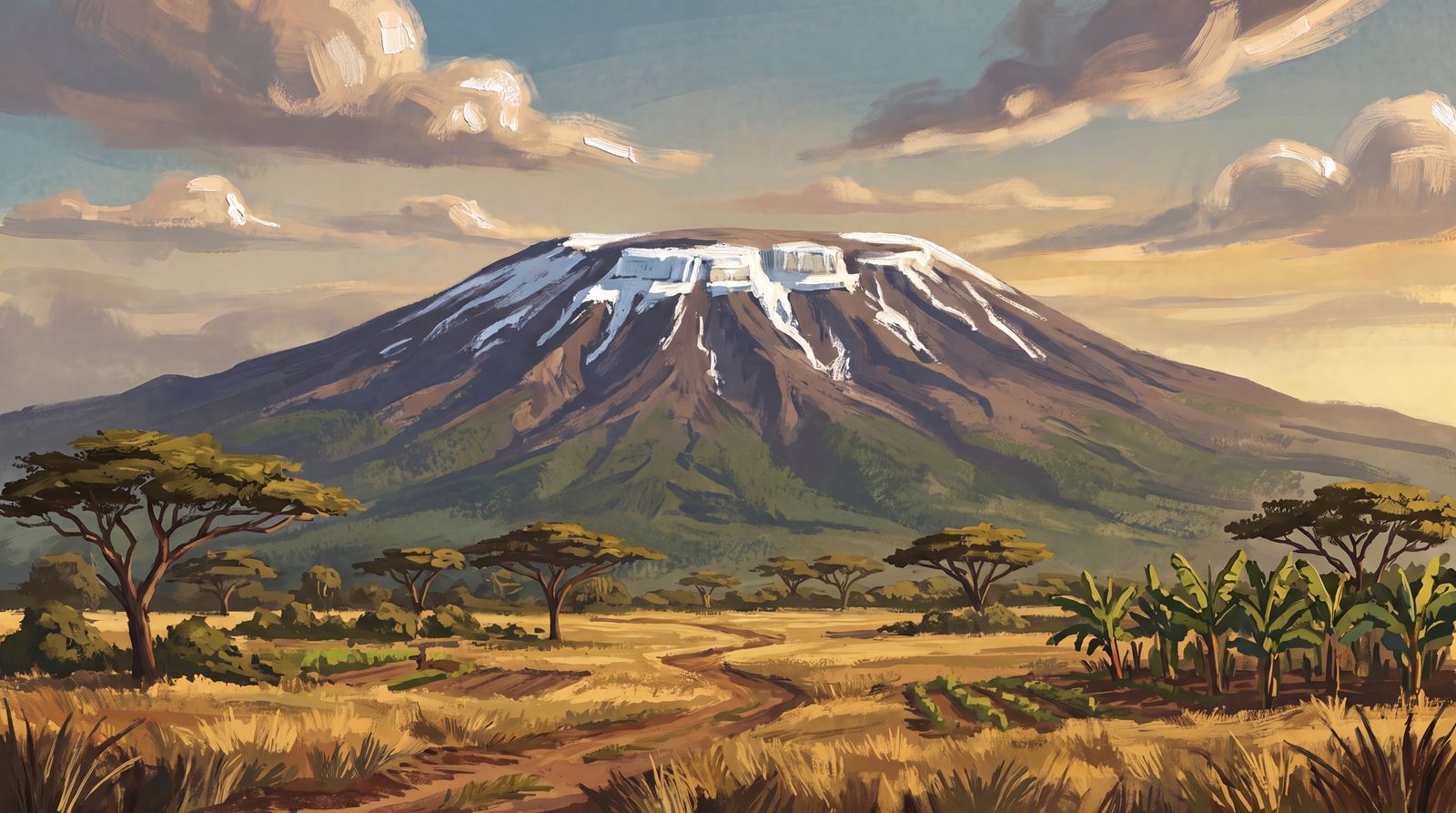
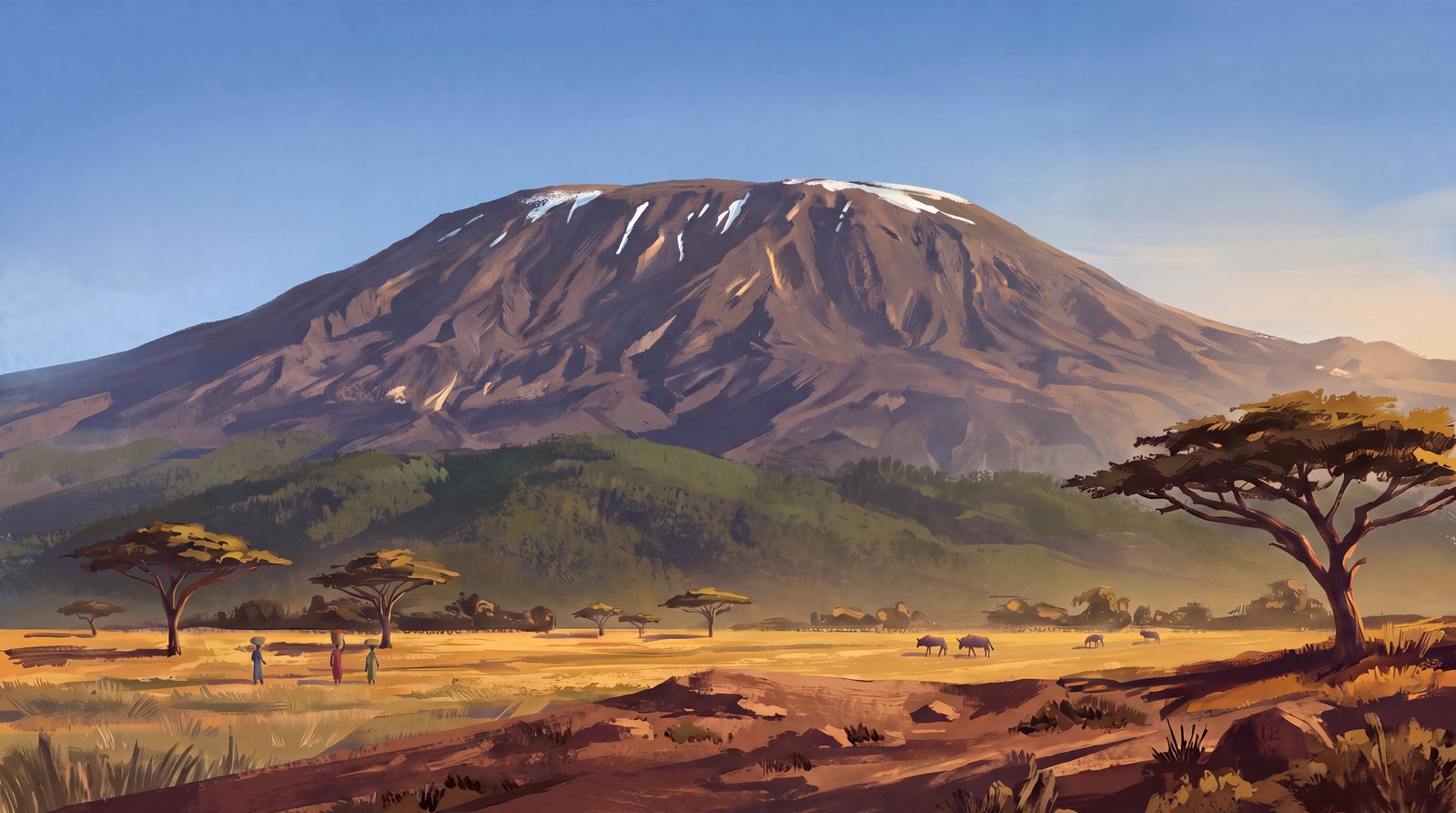
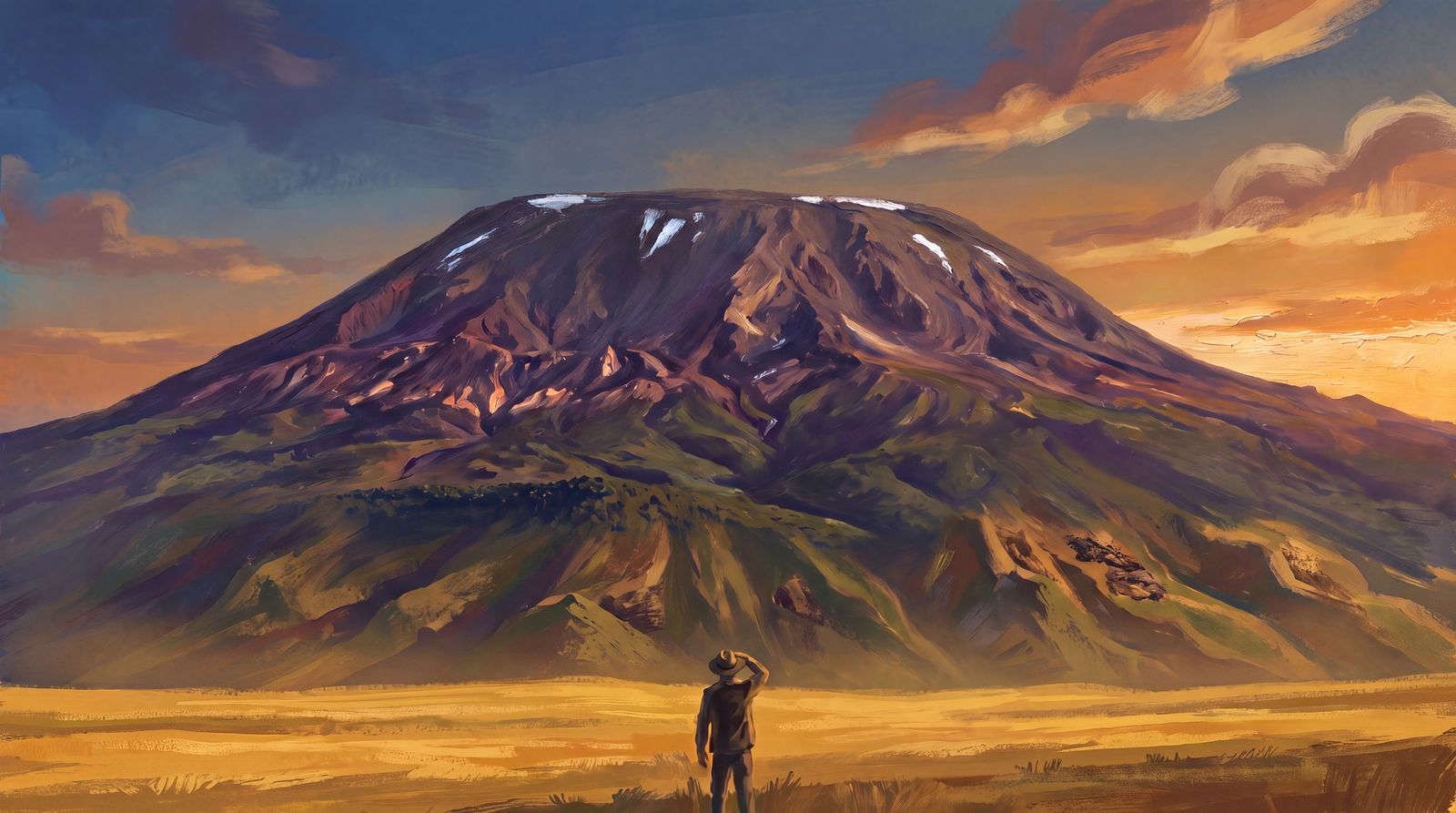
Kilimanjaro is the highest mountain in Africa, nearly six kilometres tall.

It is so high that its summit is bitterly cold, even sitting just three degrees from the equator.

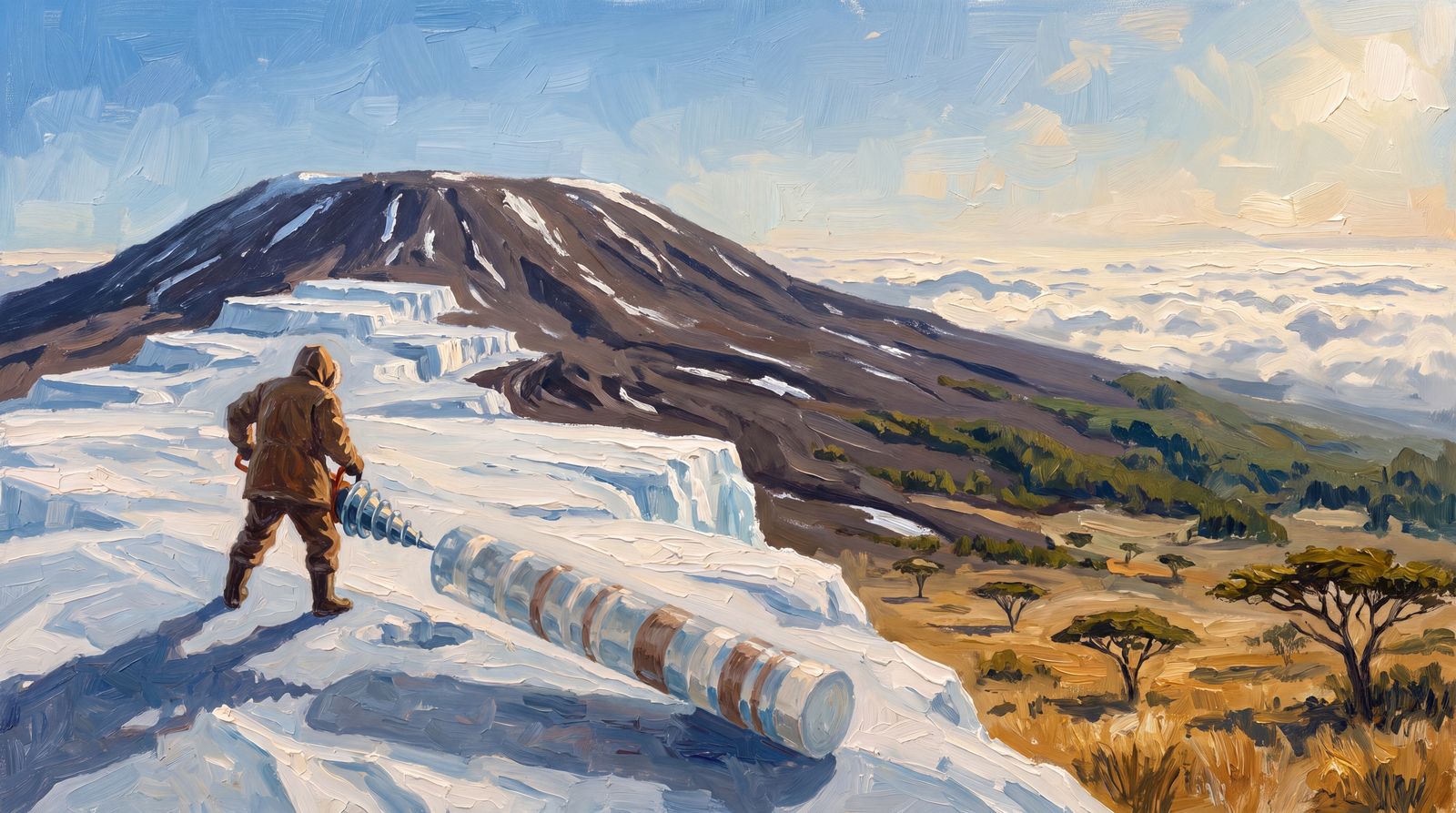
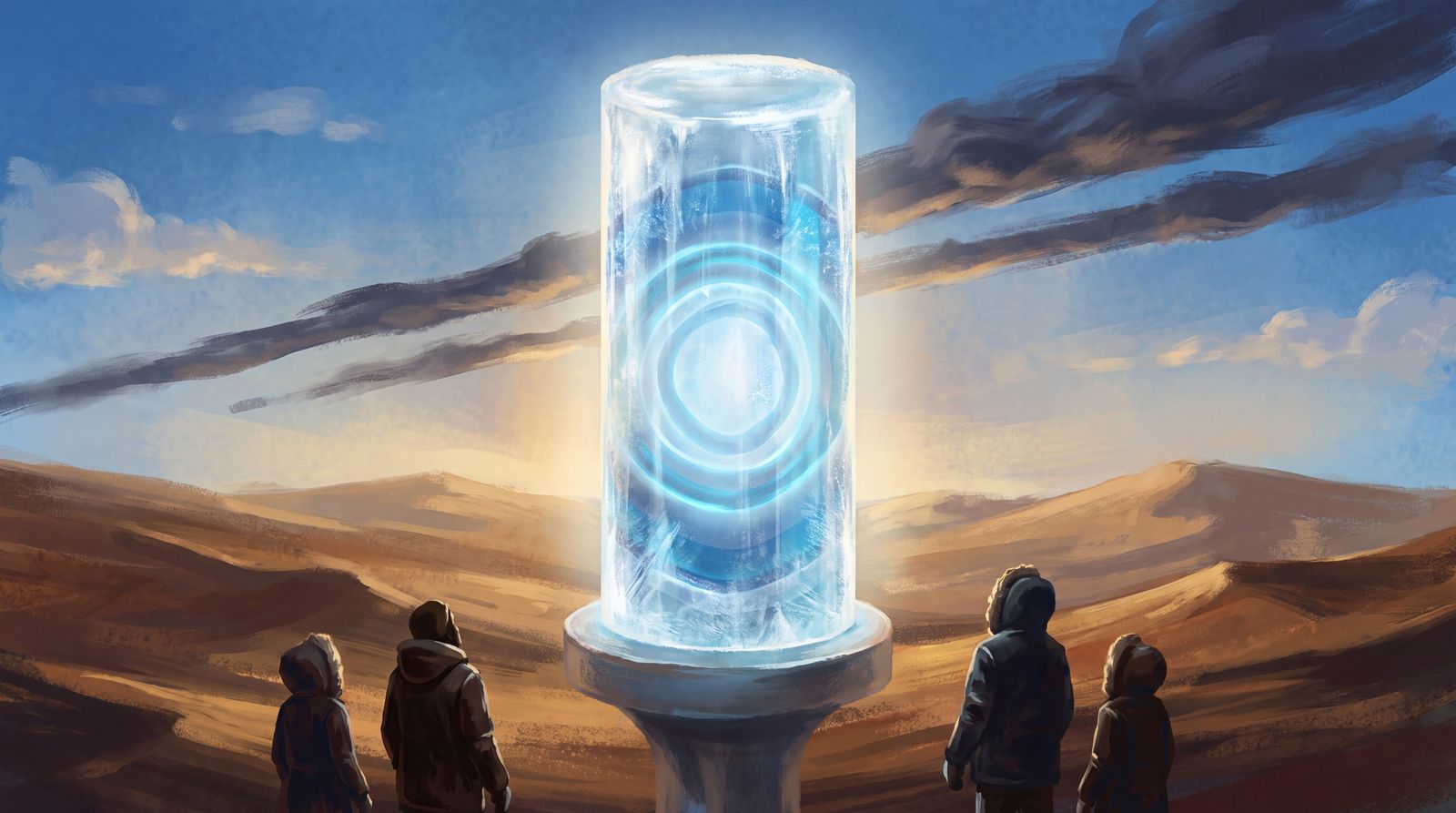
For thousands of years, that cold kept a cap of glaciers frozen at the top. Ice cores drilled from them hold a frozen record of the climate going back nearly twelve thousand years.

They are one of the oldest and most famous ice fields in the tropics. A writer named Ernest Hemingway made them legendary. The snows of Kilimanjaro.

But over the last century, they have been collapsing.

Since around 1912, the mountain has lost more than eighty percent of its ice.

Photographs from a hundred years ago show a summit sheathed in white. Today, only scattered fragments remain, shrinking every year.

And the loss is speeding up.

So why is it happening? The answer is more surprising than you might think.

Part of it is a warming world, the same warming affecting glaciers everywhere.

But Kilimanjaro's ice is also starving.

Since the late nineteenth century, moist air from the Indian Ocean has reached the mountain less often.

Changes in regional moisture have left less snow to replenish the ice.

Ice is lost through melting, and through sublimation, when it turns directly into water vapour.

A warming world, and drier air. Together, they are erasing a crown of ice older than farming, older than the pyramids, older than written history.

And here's what makes it more than just sad.

They hold a scientific archive of the deep past that, once melted, is lost forever.

And they are a symbol, watched by the whole world, of just how fast our planet is changing.

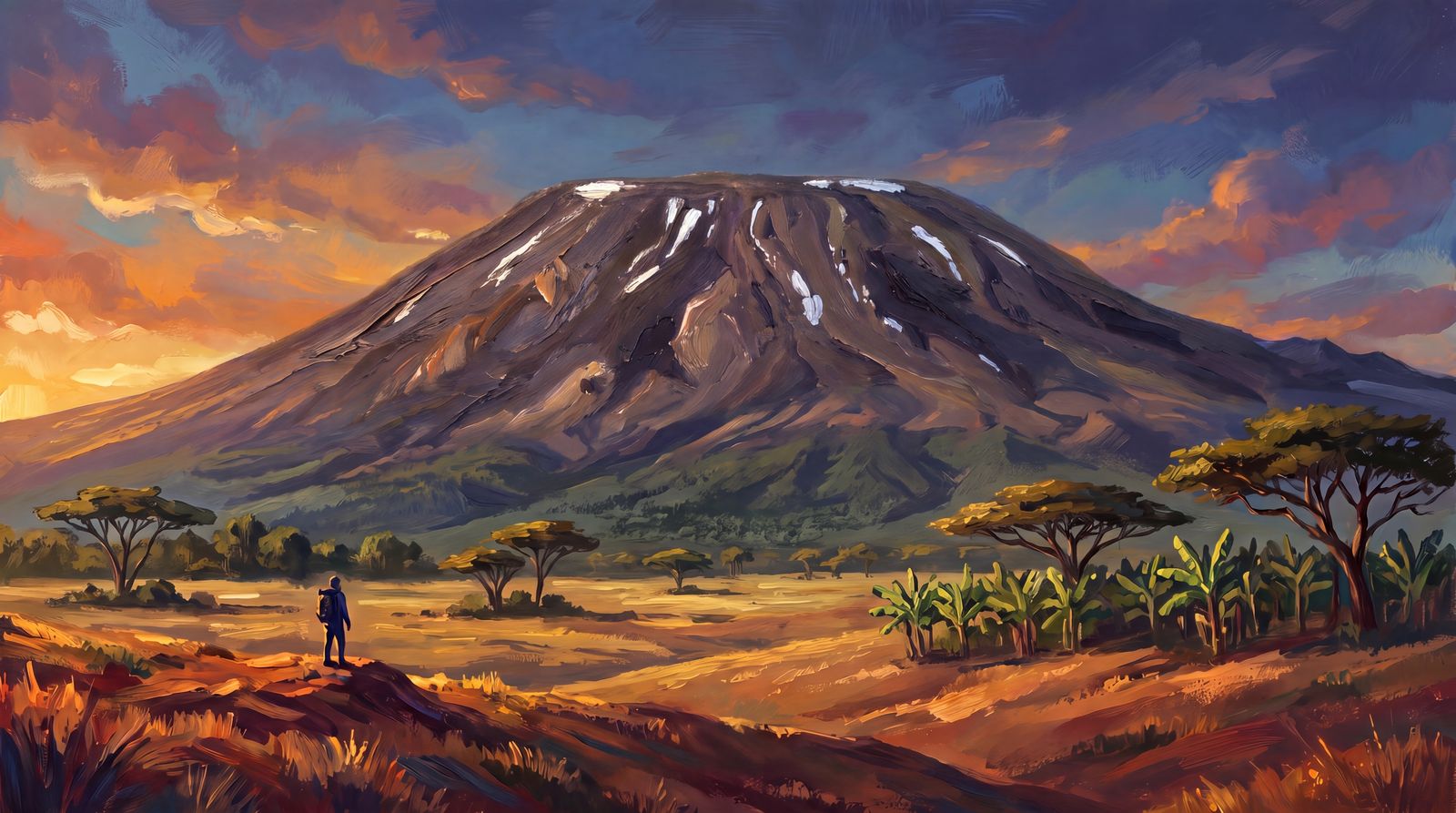
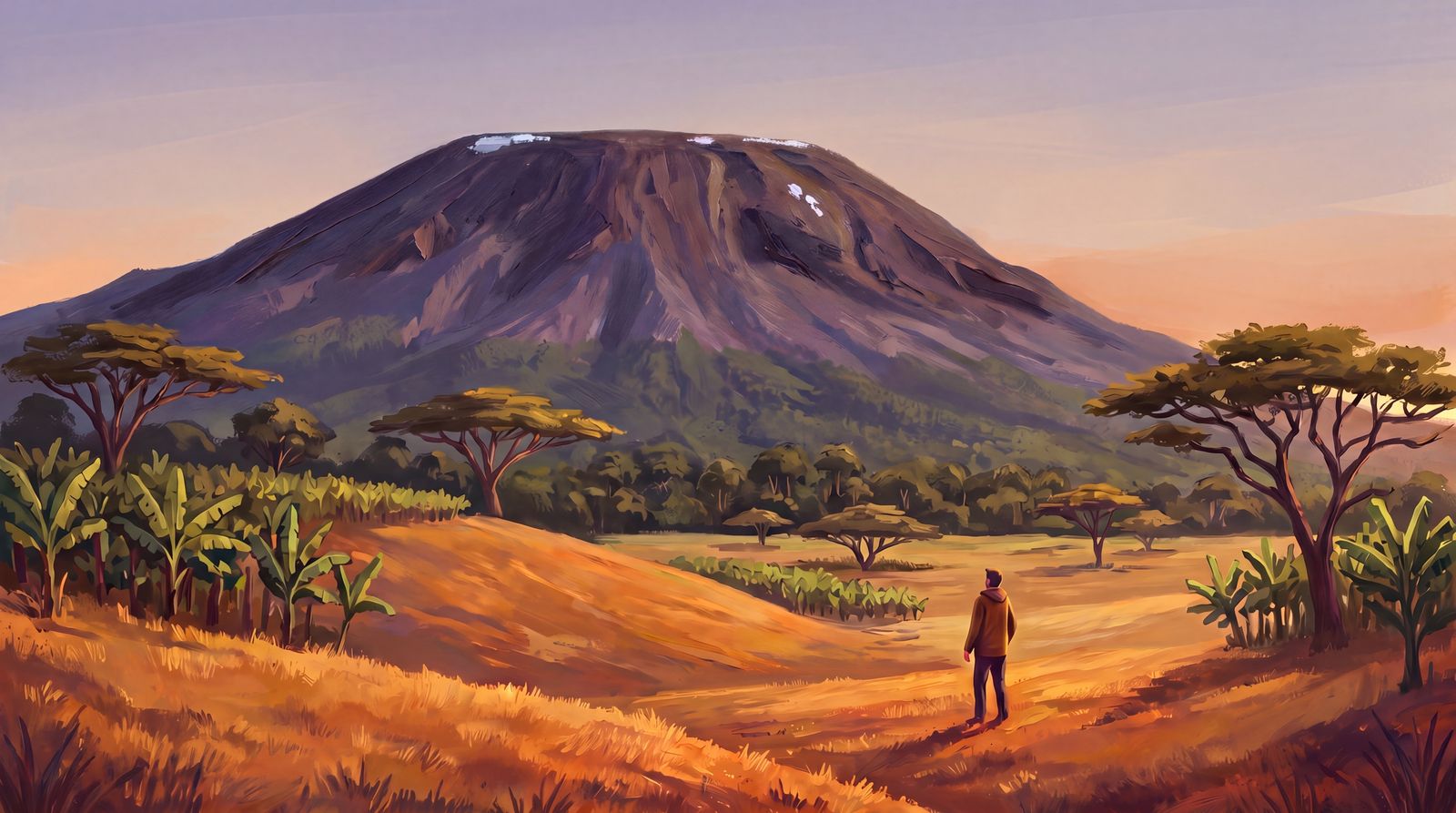
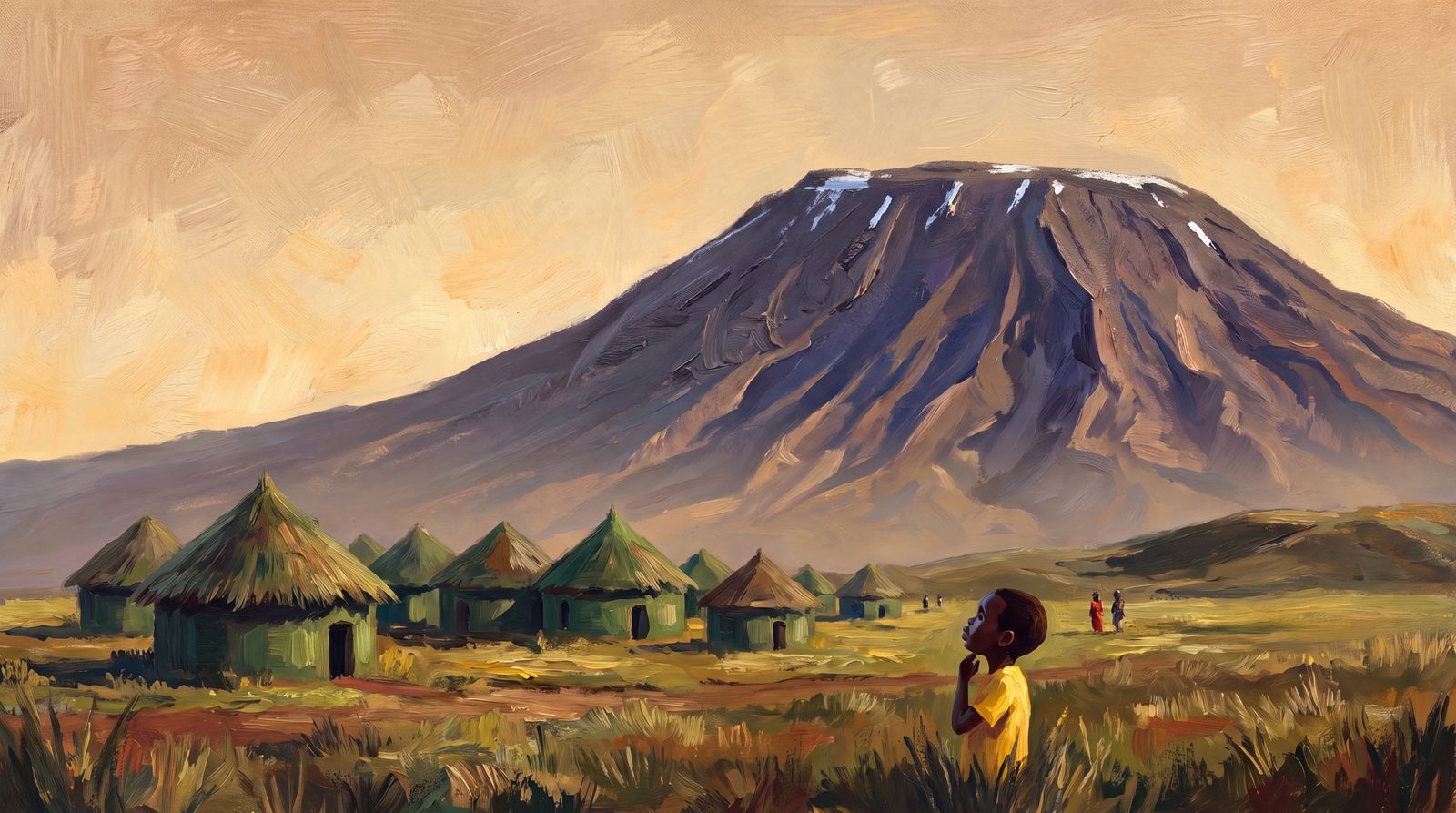
Soon, a child born in the villages below Kilimanjaro may grow up, and never once see snow on their own mountain.

A crown of ancient ice, on the roof of Africa, melting away within a single human lifetime.

Four stories. One land. Where the human journey began, and never stopped. From Dunia Docs. Subscribe, and travel with us.
Around three and a half million years ago, three creatures walked across a plain of wet volcanic ash in what is now northern Tanzania. Their footprints are still there. This is Dunia Docs. Four chapters, one story. This is where humanity began. They were not human. Their brains were barely bigger than a chimpanzee's. But they walked upright, on two legs, just like you. These are the oldest clear footprints of our family ever found. And they rewrote the story of how we became human. This is Laetoli, on the southern edge of the Serengeti. A quiet, dusty place that holds one of the most precious fossils on Earth. Not a bone, but a walk. So who left these prints? And why do they matter so much? It began with a volcano. Ash from a nearby eruption dusted the plains, fine and powdery. Then it rained, and the ash turned to a soft, wet paste, like fresh cement. Animals walked across it and left their tracks. Birds, ancient elephants, rhinos, hares. And then, three of our own ancestors. The sun baked the ash hard. More ash buried it. And there it waited, for three and a half million years. In 1978, a team led by the famous fossil-hunter Mary Leakey uncovered it. One of her colleagues literally stumbled onto the trail. What they found was a trackway almost twenty-seven metres long, with around seventy footprints. Made by three individuals, walking together in the same direction. A larger one, a smaller one beside it, and a third stepping carefully into the big one's prints. The prints have a rounded heel, an arch, and a big toe in line with the others, pressing off just like a modern human foot. Whoever they were, they were not shuffling, or knuckle-walking. They were striding, upright, and free. So who were they? Almost certainly a species called Australopithecus afarensis. The same kind of creature as the famous fossil nicknamed Lucy. Small. A little over a metre tall. A face still ape-like, a brain still small. And that is the shock hidden in these footprints. For a long time, people assumed we grew big brains first, and only started walking upright later. Laetoli proves it was the other way around. These creatures walked upright three and a half million years ago, long before big brains, before stone tools, before fire. Standing up came first. Everything else, our tools, our intelligence, our whole journey, came after. There is even a human touch in the trail. At one point the tracks seem to pause and turn slightly, as if one of them stopped, and looked to the left. We will never know what they saw. A predator? A storm on the horizon? A companion? The footprints are so fragile that scientists reburied them, to protect them from the very air. A single, ordinary walk across a muddy field, frozen into the most extraordinary record of who we were becoming. But those footprints were only the beginning. A few miles away, one gorge holds two million years of the human story. Layer by layer, like the pages of a book written in stone, it holds the bones and tools of our ancestors, stacked in order, oldest at the bottom. More than almost anywhere on Earth, this is the place where we found out who we used to be. This is Olduvai Gorge, cut into the edge of the Serengeti. A dry, striped canyon about fifty kilometres long, and one of the most important places in all of science. So what makes this gorge so special? And what did we find here that changed everything? Its real name is Oldupai, after a wild sisal plant that grows here. For a century, the world has called it Olduvai by mistake. The gorge was carved by an ancient river, slicing down through layers of volcanic ash and old lake bed. And because those ash layers can be dated, the gorge became a natural clock. Dig down, and you travel back in time. For decades, two scientists gave their lives to this place. Louis and Mary Leakey. They searched these slopes year after year, often finding almost nothing. Then, in 1959, Mary Leakey spotted teeth in the dirt. They belonged to a heavy-jawed, small-brained relative we now nickname Nutcracker Man, for his enormous molars. It was nearly two million years old, and it made headlines around the world. But the bigger discovery was still to come. Soon after, the Leakeys found something else in the same gorge. A different creature, with a larger brain and lighter jaws. And beside it, something astonishing. Stones, deliberately chipped into simple tools. They named this creature Homo habilis, the handy man. One of the earliest members of our own genus, Homo. These were the first toolmakers we know of, striking one rock against another to make a sharp cutting edge. That simple chipped stone is the beginning of all technology. Every machine, every phone, every rocket, traces back to a moment like this, in a gorge like this. And the gorge kept giving. Layer after layer revealed ancient elephants, giant buffalo, and more of our ancestors, across nearly two million years. Butchered bones and scattered tools slowly revealed how these early humans lived, and ate, and survived. It's why Olduvai earned a nickname of its own. The Cradle of Mankind. Not because humanity began in this exact gorge, but because here, more than anywhere, we can watch it happening, step by step, written in the rock. Stand at the edge, and every stripe in the cliff below you is a chapter. The deeper you look, the older, and stranger, our family becomes. Our ancestors did not walk this land alone. The plains that raised them are still alive, and every single year they carry the greatest march of animals on Earth. Every single year, on the plains of East Africa, around two million animals set off on a journey in one giant, endless circle. It is the largest march of land animals anywhere on Earth. More than a million wildebeest, together with hundreds of thousands of zebra and gazelle, moving as one vast living river across the grass. They never truly stop. Round and round, year after year, chasing the rain. This is the Great Migration, across the Serengeti of Tanzania and the Mara of Kenya. The word Serengeti comes from a Maasai phrase meaning the endless plains. And across those endless plains, the herds are always moving. So what drives two million animals to walk in a circle forever? And what waits for them along the way? The whole journey is a chase after one thing. Fresh grass, and the rain that grows it. It begins in the south, on short-grass plains made rich by minerals from ancient volcanic ash. Here, in just a few weeks early in the year, something extraordinary happens. Hundreds of thousands of calves are born, almost all at once. A newborn wildebeest can stand and run within minutes. It has to. Because it is born into a land full of hunger. Lions, cheetahs, hyenas and leopards shadow the herds, taking the young, the old, and the slow. As the dry season comes and the southern grass fades, the herds turn, and begin to move north, in columns that can stretch for miles. And ahead of them lies the greatest test of all. The rivers. To reach fresh grazing, the herds must cross wide, muddy rivers like the Grumeti and the Mara. And in that water wait some of the largest crocodiles on Earth, who spend much of the year simply waiting for this one feast. The animals gather on the bank, hesitating, packing tighter and tighter. Then one leaps, and thousands follow, in a churning, desperate rush. Some drown. Some are taken. But most make it across, and press on north. They reach the northern plains, graze through the dry months, and then, as the rains return to the south, they turn around, and do it all again. A single wildebeest may walk more than a thousand kilometres in one year, on this endless loop. And here is the wonder of it. This is not chaos. It is one of the great engines of an entire ecosystem. The herds fertilize the plains as they pass. They feed the predators. Their crossings feed the rivers. Two million lives, moving together, keeping one of the last great wild places on Earth alive. It has rolled on like this for longer than humans have farmed, or built cities, or written a single word. A living river of hooves and horns, circling forever beneath the African sky. And above those plains stands the mountain our ancestors would have seen on the horizon. Kilimanjaro, crowned with ice. Ice that is vanishing in our own lifetime, changing the very landscape that made us. When the first climbers reached the top of Kilimanjaro, its summit was buried in glaciers, great walls and towers of ice gleaming above the plains of Tanzania. Today, most of that ice is simply gone. And what remains may vanish within a few decades. This is the story of the snows of Kilimanjaro, and why they are melting away. So how did ice this old survive so close to the equator? And why is it dying now? Kilimanjaro is the highest mountain in Africa, nearly six kilometres tall. It is so high that its summit is bitterly cold, even sitting just three degrees from the equator. For thousands of years, that cold kept a cap of glaciers frozen at the top. Ice cores drilled from them hold a frozen record of the climate going back nearly twelve thousand years. They are one of the oldest and most famous ice fields in the tropics. A writer named Ernest Hemingway made them legendary. The snows of Kilimanjaro. But over the last century, they have been collapsing. Since around 1912, the mountain has lost more than eighty percent of its ice. Photographs from a hundred years ago show a summit sheathed in white. Today, only scattered fragments remain, shrinking every year. And the loss is speeding up. So why is it happening? The answer is more surprising than you might think. Part of it is a warming world, the same warming affecting glaciers everywhere. But Kilimanjaro's ice is also starving. Since the late nineteenth century, moist air from the Indian Ocean has reached the mountain less often. Changes in regional moisture have left less snow to replenish the ice. Ice is lost through melting, and through sublimation, when it turns directly into water vapour. A warming world, and drier air. Together, they are erasing a crown of ice older than farming, older than the pyramids, older than written history. And here's what makes it more than just sad. They hold a scientific archive of the deep past that, once melted, is lost forever. And they are a symbol, watched by the whole world, of just how fast our planet is changing. Soon, a child born in the villages below Kilimanjaro may grow up, and never once see snow on their own mountain. A crown of ancient ice, on the roof of Africa, melting away within a single human lifetime. Four stories. One land. Where the human journey began, and never stopped. From Dunia Docs. Subscribe, and travel with us.