
Where Humanity Begins · Episode 4 of 5 · 4:09
The Greatest March on Earth
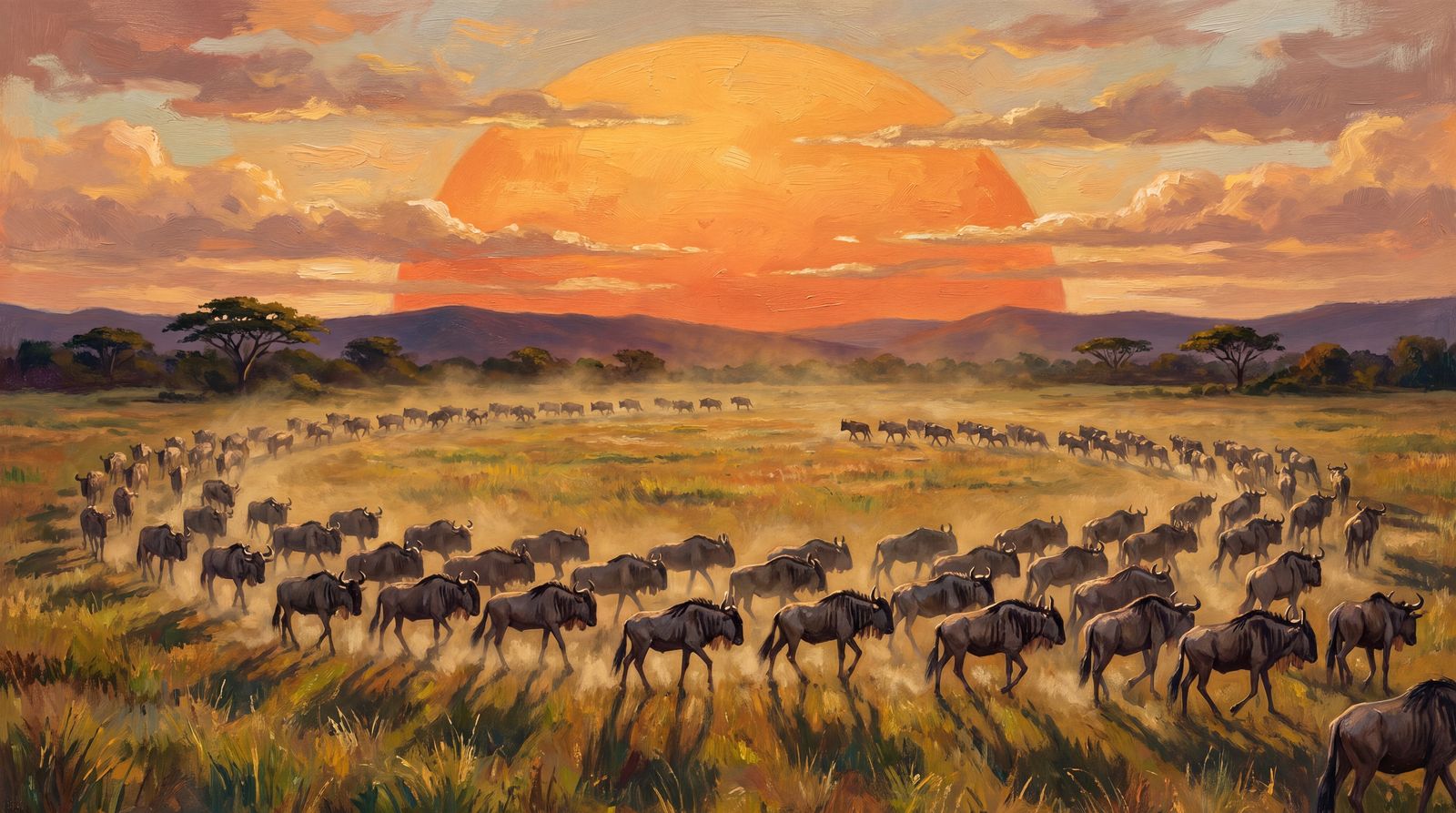
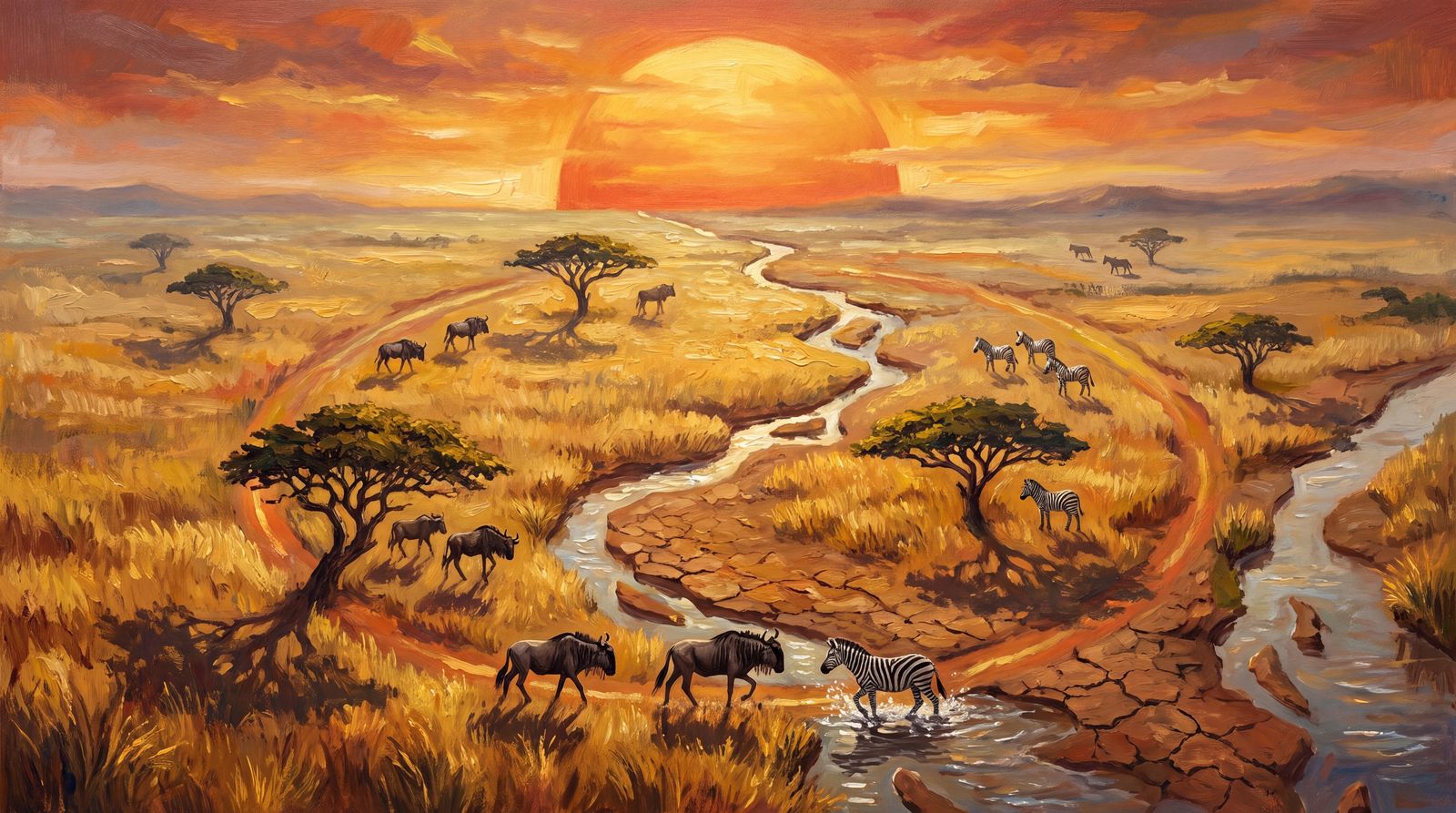
Every year, around two million animals cross the plains of the Serengeti and the Mara in one giant, endless circle — the largest overland migration on Earth. More than a million wildebeest, with hundreds of thousands of zebra and gazelle, chase the rain and fresh grass: born by the hundreds of thousands in a few weeks, shadowed by lions and cheetahs, and forced through rivers where giant crocodiles wait. It isn't chaos — it's the engine that keeps one of the last great wild places alive. A deep dive from our Tanzania story.
 Watch on YouTube
The episode, frame by frame
29 frames, one painted frame per line.

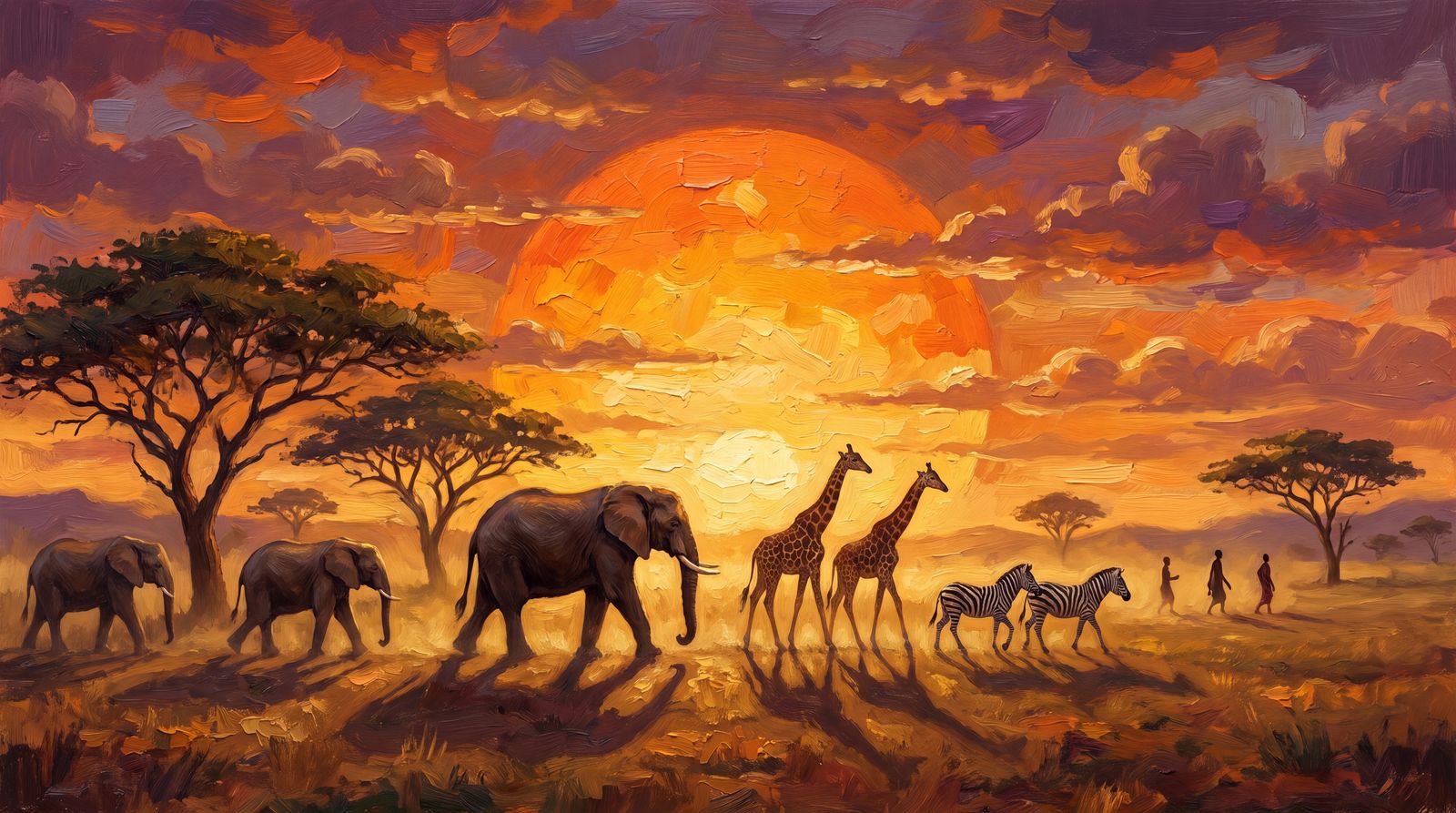
The Greatest March on Earth
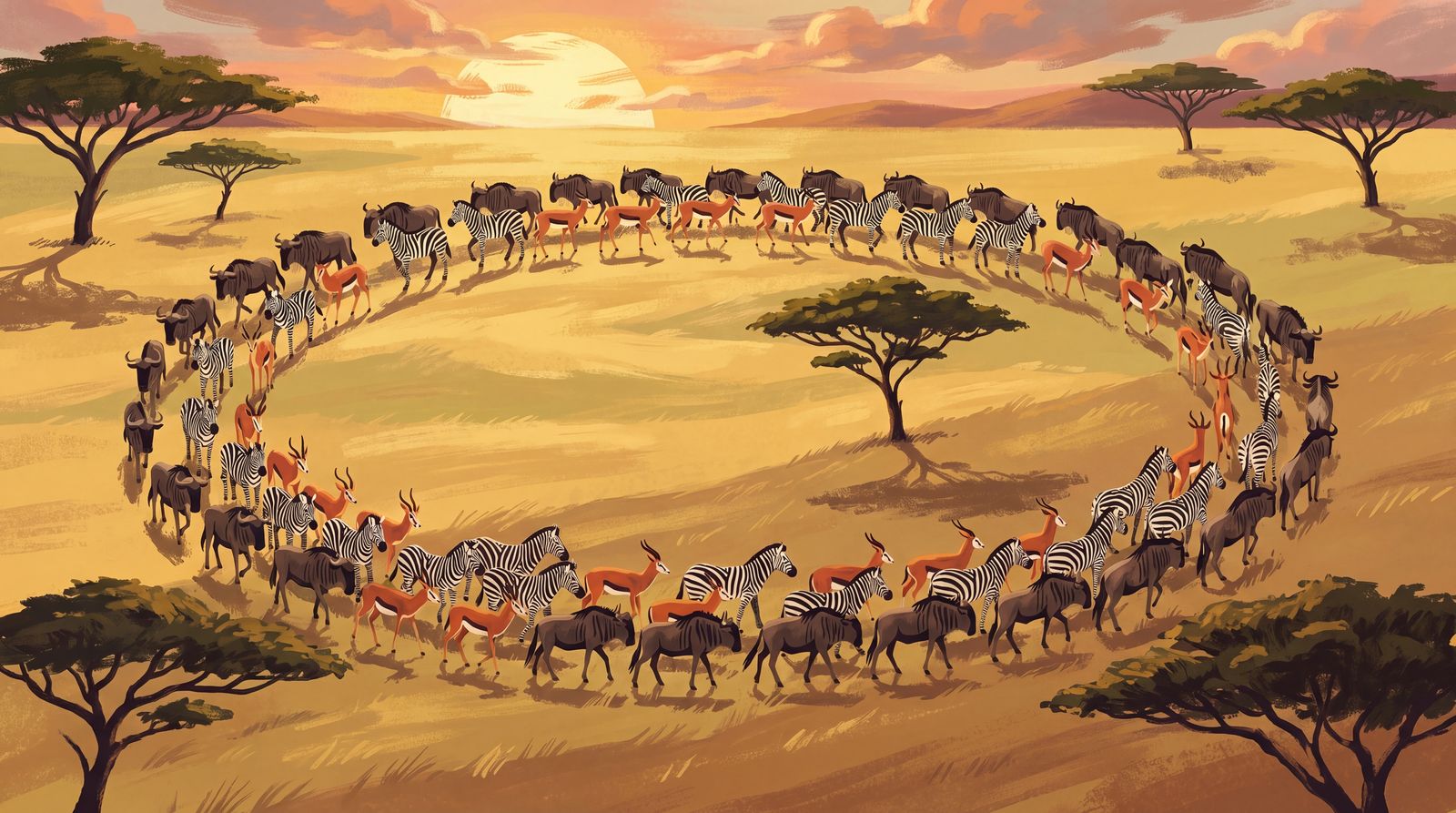
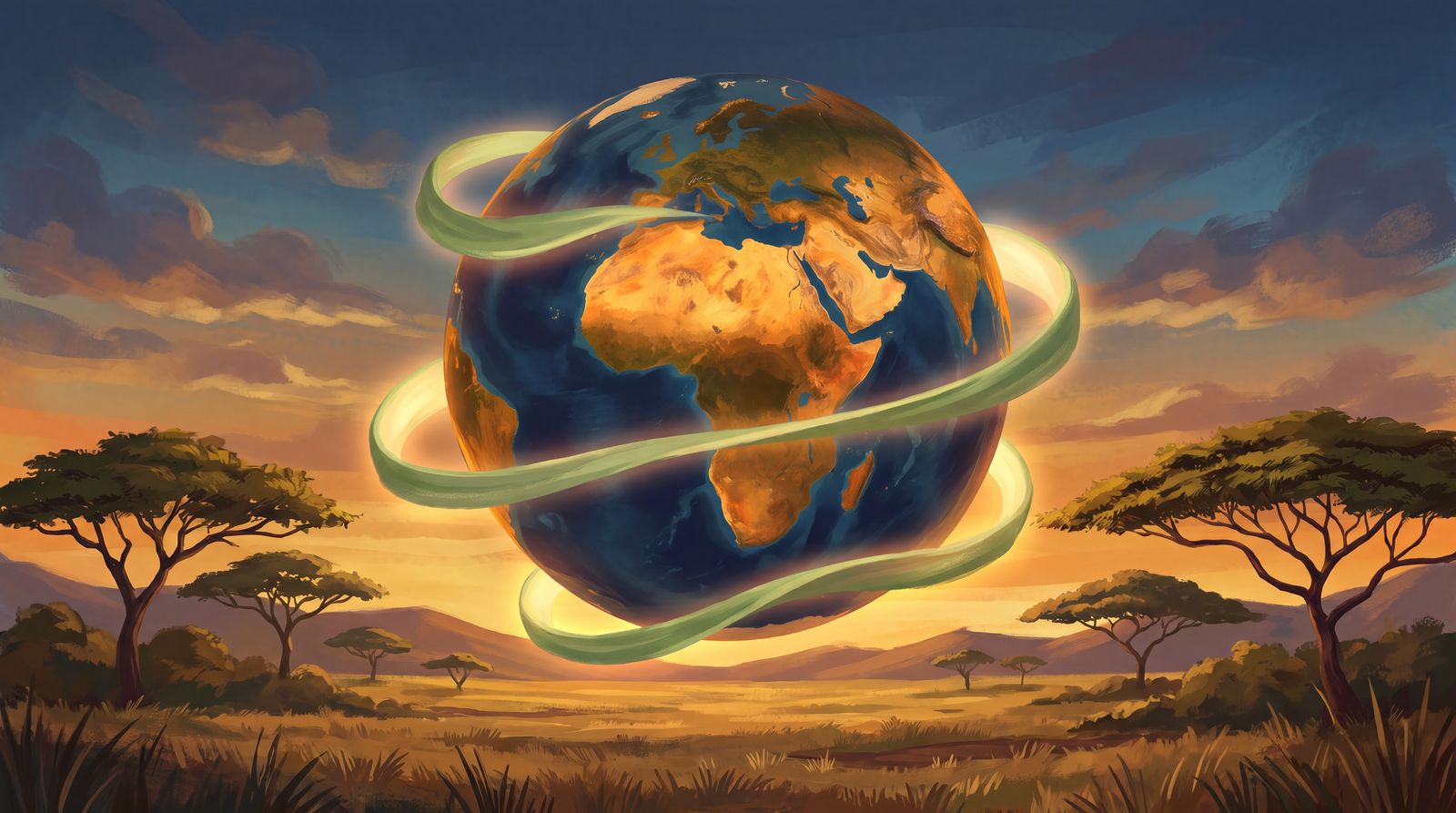
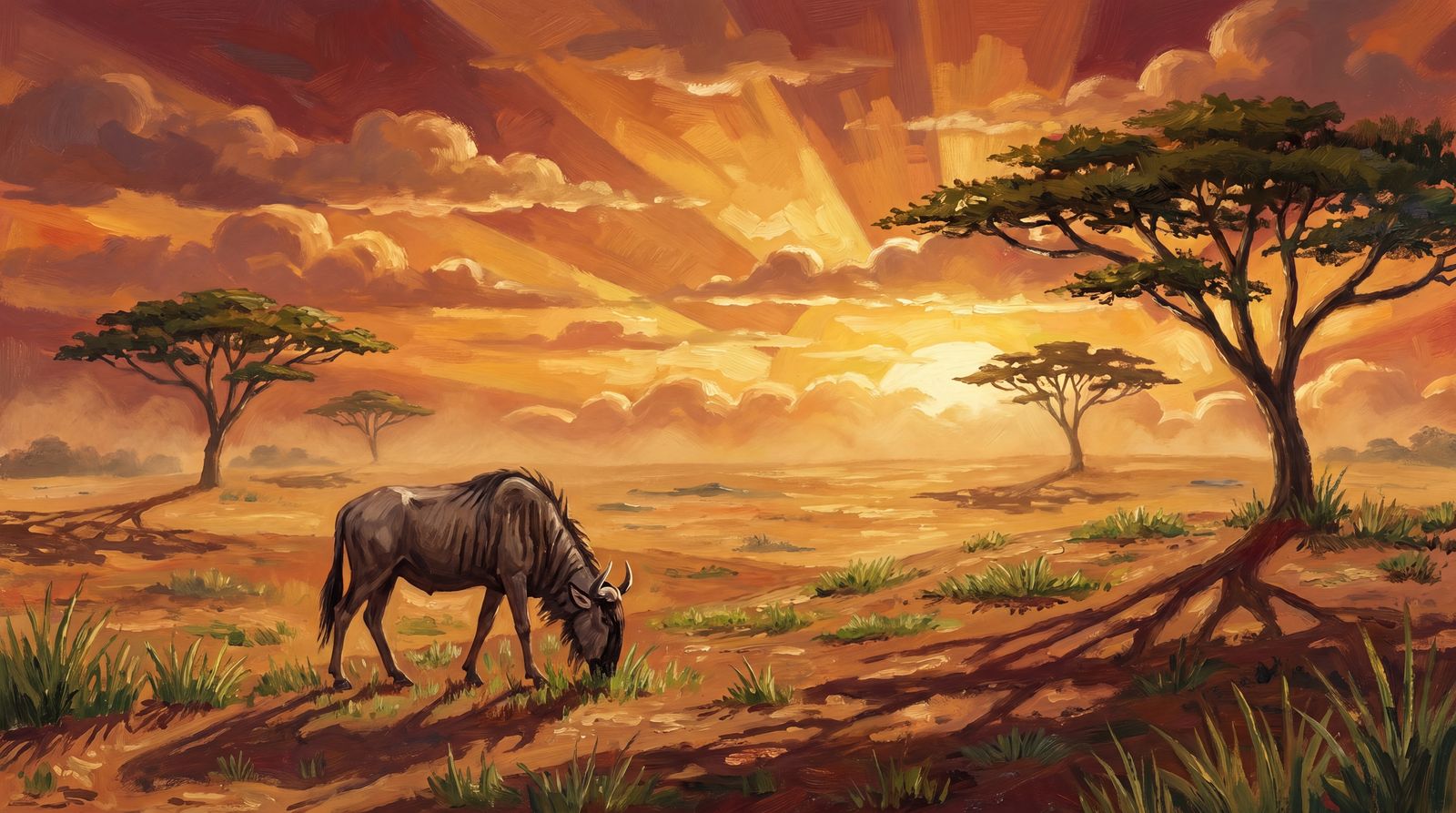
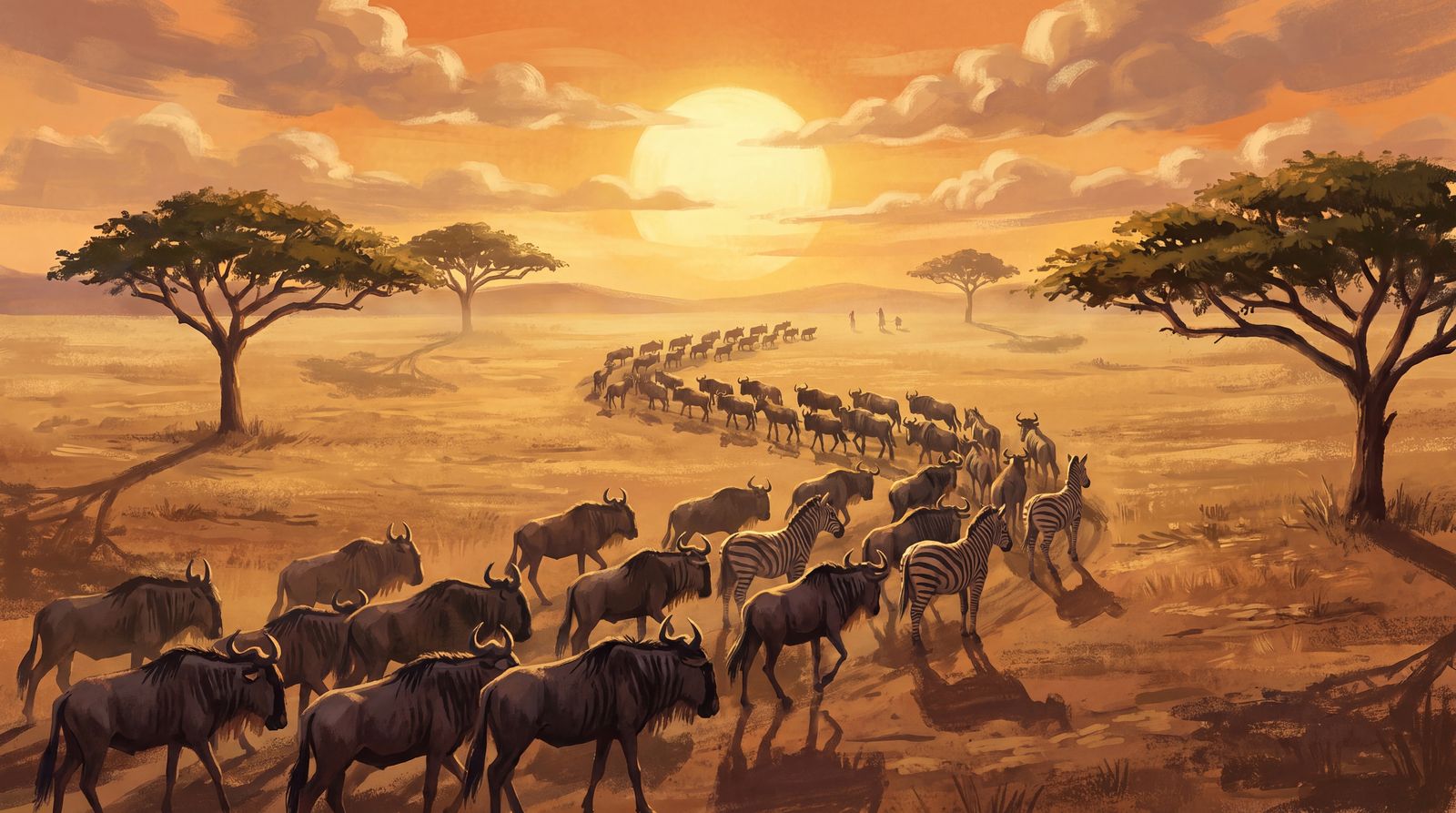
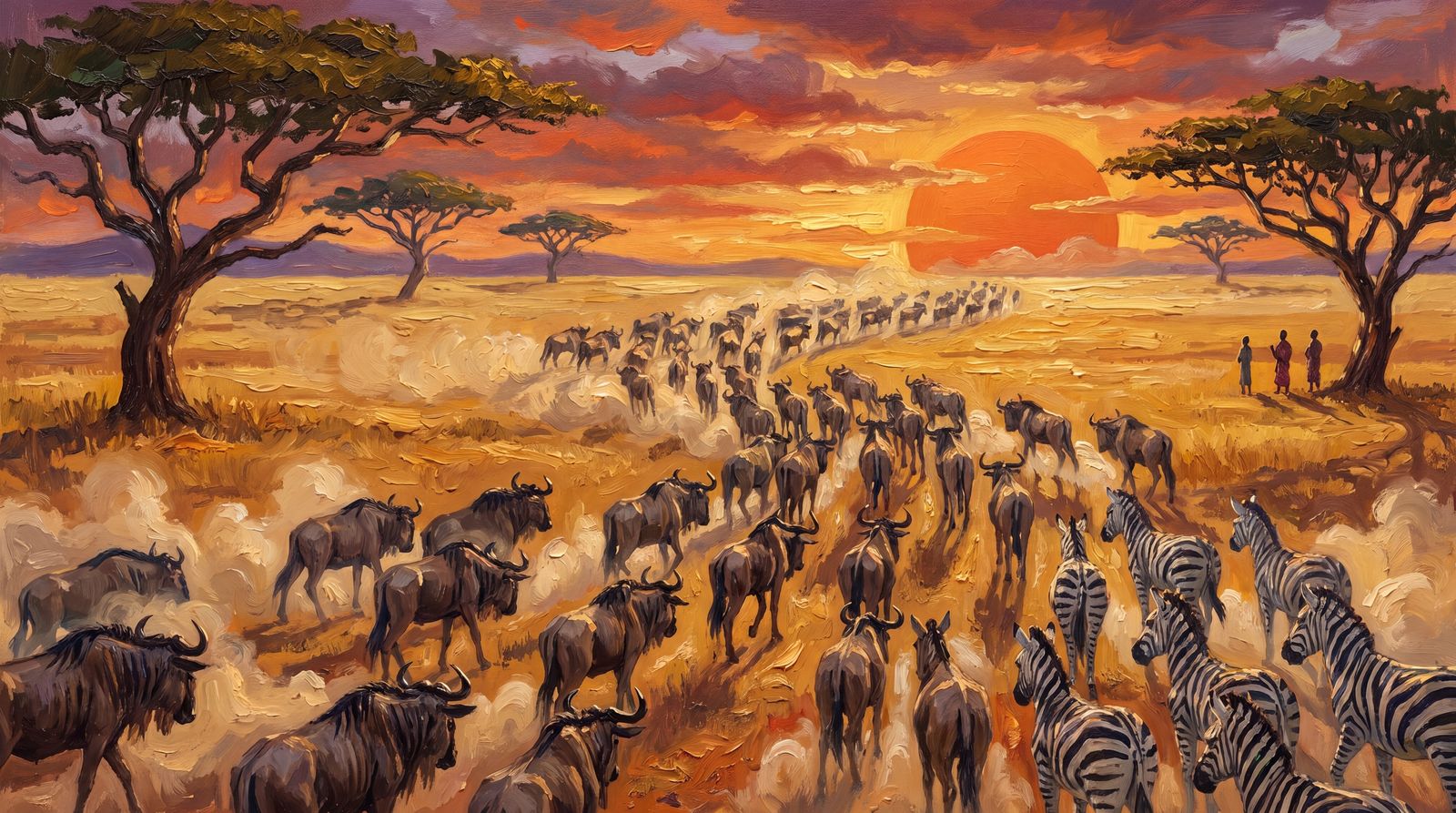
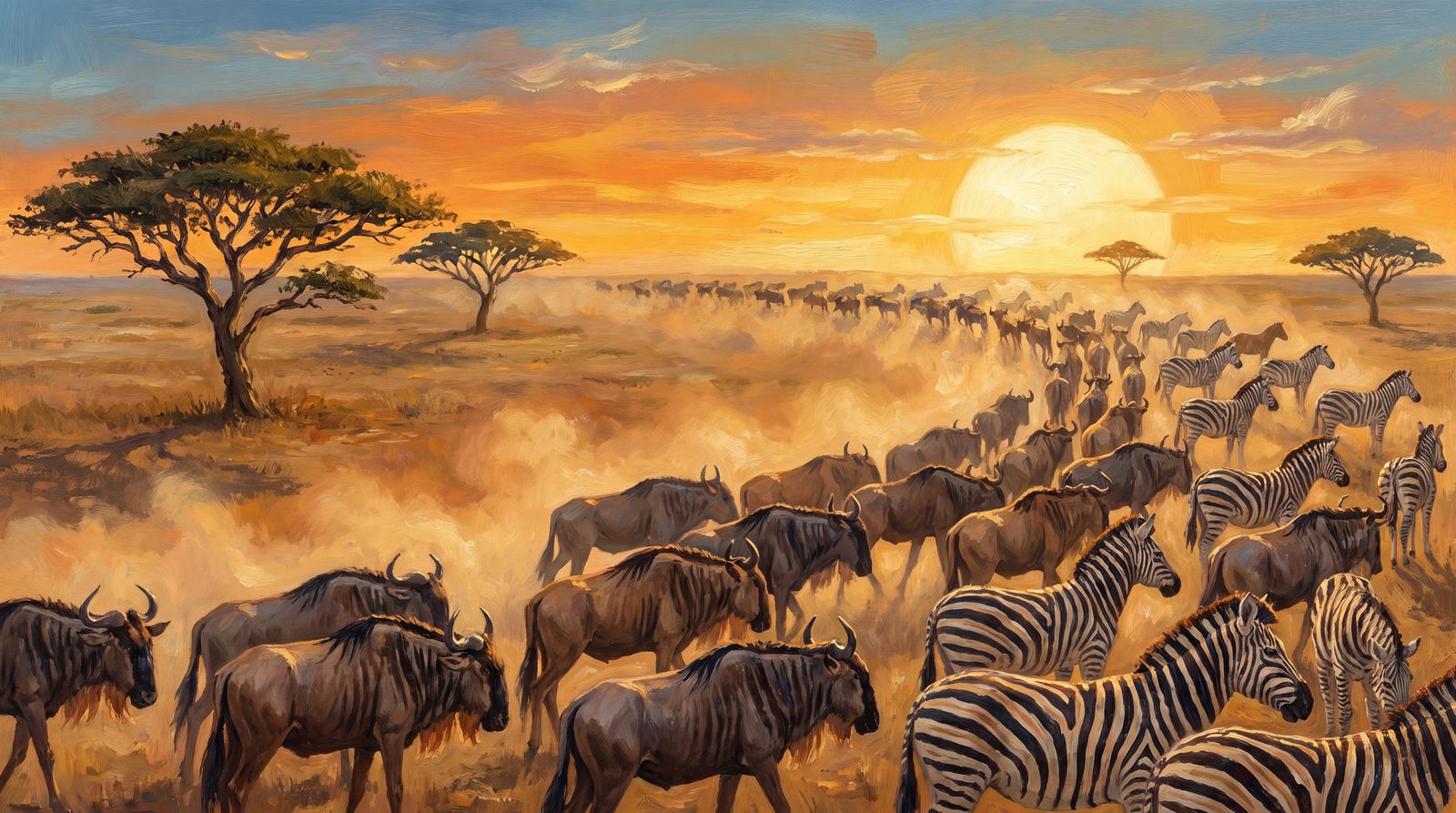
Every single year, on the plains of East Africa, around two million animals set off on a journey in one giant, endless circle. It is the largest march of land animals anywhere on Earth.

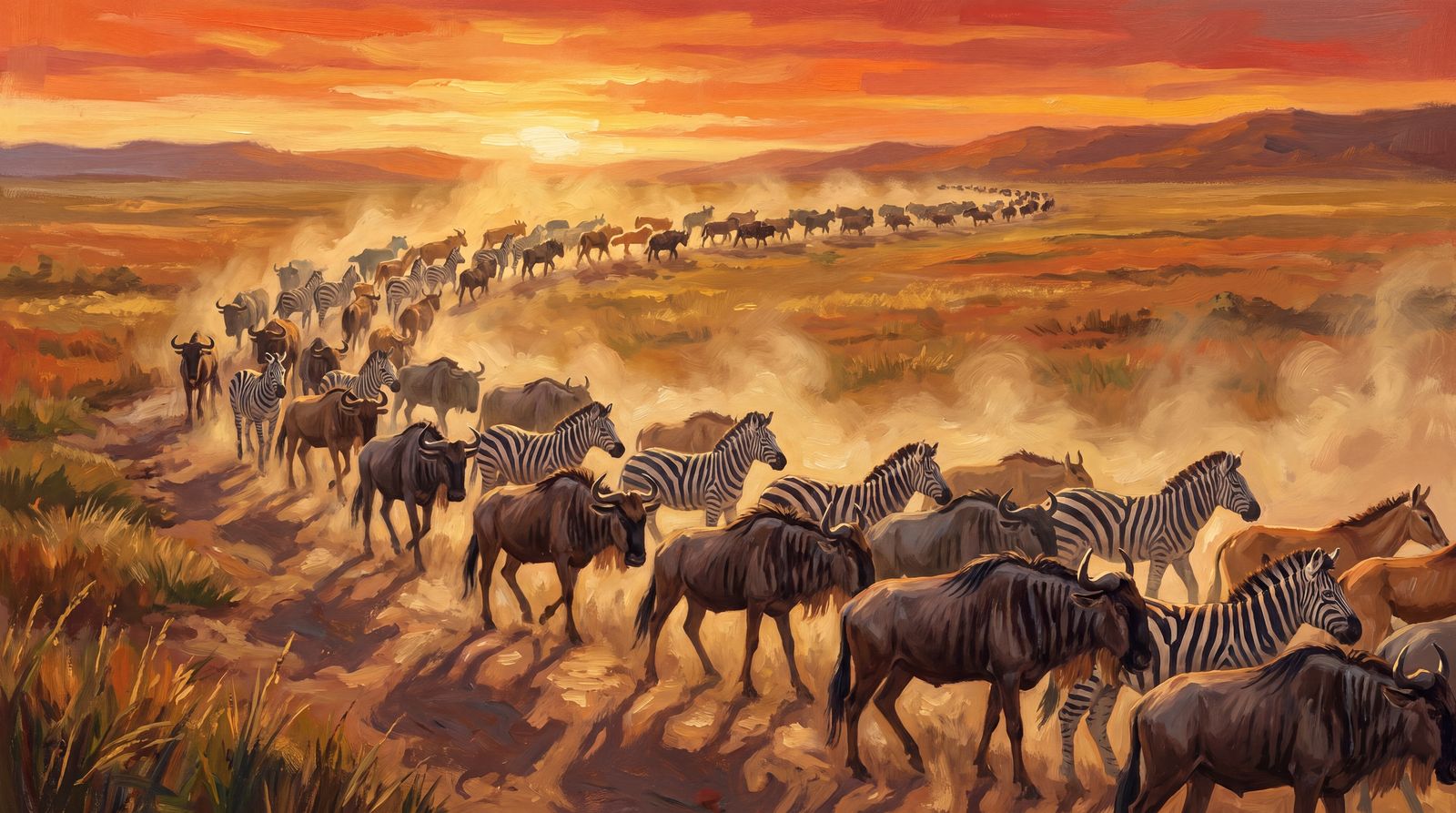
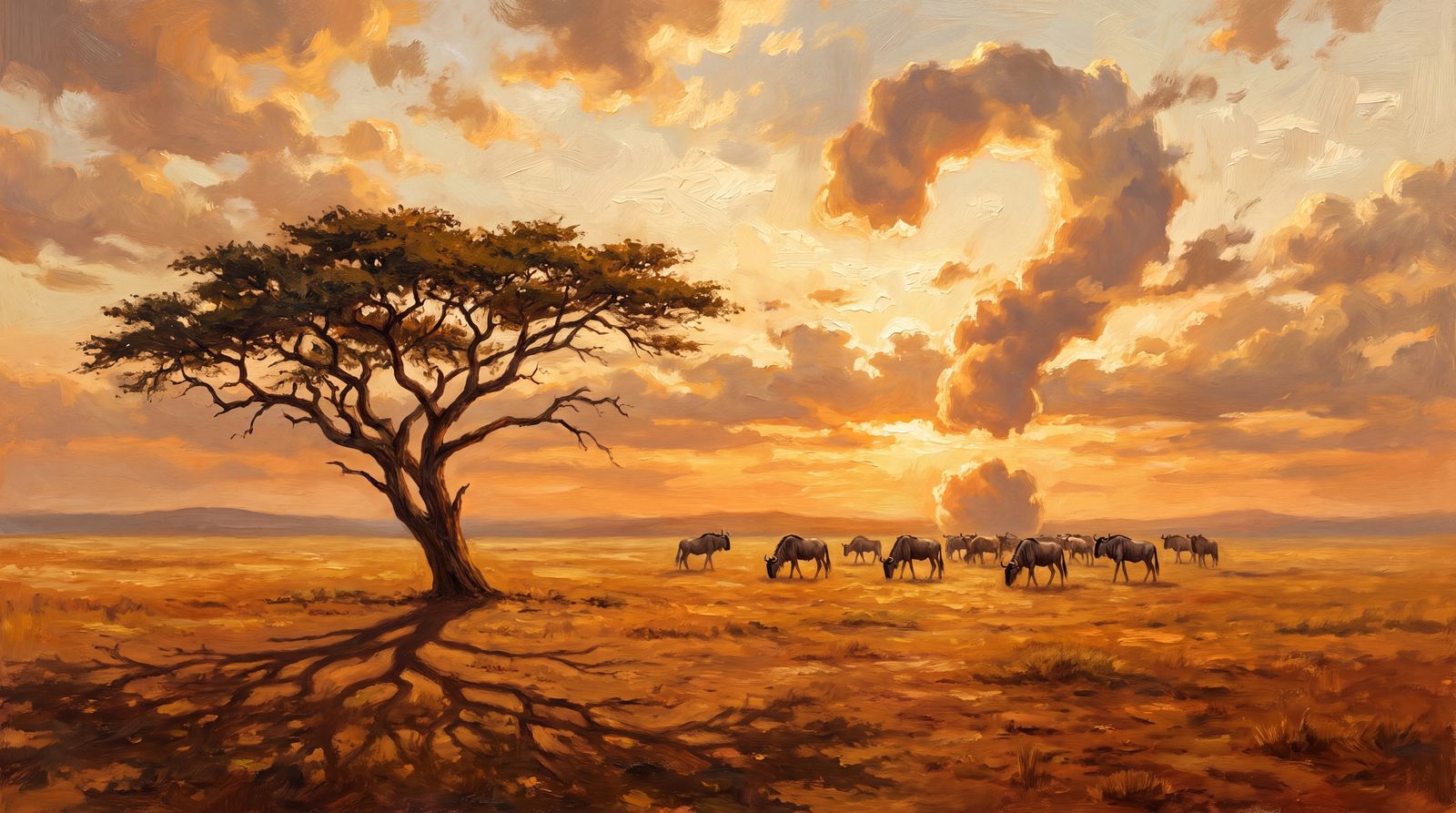
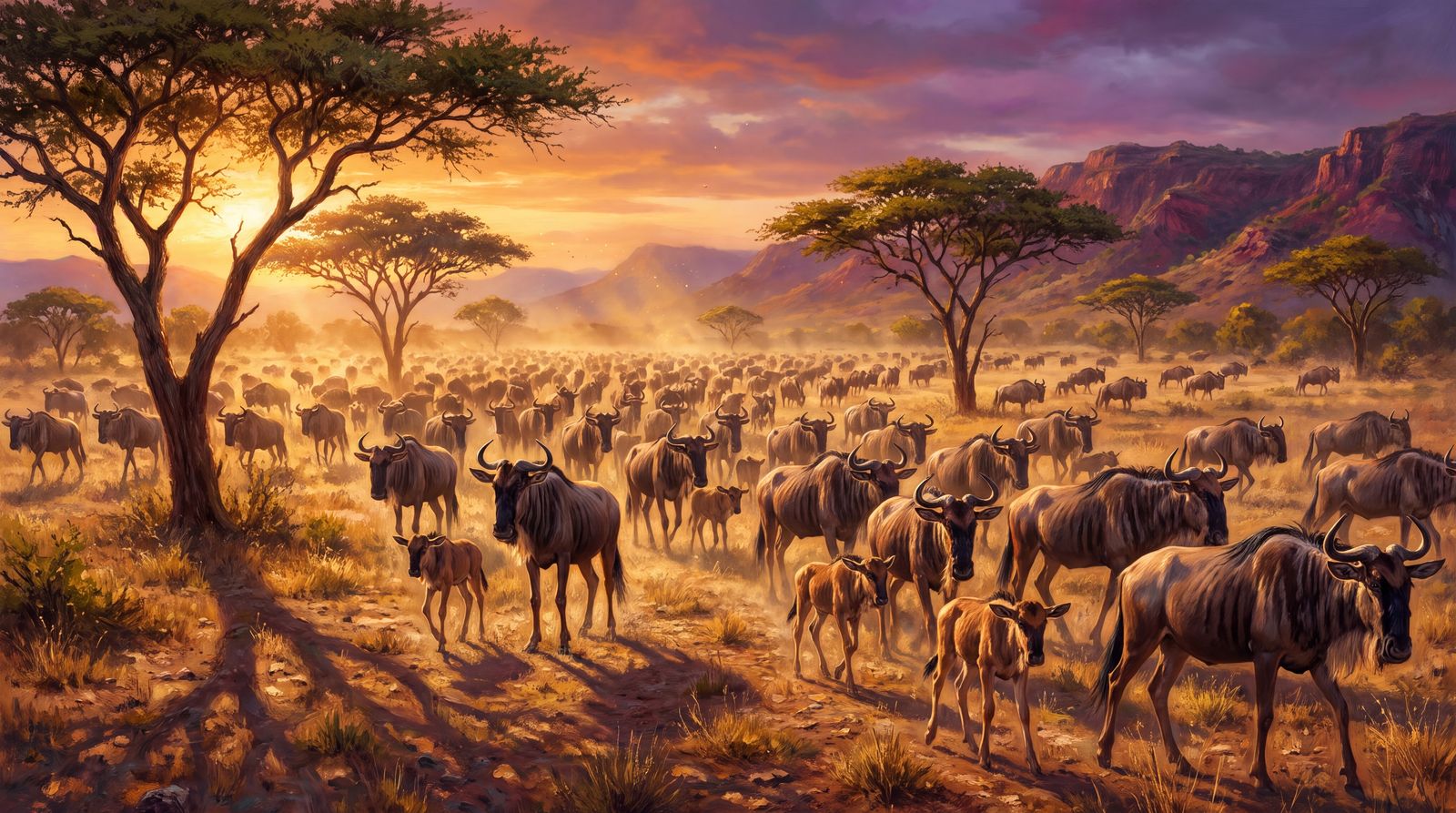
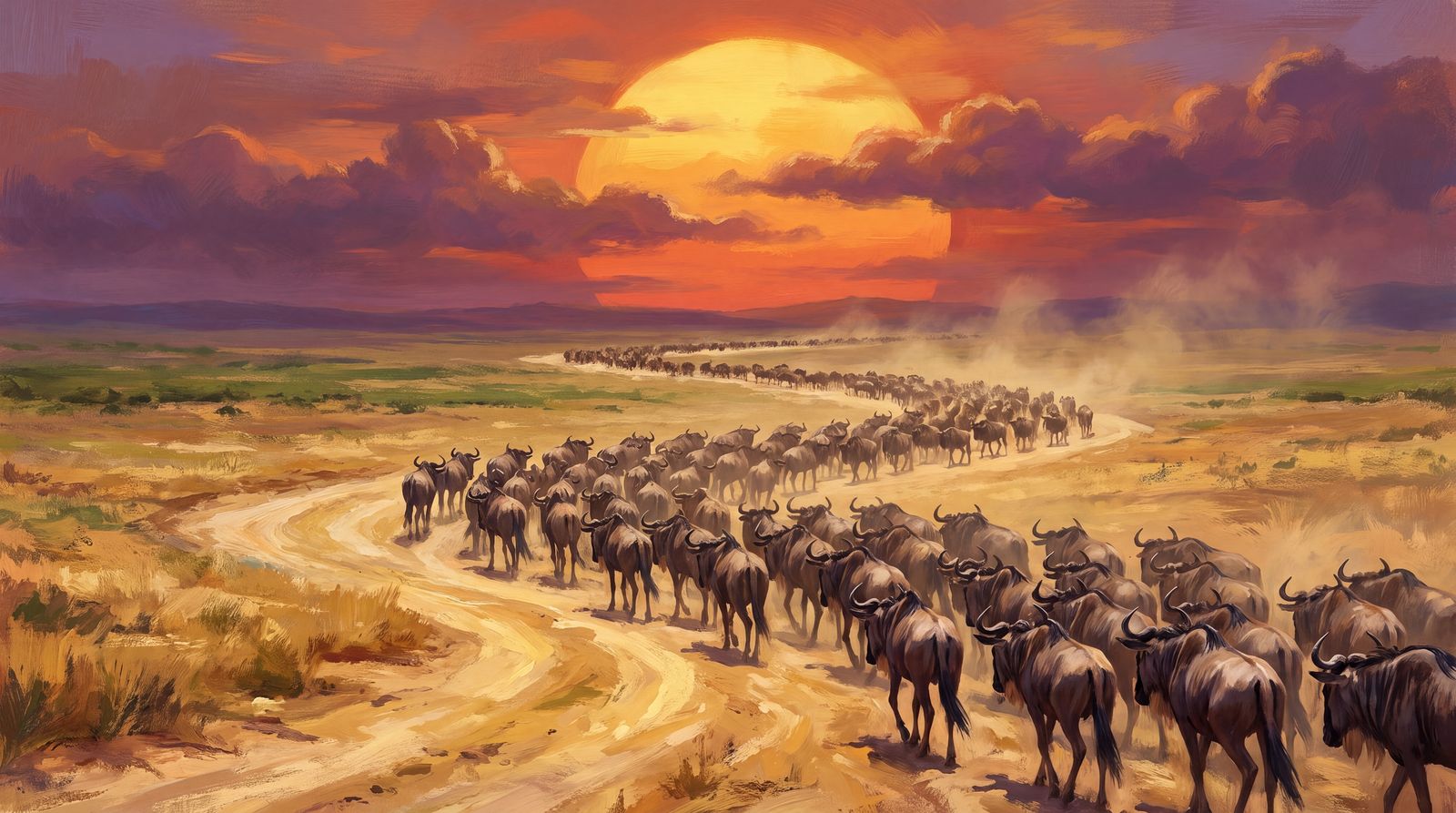
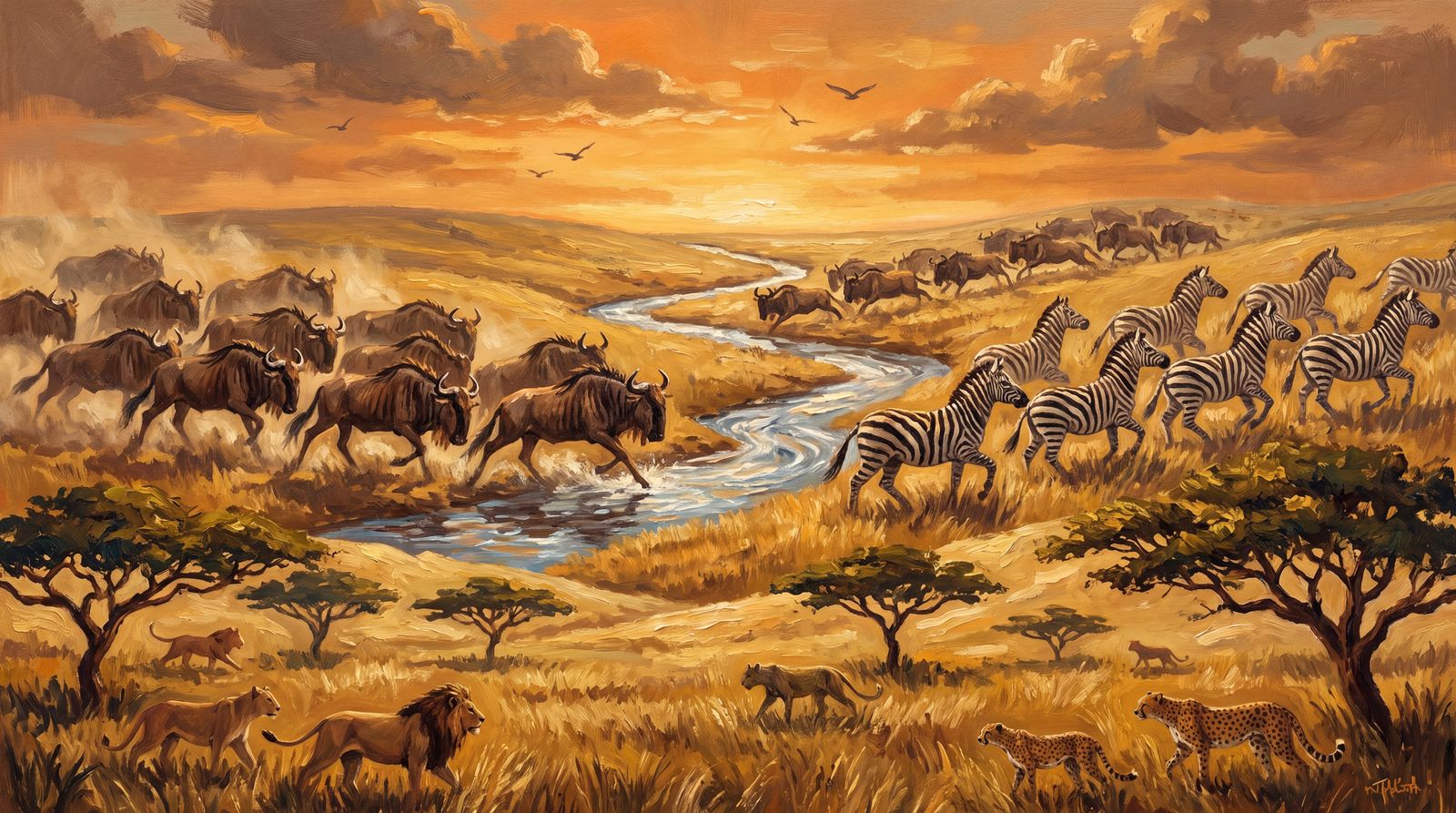
More than a million wildebeest, together with hundreds of thousands of zebra and gazelle, moving as one vast living river across the grass.

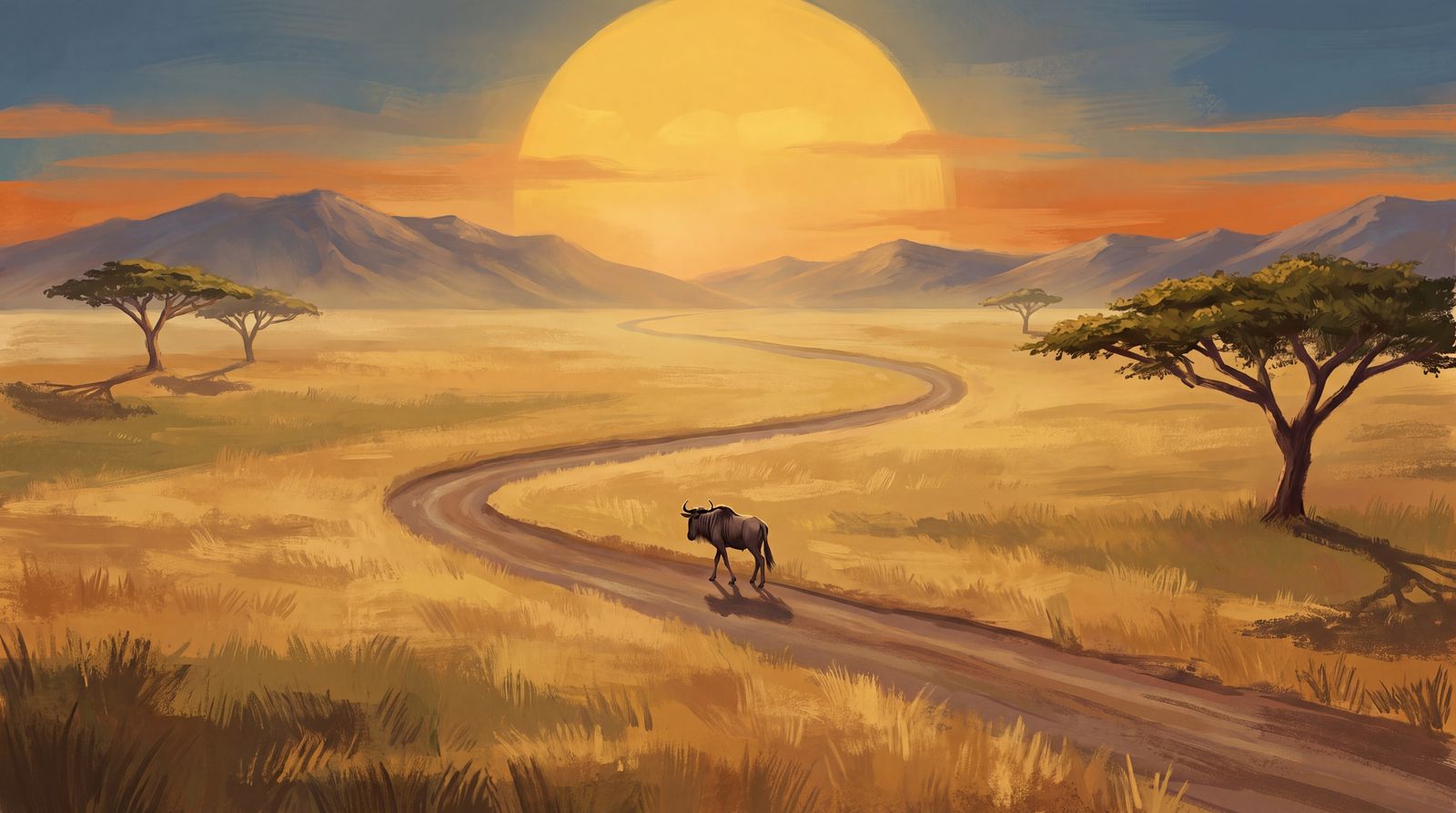
They never truly stop. Round and round, year after year, chasing the rain.

This is Dunia Docs. The real places behind the world's greatest stories.

This is the Great Migration, across the Serengeti of Tanzania and the Mara of Kenya.

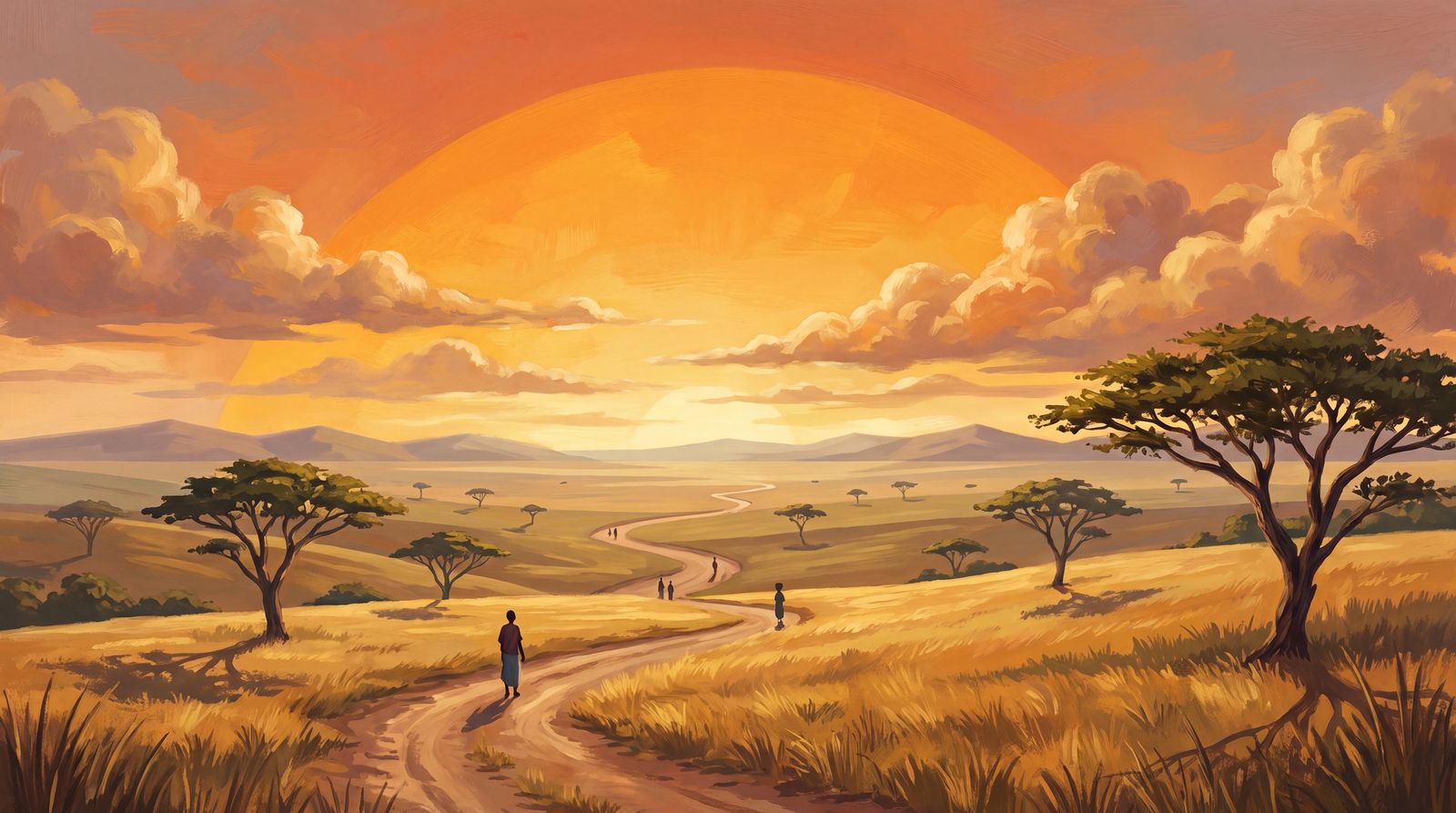
The word Serengeti comes from a Maasai phrase meaning the endless plains. And across those endless plains, the herds are always moving.

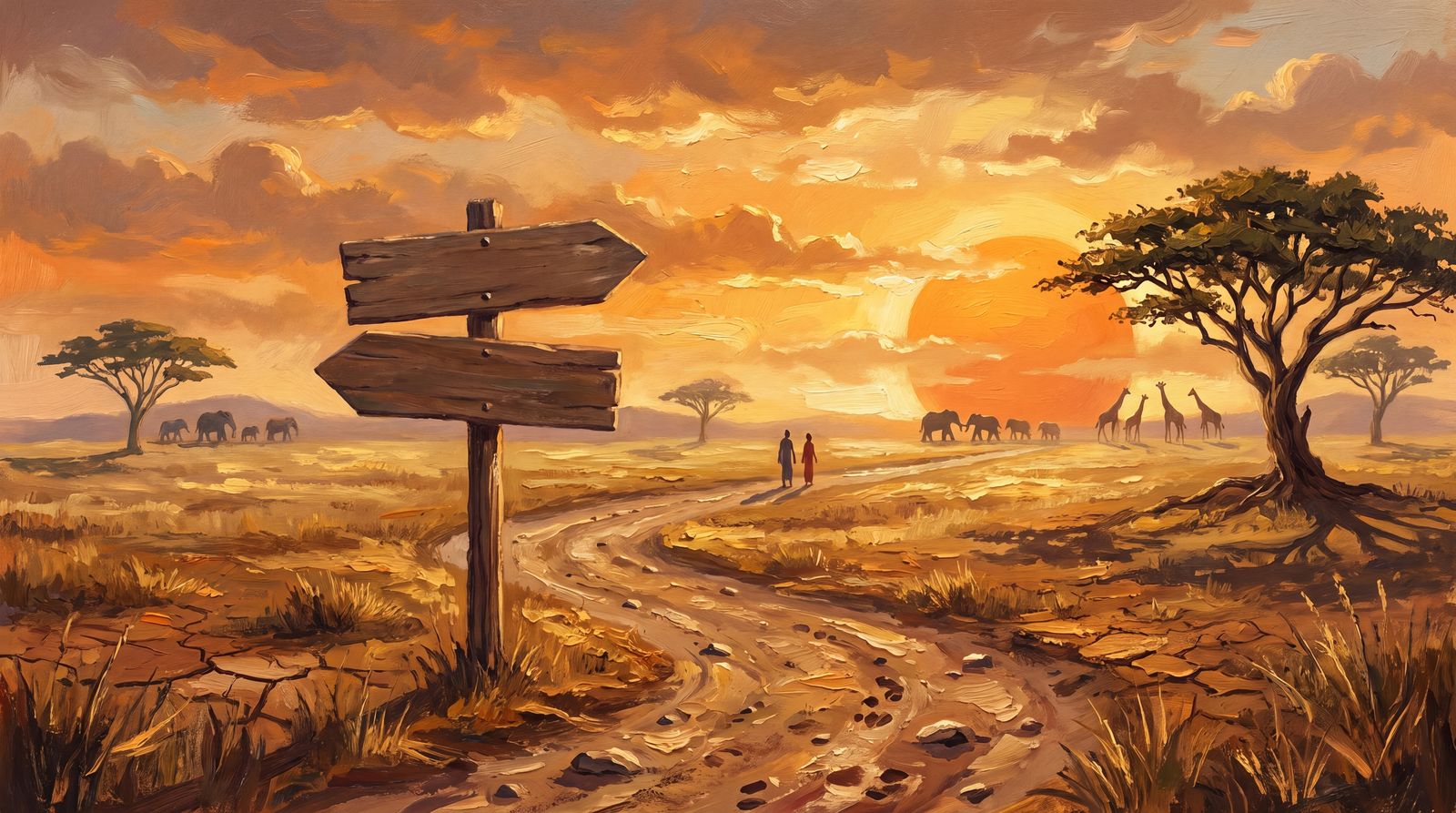
So what drives two million animals to walk in a circle forever? And what waits for them along the way?

Stick with me. And if you love the wild, tap subscribe. It's free.

The whole journey is a chase after one thing. Fresh grass, and the rain that grows it.

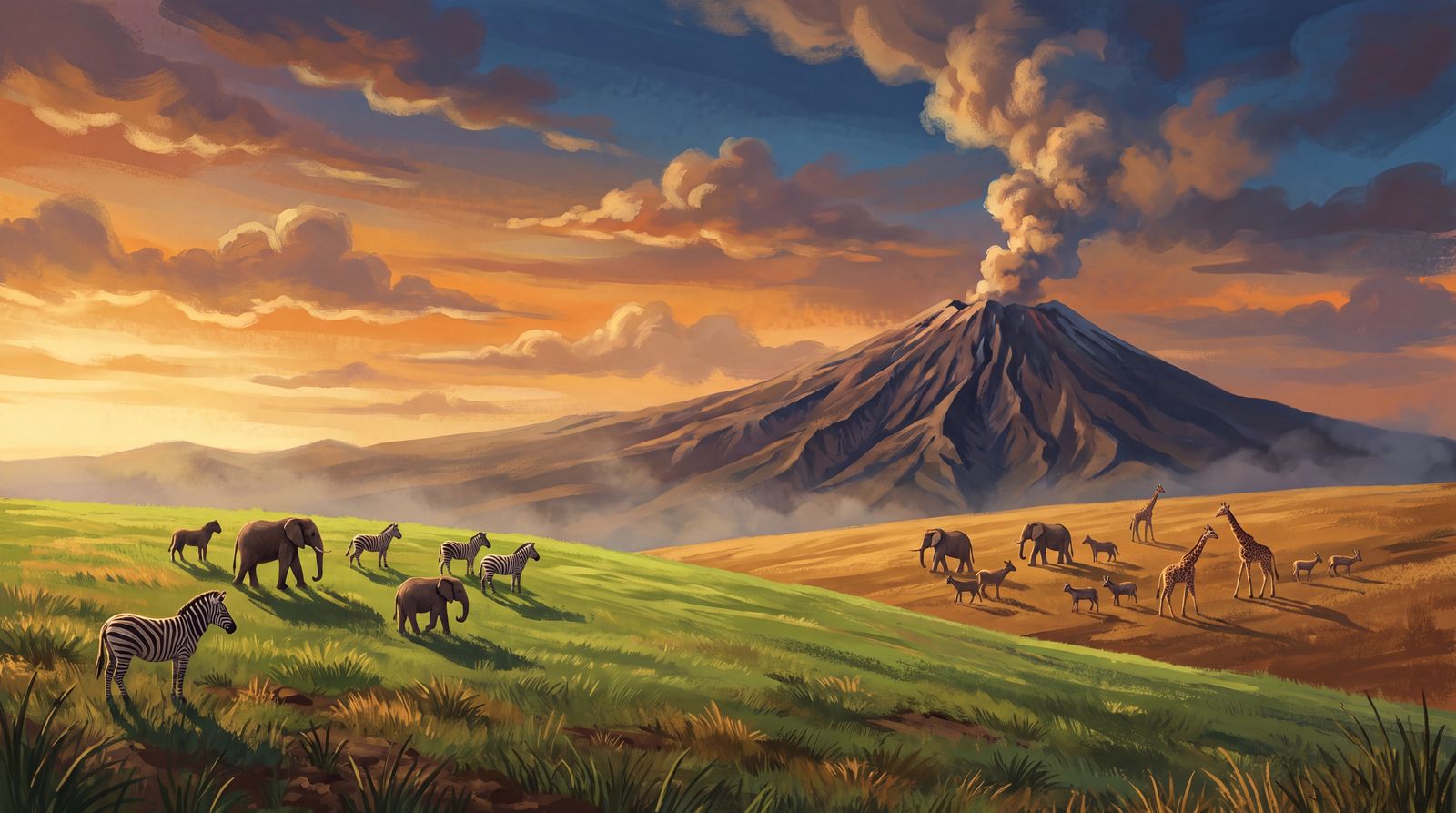
It begins in the south, on short-grass plains made rich by minerals from ancient volcanic ash.

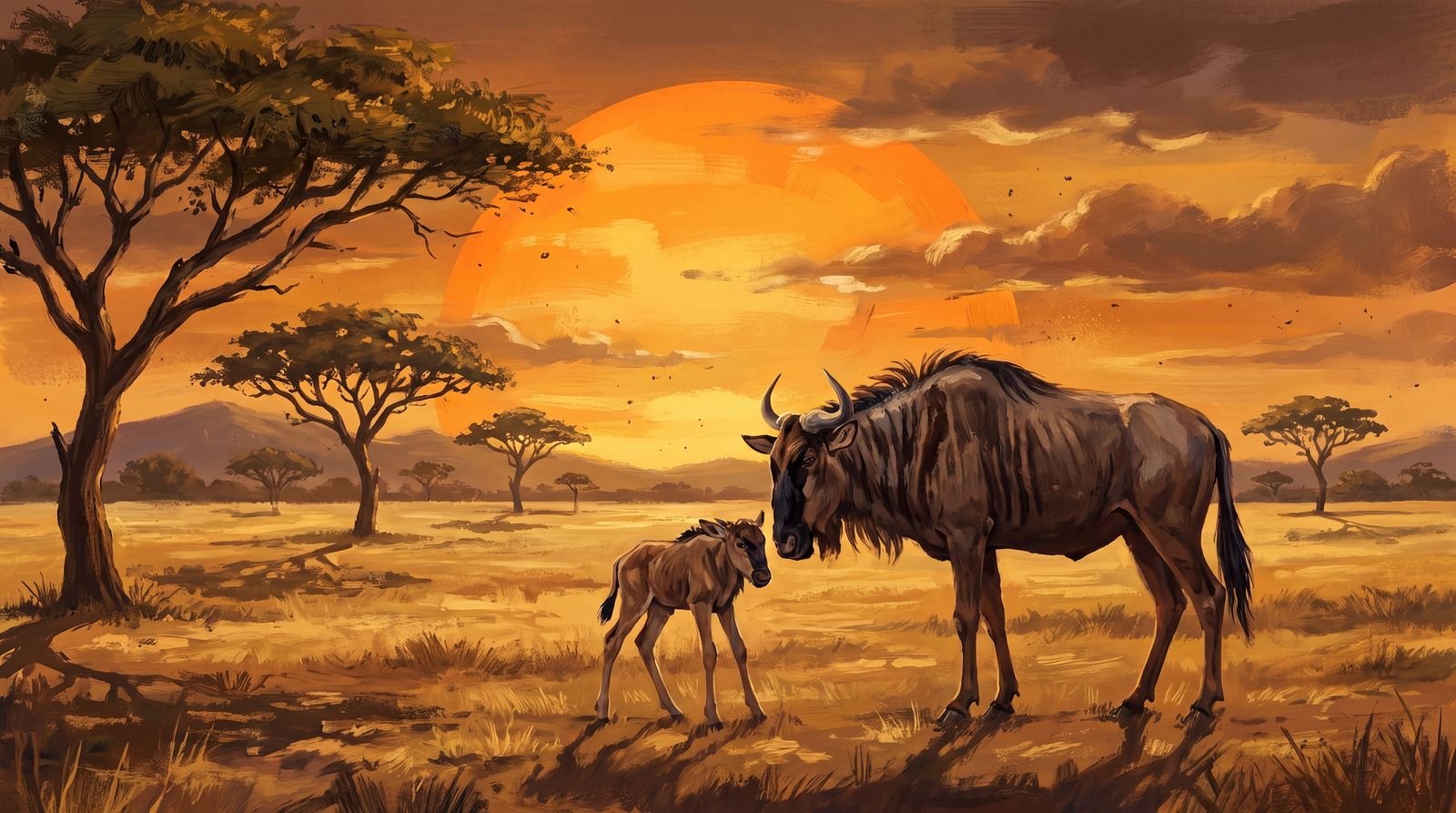
Here, in just a few weeks early in the year, something extraordinary happens. Hundreds of thousands of calves are born, almost all at once.

A newborn wildebeest can stand and run within minutes. It has to. Because it is born into a land full of hunger.

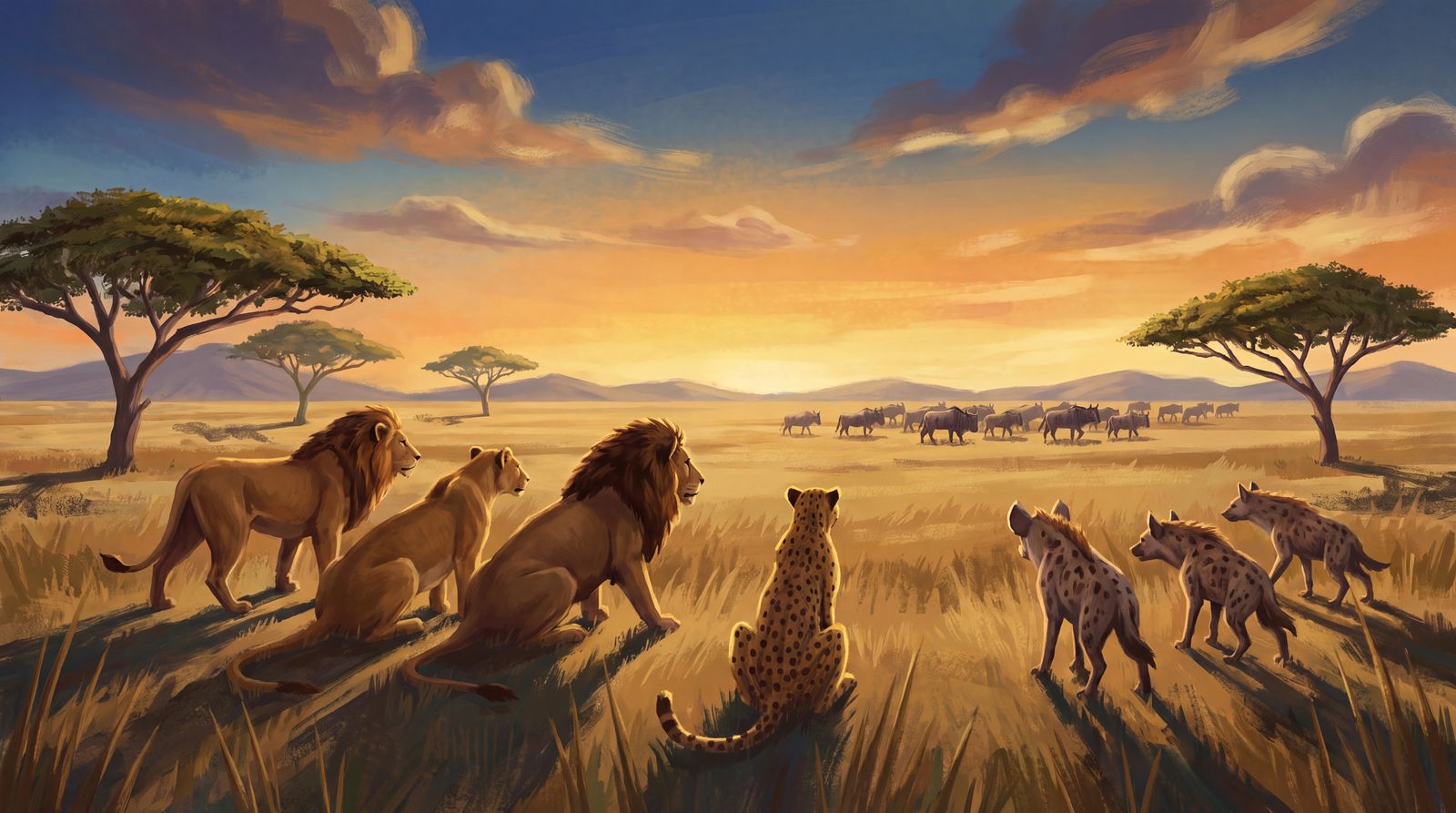
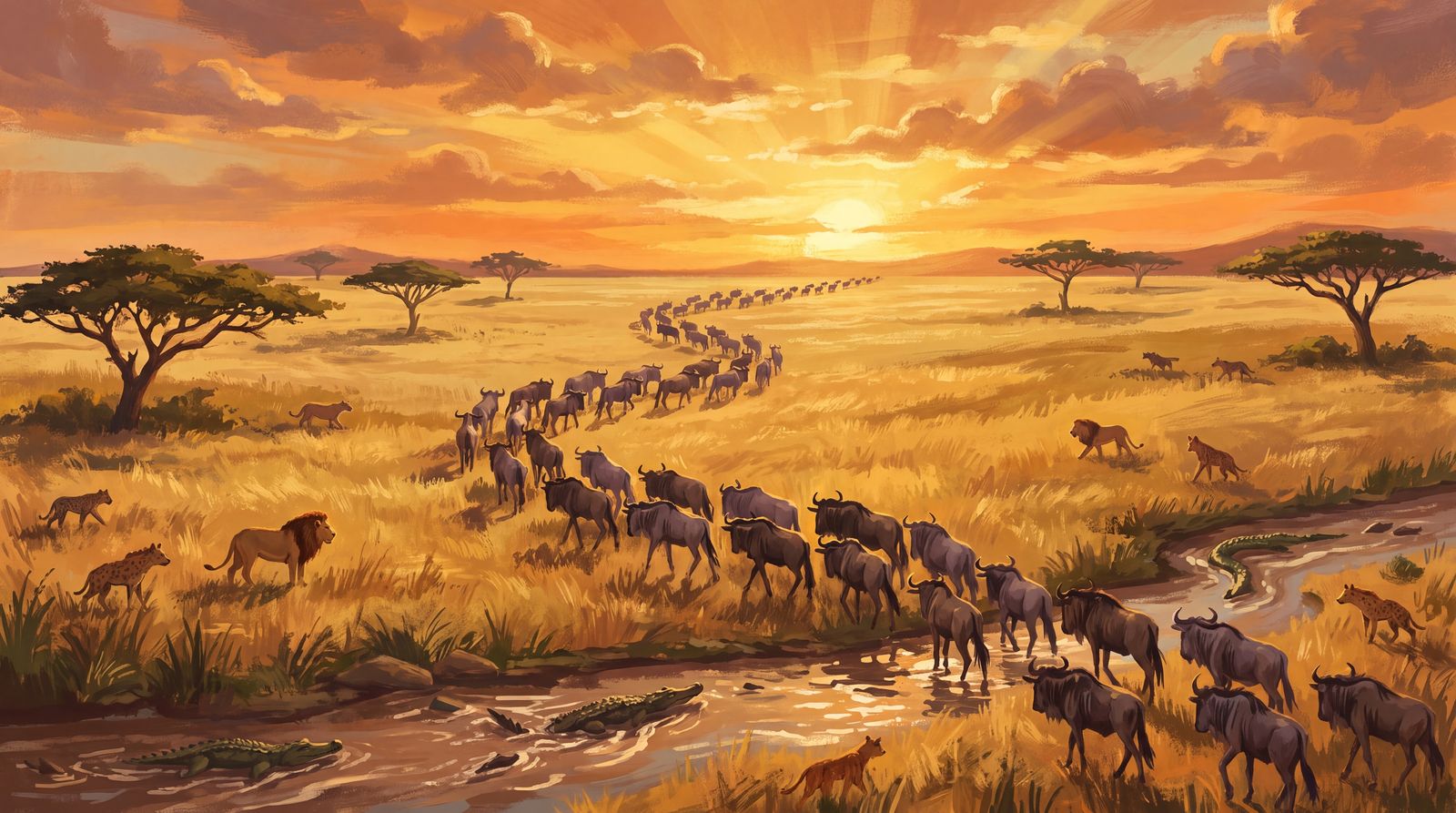
Lions, cheetahs, hyenas and leopards shadow the herds, taking the young, the old, and the slow.

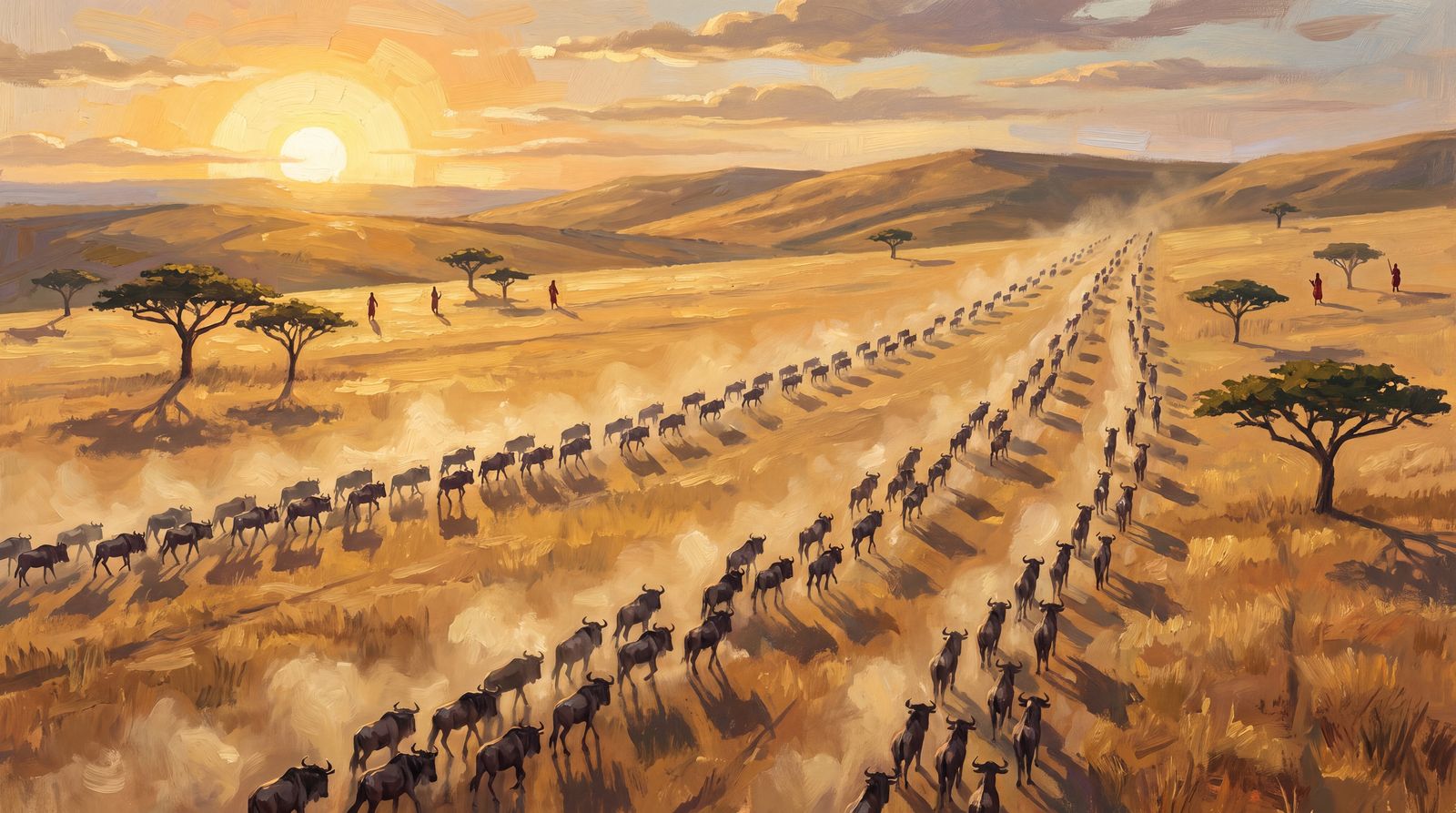
As the dry season comes and the southern grass fades, the herds turn, and begin to move north, in columns that can stretch for miles.

And ahead of them lies the greatest test of all.

The rivers.

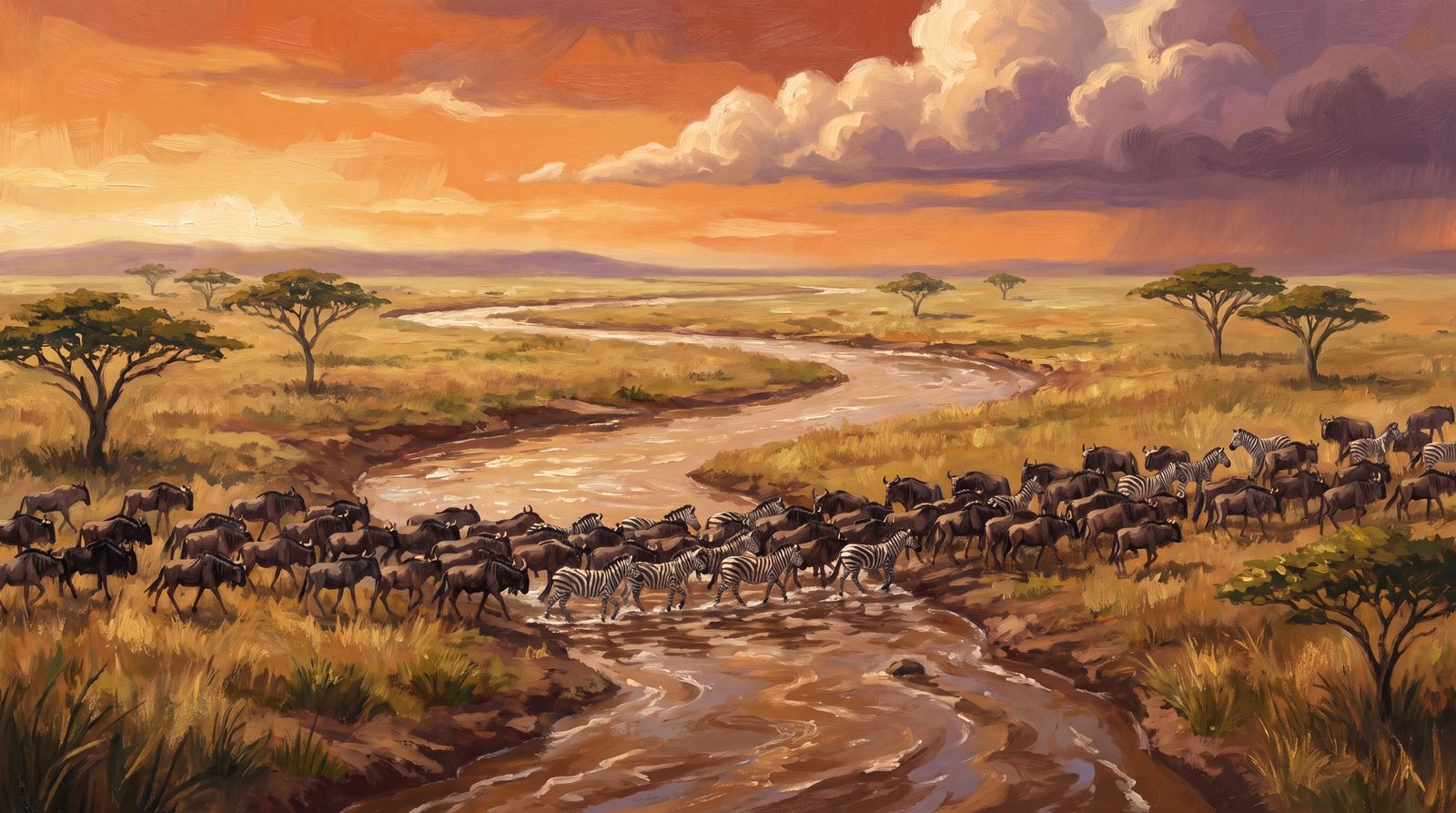
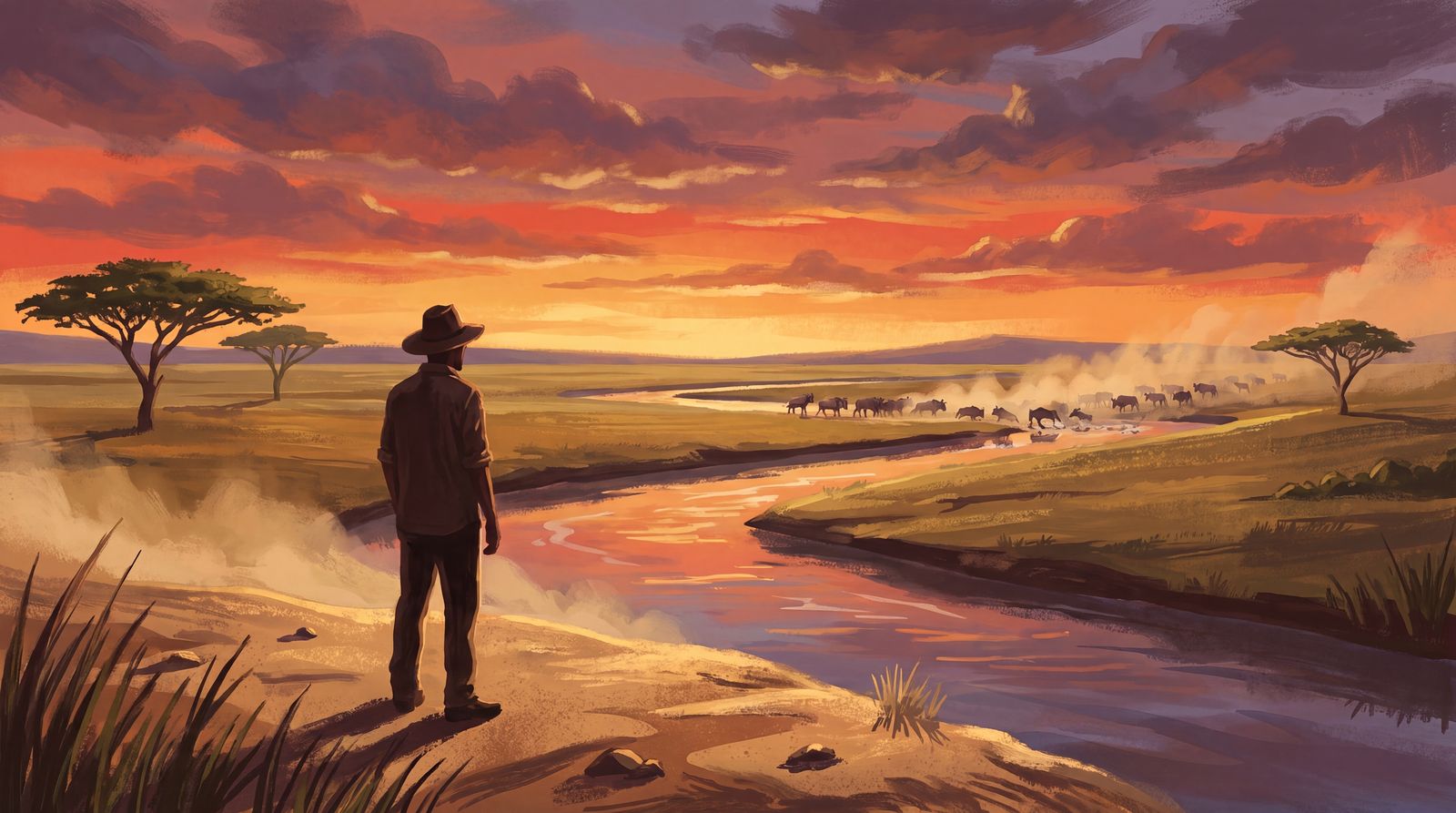
To reach fresh grazing, the herds must cross wide, muddy rivers like the Grumeti and the Mara.

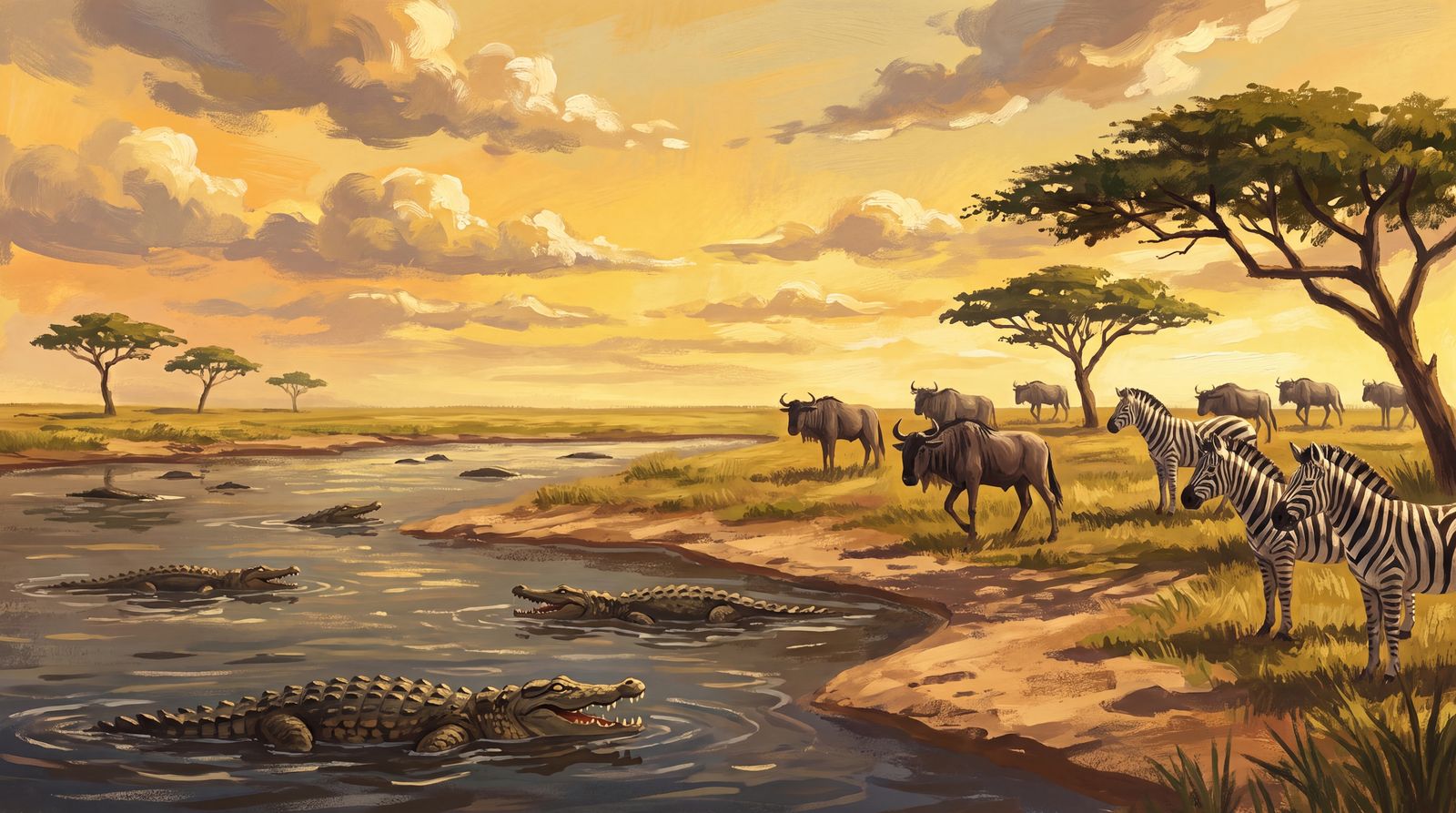
And in that water wait some of the largest crocodiles on Earth, who spend much of the year simply waiting for this one feast.

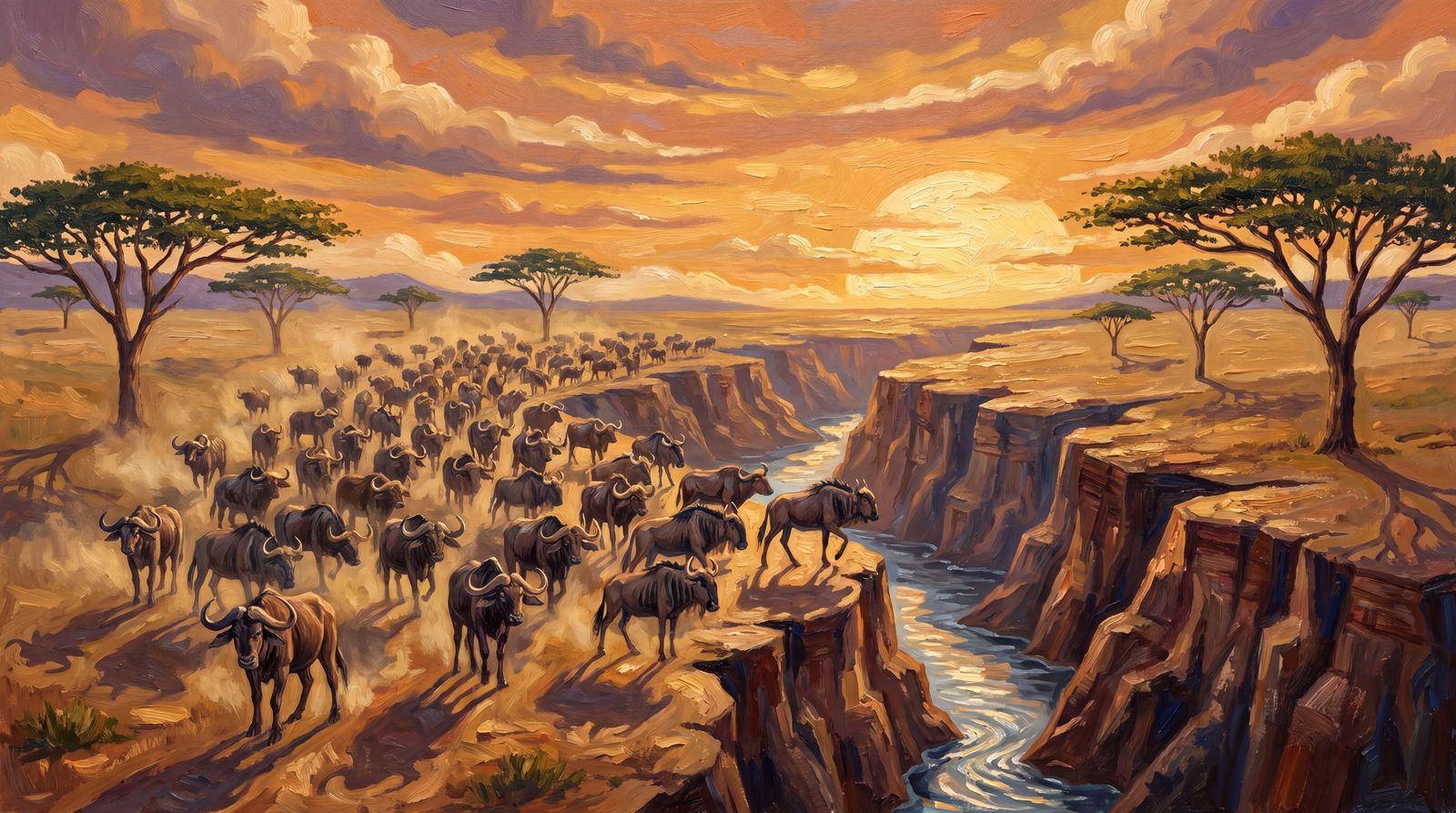
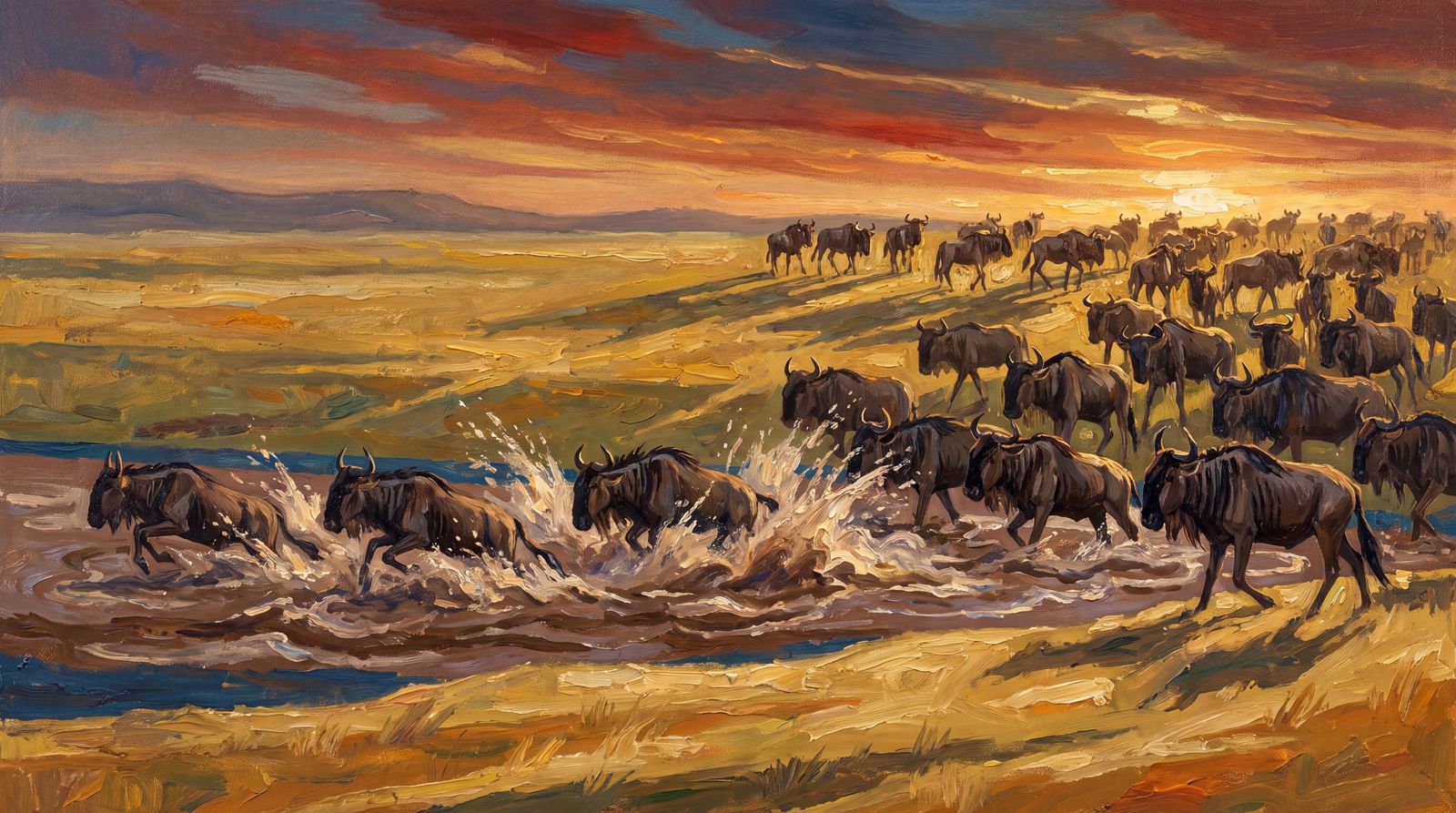
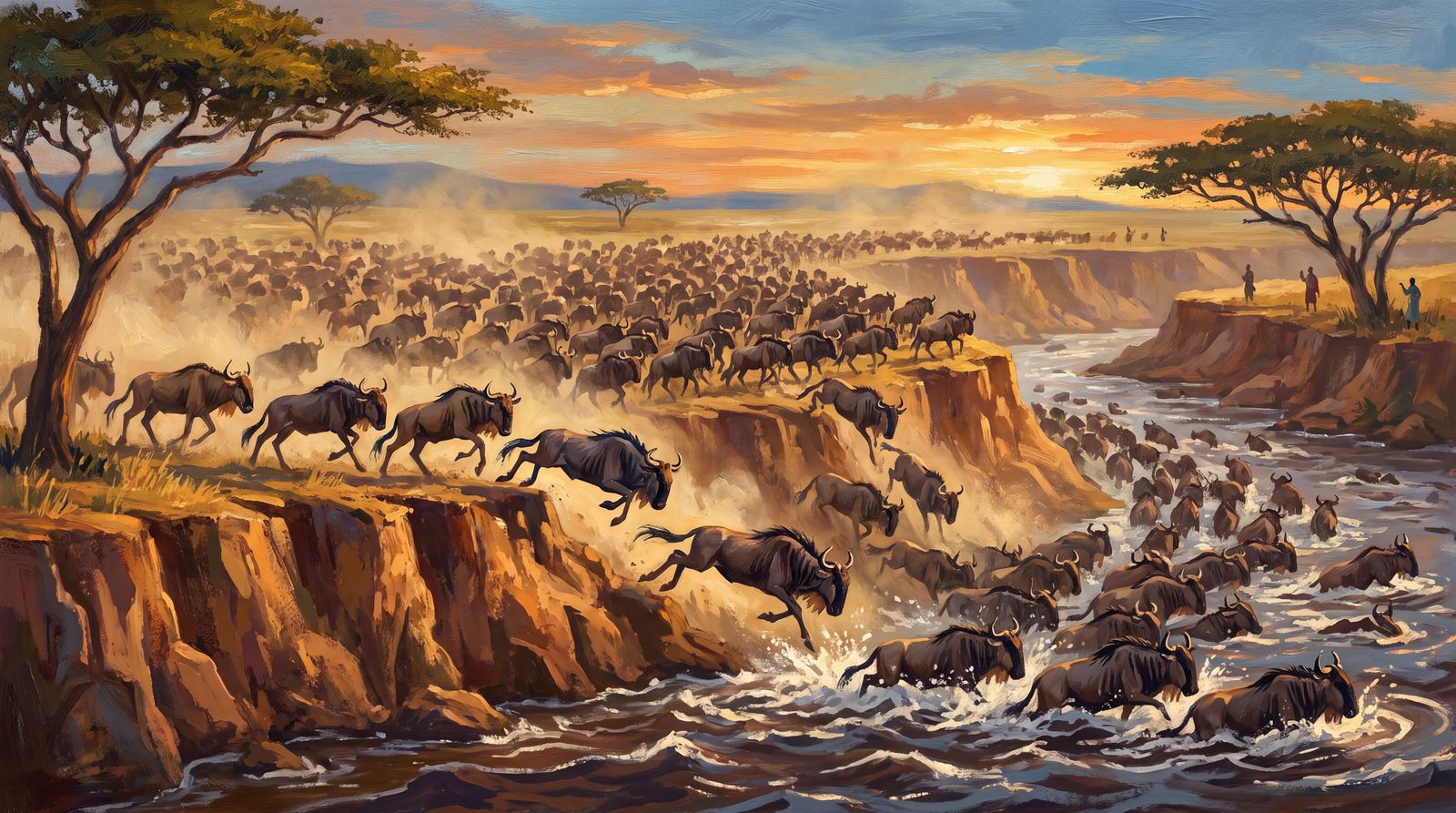
The animals gather on the bank, hesitating, packing tighter and tighter. Then one leaps, and thousands follow, in a churning, desperate rush.

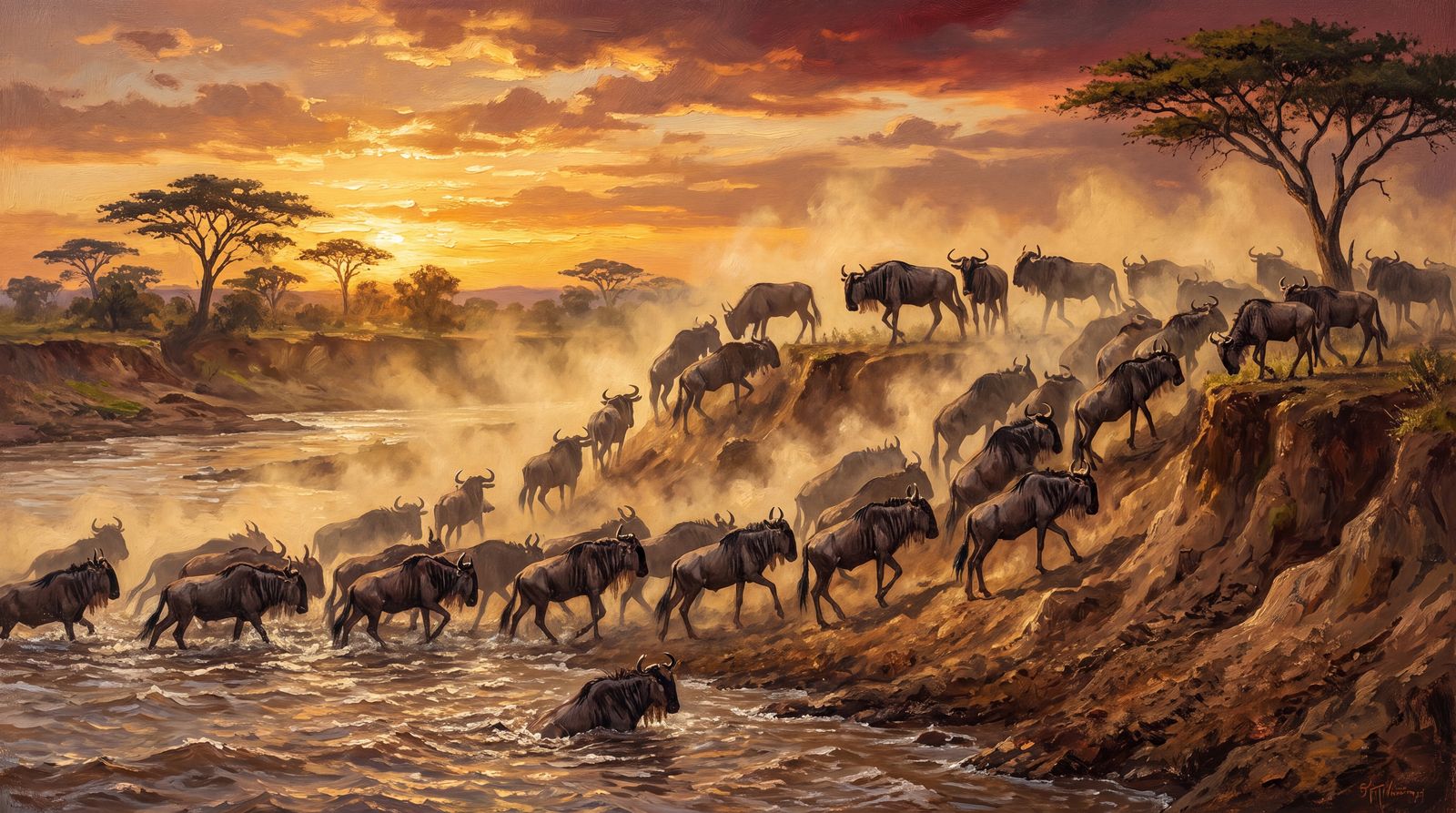
Some drown. Some are taken. But most make it across, and press on north.

They reach the northern plains, graze through the dry months, and then, as the rains return to the south, they turn around, and do it all again.

A single wildebeest may walk more than a thousand kilometres in one year, on this endless loop.

And here is the wonder of it. This is not chaos. It is one of the great engines of an entire ecosystem.

The herds fertilize the plains as they pass. They feed the predators. Their crossings feed the rivers.

Two million lives, moving together, keeping one of the last great wild places on Earth alive.

It has rolled on like this for longer than humans have farmed, or built cities, or written a single word.

A living river of hooves and horns, circling forever beneath the African sky.

So here's my question for you. Would you stand on the bank of the Mara and watch the crossing, even knowing what waits in the water? Tell me in the comments. I read them.

This has been a deep dive from our Tanzania story, the land where humanity began. Subscribe, and I'll take you further in.
Every single year, on the plains of East Africa, around two million animals set off on a journey in one giant, endless circle. It is the largest march of land animals anywhere on Earth. More than a million wildebeest, together with hundreds of thousands of zebra and gazelle, moving as one vast living river across the grass. They never truly stop. Round and round, year after year, chasing the rain. This is Dunia Docs. The real places behind the world's greatest stories. This is the Great Migration, across the Serengeti of Tanzania and the Mara of Kenya. The word Serengeti comes from a Maasai phrase meaning the endless plains. And across those endless plains, the herds are always moving. So what drives two million animals to walk in a circle forever? And what waits for them along the way? Stick with me. And if you love the wild, tap subscribe. It's free. The whole journey is a chase after one thing. Fresh grass, and the rain that grows it. It begins in the south, on short-grass plains made rich by minerals from ancient volcanic ash. Here, in just a few weeks early in the year, something extraordinary happens. Hundreds of thousands of calves are born, almost all at once. A newborn wildebeest can stand and run within minutes. It has to. Because it is born into a land full of hunger. Lions, cheetahs, hyenas and leopards shadow the herds, taking the young, the old, and the slow. As the dry season comes and the southern grass fades, the herds turn, and begin to move north, in columns that can stretch for miles. And ahead of them lies the greatest test of all. The rivers. To reach fresh grazing, the herds must cross wide, muddy rivers like the Grumeti and the Mara. And in that water wait some of the largest crocodiles on Earth, who spend much of the year simply waiting for this one feast. The animals gather on the bank, hesitating, packing tighter and tighter. Then one leaps, and thousands follow, in a churning, desperate rush. Some drown. Some are taken. But most make it across, and press on north. They reach the northern plains, graze through the dry months, and then, as the rains return to the south, they turn around, and do it all again. A single wildebeest may walk more than a thousand kilometres in one year, on this endless loop. And here is the wonder of it. This is not chaos. It is one of the great engines of an entire ecosystem. The herds fertilize the plains as they pass. They feed the predators. Their crossings feed the rivers. Two million lives, moving together, keeping one of the last great wild places on Earth alive. It has rolled on like this for longer than humans have farmed, or built cities, or written a single word. A living river of hooves and horns, circling forever beneath the African sky. So here's my question for you. Would you stand on the bank of the Mara and watch the crossing, even knowing what waits in the water? Tell me in the comments. I read them. This has been a deep dive from our Tanzania story, the land where humanity began. Subscribe, and I'll take you further in.